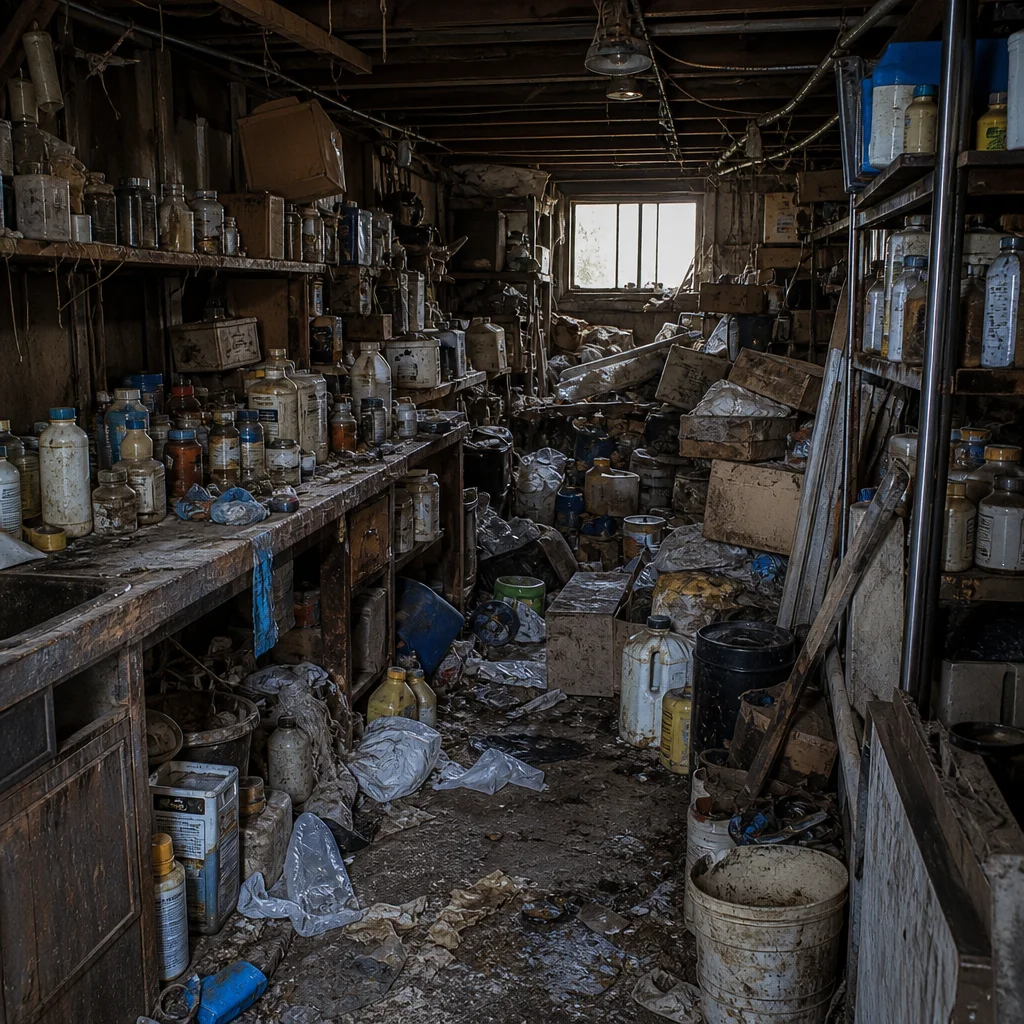
Biohazard cleanup cost depends on the scope of the contamination, not the size of the property: the type of material, how deep it soaked in, how much regulated waste has to be hauled, and how fast the space must be usable again. Emergency Cleanings scopes every job on site, then quotes one flat price, locked before any work begins. That applies whether you are settling an estate and need after-death cleaning or facing a sudden trauma scene.
Search for what biohazard cleanup costs and you’ll find a lot of pages that never answer the question. Most of the industry treats price as something you only learn after someone has been to your property — and by then you’re emotionally committed, often in the middle of the worst week of your life, and in no position to compare.
We think that’s backwards. You can’t publish one number for work that ranges from a single contained room to a whole-house remediation. But you absolutely can explain what sets the number, what’s included, and what should never appear on the invoice as a surprise. That’s what this is.
The six things that actually set the price
1. What kind of contamination it is. An unattended death, a homicide scene, a sewage backup, a hoarding-with-biohazard cleanout, and a drug lab decontamination are five different jobs with five different protocols, disposal paths, and PPE requirements. This is the single biggest driver, and it’s why “how much does biohazard cleanup cost” has no one answer.
2. How far it penetrated. Surface contamination on non-porous finishes is the cheap version. Once fluids have reached carpet pad, subfloor, drywall, or insulation, those materials leave the building — and demolition, disposal, and rebuild replace simple cleaning. Two rooms of identical size can differ by a factor of five on this alone.
3. Square footage and number of affected areas. Not the size of the house — the size of what’s contaminated, plus every path the contamination traveled. A single bedroom is one job; a bedroom, the hallway it drained into, and the HVAC that distributed the odor is another.
4. Regulated waste volume. Biohazardous material can’t go in a dumpster. It’s containerized, manifested, and taken to a licensed treatment facility, and that’s charged by volume. A job that generates fifteen bags of regulated waste costs meaningfully more than one that generates two, even at the same square footage.
5. Time pressure. A property that has to be turned over for a closing on Friday, or a business that’s losing revenue every hour it’s shut, means overtime and additional crew. Genuine emergency response costs more than scheduled work, and it should be quoted that way up front rather than added later.
6. Access. Third floor with no elevator, a narrow stairwell, a rural address two hours out, restricted building hours. These are real labor costs and they belong in the written estimate, not in a change order.
One thing we don’t do
Removing contaminated material is remediation. Putting the drywall, flooring, and paint back is restoration — and we don’t do restoration. We clean, decontaminate, and remove what can’t be saved. Rebuilding is a separate trade, and we’d rather tell you that upfront than have you discover it on completion day.
We’ll tell you clearly what’s coming out so you know what a contractor will need to put back. Ask any company you’re considering the same question — a quote that quietly covers only removal, presented as if it covers everything, is one of the most common ways a project ends up costing far more than the estimate suggested.
What we charge, and how
Every project is different, so every price is different — that isn’t a dodge, it’s the nature of the work. What we can tell you is that most projects land somewhere between $1,500 and $3,500, and the six factors above are what move a job within that. Anyone who gives you a precise figure before seeing the property is guessing.
What matters more than the range is the structure.
We quote a flat fee. Not an hourly rate, not a rate plus disposal, not a rate plus whatever the truck ends up hauling. One number that includes labor, disposal, transportation, equipment, and insurance. If the job takes our crew two hours longer than we thought, that’s our problem, not a line on your invoice. You never have to wonder whether you’re being billed for this hour or that hour, or whether someone is working slowly on purpose.
You know the full and final price before any work starts. Here’s the actual sequence:
We give you a 2-hour arrival window, and you get a text with the ETA when the technician is on the way. No sitting home all day guessing.
The technician walks the property — a real inspection, with photos and documentation. You don’t have to prepare anything.
Our Project Coordinator calls you directly with the exact final price and walks you through the process step by step.
You approve it. Only then does work begin — often the same day.
There is no version of this where a crew starts working and you find out the cost afterward.
The deposit. We take a 20% deposit to hold your slot and commit the crew and equipment to your job.
It is refundable if the final price is more than the verbal quote. If we come out, look at the job, and the real number is higher than what we told you on the phone, you can walk away and get the deposit back. You’re never trapped by a number you didn’t agree to. Refunds process back to your card in five to seven business days.
It is not refundable if:
- You cancel before we arrive, or
- You decide not to proceed after the walkthrough and the final price came in at or below the verbal quote.
If the number is a problem, say so. We offer financing, and many jobs can be phased — done room by room at a fixed price per phase — so the whole thing isn’t one bill in one week. Families stall for months over a number they never asked us to work with. Ask.
What should never be a surprise on the invoice
The most common complaint in this entire category is simple: the number on the phone wasn’t the number when the crew showed up.
If you’re comparing companies — including us — these are the questions that separate a real quote from a placeholder:
- Is the price flat, or hourly? Hourly means the risk of a slow day is yours.
- What’s included? Disposal, transportation, equipment, insurance — or are those added later?
- When do I learn the final price — before or after work starts?
- Is there a dispatch or trip fee? A minimum charge? A cancellation fee?
- Are there per-item surcharges? Heavy items, mattresses, appliances, tires — this is where advertised prices quietly become real prices.
- Is this removal only, or does it include putting the space back together?
- What’s the arrival window, and do I get notified when the crew is en route?
- What are the deposit terms, and exactly when is it refunded?
Write the answers down. A company that answers all eight cleanly has told you more about how the job will go than any review could.
Who actually pays
Most people are surprised by how often they aren’t paying the whole thing themselves.
Homeowners insurance frequently covers biohazard remediation when it results from a sudden, accidental event — a death in the home, a covered water or sewage loss, vandalism. It typically doesn’t cover gradual conditions or long-term neglect. The distinction usually turns on “sudden and accidental,” so how the claim is described matters. We can document the scene in the way adjusters expect.
Crime victim compensation programs exist in every state and many of them reimburse crime scene cleanup for the victim or the family — Texas, Illinois, and Wisconsin all run programs that specifically address it, and most states have an equivalent through the attorney general’s office. Families routinely don’t know these exist. Deadlines to file are often short, so ask early.
Commercial and landlord coverage varies widely. Where a tenant caused the damage, deposit recovery or a claim against them may apply — which is exactly why documentation of what was removed and why is worth insisting on.
Estates commonly pay from estate funds when a property has to be cleared before sale. Our insurance coverage guide goes deeper on what’s typically included and what isn’t.
Why cheaper is sometimes much more expensive
A general cleaning company or a junk hauler will often quote well below a remediation company on the same scene. Sometimes that’s a fair price for a limited scope. Often it’s a bid on work they aren’t equipped to complete — surface cleaning where material removal was required, ordinary disposal where regulated disposal was required, no containment, no air handling.
The failure shows up weeks later, when the odor returns or a buyer’s inspection finds what’s under the flooring, and the second company has to remove more than the first one would have. You end up paying twice, and the second bill is bigger because the contamination had more time.
Related reading: The Dangers of DIY Biohazard Cleanup · Who Needs Biohazard Cleanup Services Most? · What to Expect in a Crime Biohazard Cleanup Service · Emergency Cleaning Services Cost Guide
Frequently Asked Questions
How fast can a biohazard cleanup crew get to the property?
Same day in most cases. Emergency Cleanings works through a nationwide network of vetted, licensed and insured local technicians, so someone is usually close by. You get a two-hour arrival window and a text with the ETA. Details are on the emergency cleanup service page.
Can the estimate go up after the work starts?
No. The price is set after the technician walks the property, and it is flat. If the crew runs long, that cost stays with Emergency Cleanings. If the on-site price comes in above the rough figure from the phone call, your deposit is refunded and you can walk away.
Does biohazard cleanup include putting the room back together?
It does not. Cleanup covers decontamination and removal of anything that cannot be saved, such as soaked carpet pad or drywall. Surface mold gets cleaned along the way. Rebuilding, deep mold mitigation, water damage and fire restoration are separate trades. You get a written record of what was removed.
Can biohazard cleanup be paid from the estate?
Often, yes. When a property has to be cleared before sale or transfer, the cost is commonly paid from estate funds, and a homeowners policy may cover a sudden, accidental event like a death in the home. Ask the probate attorney or adjuster early. Photos and documentation are provided for the estate file.
Get the number before you commit
Every property is different, which is why we walk it before quoting rather than guessing over the phone. What we’ll tell you on the phone is how the pricing works, what we’d need to see, and roughly where a job like yours tends to land — so you’re not going in blind.
Then the walkthrough gives you the real number, flat, all-in, before anyone touches anything. We can be there the same day.
Call 888-560-8488 and a technician can be there the same day. The assessment is free. Once the job is scoped on site, Emergency Cleanings locks one flat price, and nothing starts until you approve it.