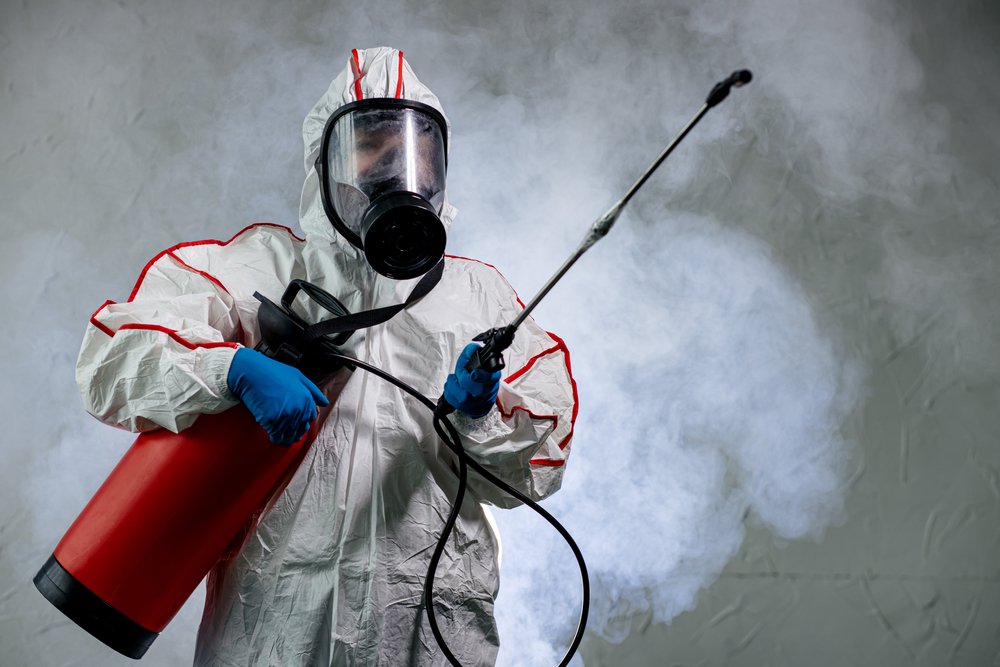
Biohazard cleanup services decontaminate any space where blood, bodily fluids, human or animal waste, or chemical contamination has made it unsafe to use. The people who call most often are property owners and next of kin after an unattended death, families dealing with an injury scene at home, adult children facing a hoarding situation that turned hazardous, and residents hit by a sewage backup or a spilled chemical. Emergency Cleanings handles all of it nationwide with vetted, licensed, insured local technicians, at a flat price locked in after a free on-site scope.
Hazardous situations at home or in shared spaces rarely announce themselves in advance. When they occur, the need for biohazard cleanup services becomes immediate and non-negotiable. These services exist to address conditions that pose genuine health and safety risks, handled by trained professionals with the equipment and protocols to do the job safely and legally. Recognizing who needs them and why helps people act quickly when it counts.
Biohazard cleanup is a regulated field for good reason. The materials involved, including blood, bodily fluids, human waste, and chemical contaminants, carry pathogens that standard cleaning cannot eliminate. The Occupational Safety and Health Administration requires specific training, protective equipment, and disposal methods for anyone handling biohazardous waste. Without that expertise, well-intentioned cleanup attempts can spread contamination rather than contain it.
Biohazard Cleanup Services After a Death at Home
One of the most common scenarios requiring professional biohazard response is an unattended death. When someone passes away and is not discovered immediately, decomposition begins within hours. The biological materials released during this process saturate porous surfaces like flooring, walls, and furniture. Odor compounds penetrate deeply and cannot be removed with household products.
Families are often not aware of the full scope of contamination until professionals assess the space. The emotional weight of losing someone, combined with the shock of the physical condition of the space, makes it especially important that trained professionals handle the cleanup. Asking grieving family members to manage this process themselves compounds trauma unnecessarily.
Law enforcement and medical personnel who respond to a death scene are not responsible for cleanup. That responsibility falls to the property owner or next of kin. Professional biohazard teams step in at that point, working discreetly and thoroughly to restore the space.
Injury and Accident Scenes
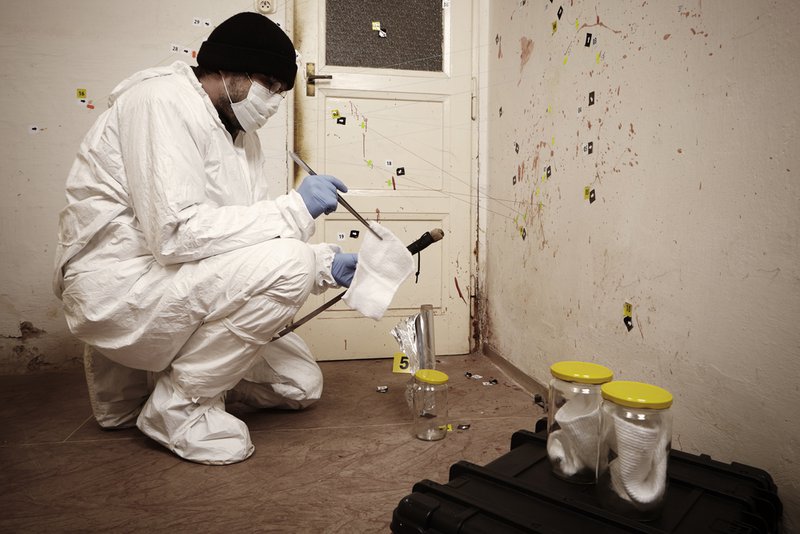
Accidents that result in significant blood loss require immediate biohazard response. Blood-borne pathogens including Hepatitis B, Hepatitis C, and HIV can survive on surfaces for days under the right conditions. The CDC confirms that Hepatitis B in particular can remain viable on dry surfaces for up to seven days. Surface-level cleaning does not address contamination that has absorbed into materials beneath the visible layer.
These situations occur in private homes, shared hallways, communal areas, and workplaces. In any setting where blood has been deposited on a surface, the cleanup process must follow OSHA's Bloodborne Pathogens Standard. Only professionals trained to that standard should handle the scene. Attempting to manage it independently exposes individuals to serious infection risk and potential regulatory liability.
The signs you need to call for emergency cleanup are not always obvious in the immediate aftermath of an accident. Shock and urgency can make it tempting to clean up quickly and move on. Pausing to call in professionals instead protects everyone who will occupy that space afterward.
Hoarding Situations That Have Reached a Tipping Point
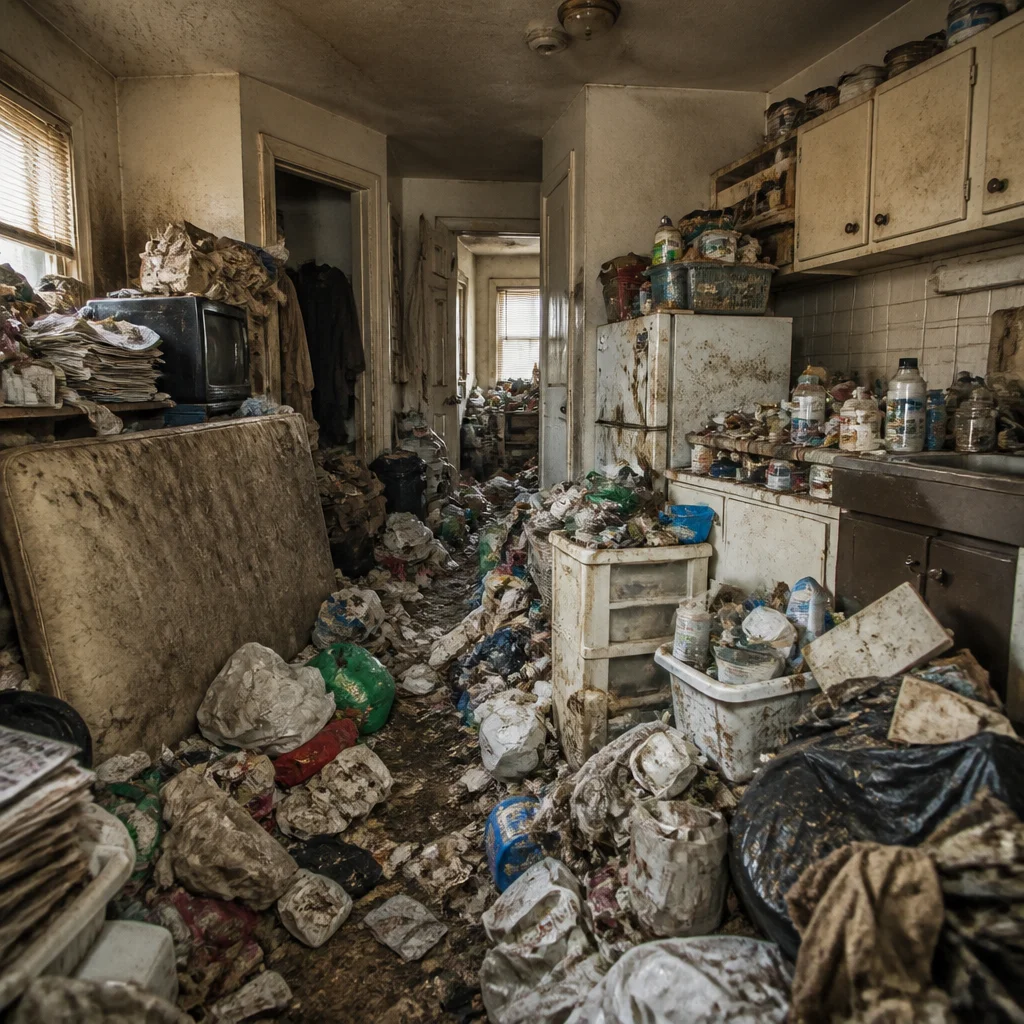
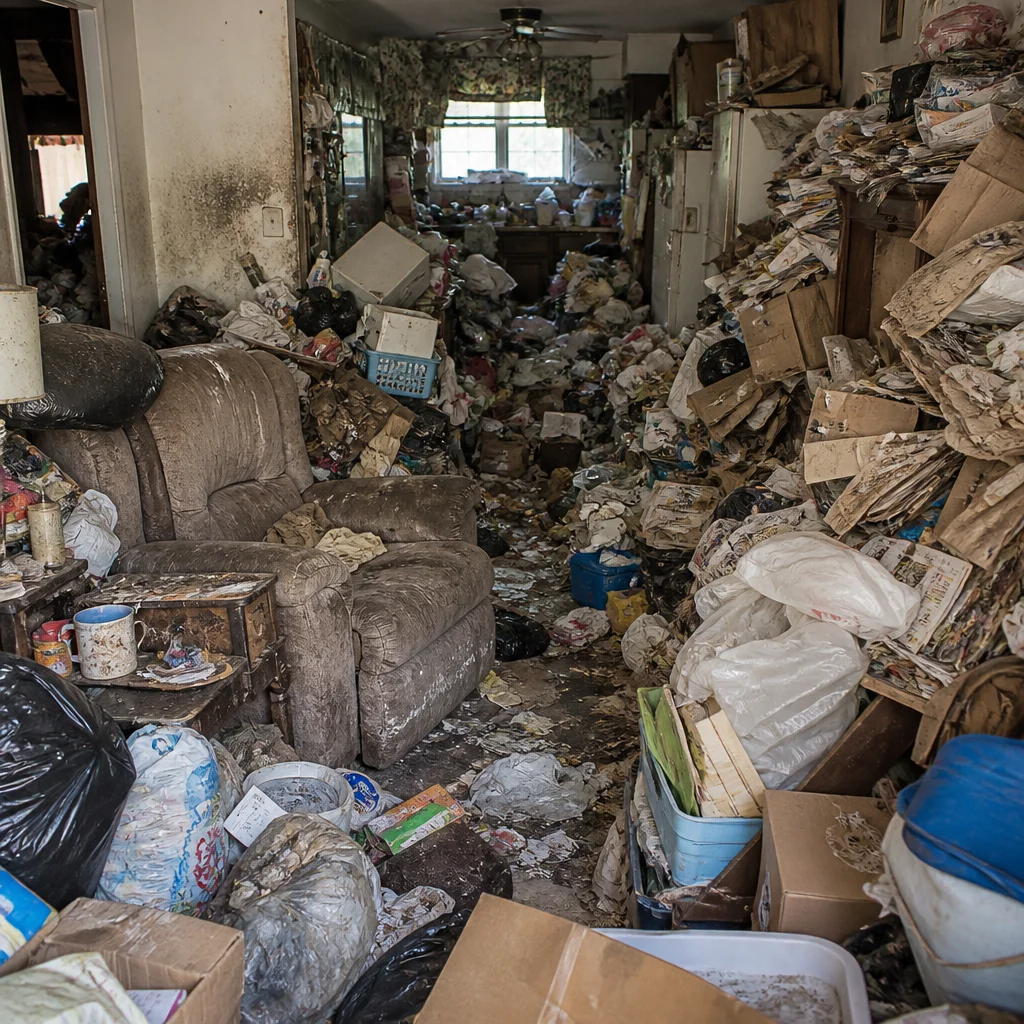
Hoarding environments present a distinct category of biohazard risk. As clutter accumulates over time, organic matter, pests, mold, and human or animal waste often become embedded throughout the space. The combination creates conditions that are genuinely dangerous for anyone who enters without protection.
The hidden hazards in cluttered homes go well beyond what is visible on the surface. Rodent droppings carry hantavirus. Mold spores trigger serious respiratory complications. Pest infestations introduce bacteria and allergens that spread through ventilation systems. These hazards do not resolve on their own and worsen with time.
Hoarding-related biohazard cleanup requires both technical skill and a compassionate approach. The individual living in the space often has a complex emotional relationship with their belongings. Professional teams trained in this area balance thoroughness with sensitivity, working in a way that respects the person while addressing the health risks.
Sewage and Waste Contamination
Sewage backups represent one of the fastest-developing biohazard scenarios. Blackwater, which contains human waste and the pathogens it carries, can flood a space within minutes. The EPA classifies it as a Category 3 water intrusion, the most hazardous classification, requiring professional remediation and disposal.
Bacteria such as E. coli, salmonella, and norovirus survive in sewage and transfer readily to any surface the water contacts. In multi-unit buildings, a backup in one unit can affect shared plumbing, adjacent spaces, and communal areas. The contamination spreads faster than most people expect, which is why response time is critical.
Flooring, drywall, insulation, and personal belongings that have been exposed to blackwater are typically not salvageable through cleaning alone. Professional remediation teams assess what can be sanitized and what must be removed and disposed of according to regulatory standards.
Chemical and Industrial Spills
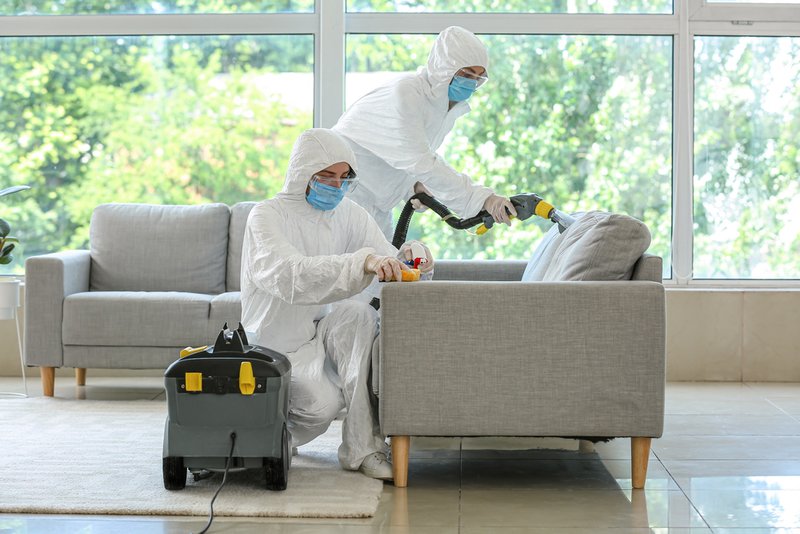
Not all biohazard situations involve biological materials. Chemical spills in residential settings, such as improperly stored pesticides, cleaning agents, or fuel, create hazardous conditions that require professional assessment and cleanup. In industrial or commercial environments, the scale and complexity of these incidents increase significantly.
Exposure to chemical contaminants can cause immediate harm through skin contact, inhalation, or ingestion. It can also create longer-term environmental hazards if materials seep into flooring, soil, or drainage systems. Regulatory requirements for chemical spill cleanup vary by material type and location, making professional involvement essential.
The broader category of biohazard risk includes any scenario where an untrained person faces potential exposure to infectious or toxic materials. That definition covers more situations than most people realize.
Biohazard Cleanup Services Built for Every Scenario
At Emergency Cleanings, we respond to the full range of biohazard situations with trained teams, proper equipment, and strict regulatory compliance. Our same day emergency cleaning covers urgent scenarios that cannot wait. We also provide sewage backup cleanup, spill cleanup, and industrial cleanups for larger-scale or commercial needs.
Frequently Asked Questions
Who calls for biohazard cleanup services most often?
Residential property owners are the biggest group, usually after an unattended death, a serious injury at home, or a sewage backup that reached living space. Landlords call when a tenant leaves behind waste or heavy contamination, and adult children call on behalf of a parent whose home has become unsafe.
How fast can a crew get to the property?
Emergency Cleanings responds the same day in most areas. You get a two hour arrival window and a text with the technician’s ETA once they are on the way. Sewage and decomposition get worse by the hour, so an early call means less material has to be removed.
What falls outside biohazard cleanup?
Covered work includes after death scenes, blood and bodily fluid cleanup, feces and urine cleanup, sewage backup cleanup, hoarding cleanup, and chemical spill response, with disposal records you can request. Mold remediation, water damage restoration, fire restoration, and plumbing repair are separate trades and are not part of this work.
How does pricing work, and is the visit discreet?
The assessment is free. A technician scopes the contamination on site, then the price is set as one flat fee locked before any work begins. Financing is available and larger jobs can be phased. Crews keep the reason for the visit between themselves and the customer.
Call Emergency Cleanings at 888-560-8488 for a same-day response. The assessment is free, a technician scopes the property on site, and your flat price is locked in before anyone starts working.