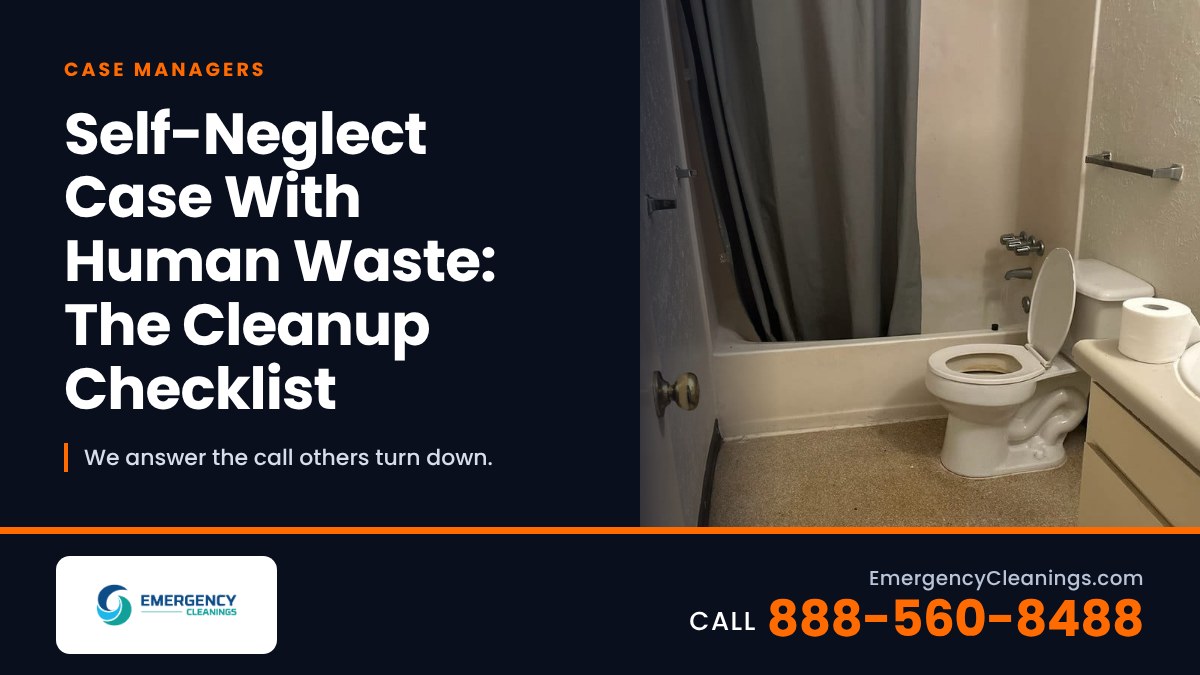
A self neglect home cleanup with feces or urine present runs from consent and scoping through documentation, a stay or relocate decision and re-inspection. Emergency Cleanings responds the same day, sends a technician to scope the home, and returns a photo-documented written scope and an invoice your file can hold.
Self-neglect is the bulk of the APS caseload. The APS Technical Assistance Resource Center, working from federal NAMRS data, reports that APS investigates more self-neglect allegations by far than any other type of maltreatment, and that people with self-neglect allegations made up 54% of APS clients in FFY 2022. This checklist covers the case where human waste is in the home and the client still lives there.
1. Before You Call a Vendor: Consent and Capacity
These calls belong to your agency, never the cleanup vendor.
- Check your agency’s consent policy. Document whether and how the client agreed.
- Note any capacity question. If capacity is in doubt, follow your agency’s process before scheduling, and record who holds authority.
- Confirm who signs the work authorization. The vendor needs one named person who can approve the scope.
2. What the Vendor Needs From You
- Access. Who lets the crew in, plus any building rules on entry times.
- One contact. Your direct line and a backup.
- Scope photos. Photos of each affected room help plan the visit. The technician still scopes on site.
- Client considerations. Mobility limits and pets, plus any items the client wants kept.
For vendor screening, see what case managers should ask before assigning a cleanup vendor.
3. What Goes in the File
Ask for these up front, since a supervisor or court may read the file later.
- Before and after photos of each room in the scope.
- A written scope listing each room and what will be removed or disinfected.
- One flat price agreed before work starts. A technician scopes on site, and the price does not move afterward.
- An invoice that fits your approval process. If the honest scope exceeds your limit, route it for higher approval. Never split one job into smaller invoices to stay under a threshold.
- Disposal records you can request for soiled materials that leave the home.
4. Client Stays or Temporarily Relocates
The goal is that the client keeps their housing. Where they sleep during the work is your case decision.
- Staying home can work for a phased job, one room at a time, with a clean bathroom and sleeping area set up first.
- Temporary relocation may make sense when waste covers most of the living space or the client’s health makes exposure a concern. Line up placement before the crew arrives.
- Either way, give the client and any landlord the schedule in writing.
If an eviction notice is already in play, our post on squalor and an eviction notice covers the landlord side.
5. During the Cleanup
- Soiled porous items such as mattresses and carpet are usually removed. Agree on that list with the client first.
- Hard surfaces are cleaned and disinfected, and odor is treated.
- Expect the crew to flag anything outside the written scope and call you before doing more.
A note on OSHA. In a 2007 interpretation letter, OSHA stated that urine and feces are not “other potentially infectious materials” under the Bloodborne Pathogens Standard unless they are visibly contaminated with blood. Base your justification on exposure risk to your client instead.
6. Re-Inspection and Closing the File
- Walk the home against the written scope, room by room.
- Compare after photos to before photos and save both to the file.
- Confirm the landlord or code officer has what they need.
- Schedule a follow-up visit, since self-neglect can recur, and keep the vendor’s written scope on file in case a second self neglect home cleanup is needed.
Emergency Cleanings handles feces and urine cleanup and adds hoarding cleanup when clutter is part of the same home.
Frequently Asked Questions
Who decides whether the client consents to the cleanup?
You and your agency do, under your agency’s consent and capacity policy. The vendor needs a named person who can sign the work authorization.
Can the client stay in the home during a feces and urine cleanup?
Often, yes, when the work is phased and a clean bathroom and sleeping area are set up first. When waste covers most of the home, temporary relocation may be the better case decision.
Does the OSHA Bloodborne Pathogens Standard cover feces and urine?
Not by themselves. OSHA’s 2007 interpretation letter says urine and feces are not other potentially infectious materials unless they are visibly contaminated with blood.
What documents should the vendor give me for the file?
Ask for before and after photos and a written scope with one flat price agreed before work starts. Then request the invoice along with any disposal records.
Get the Home Scoped Today
Call Emergency Cleanings at 888-560-8488 for same-day response and a free on-site assessment. A technician photographs and scopes the home, and a project coordinator calls you with one flat price locked before work starts.