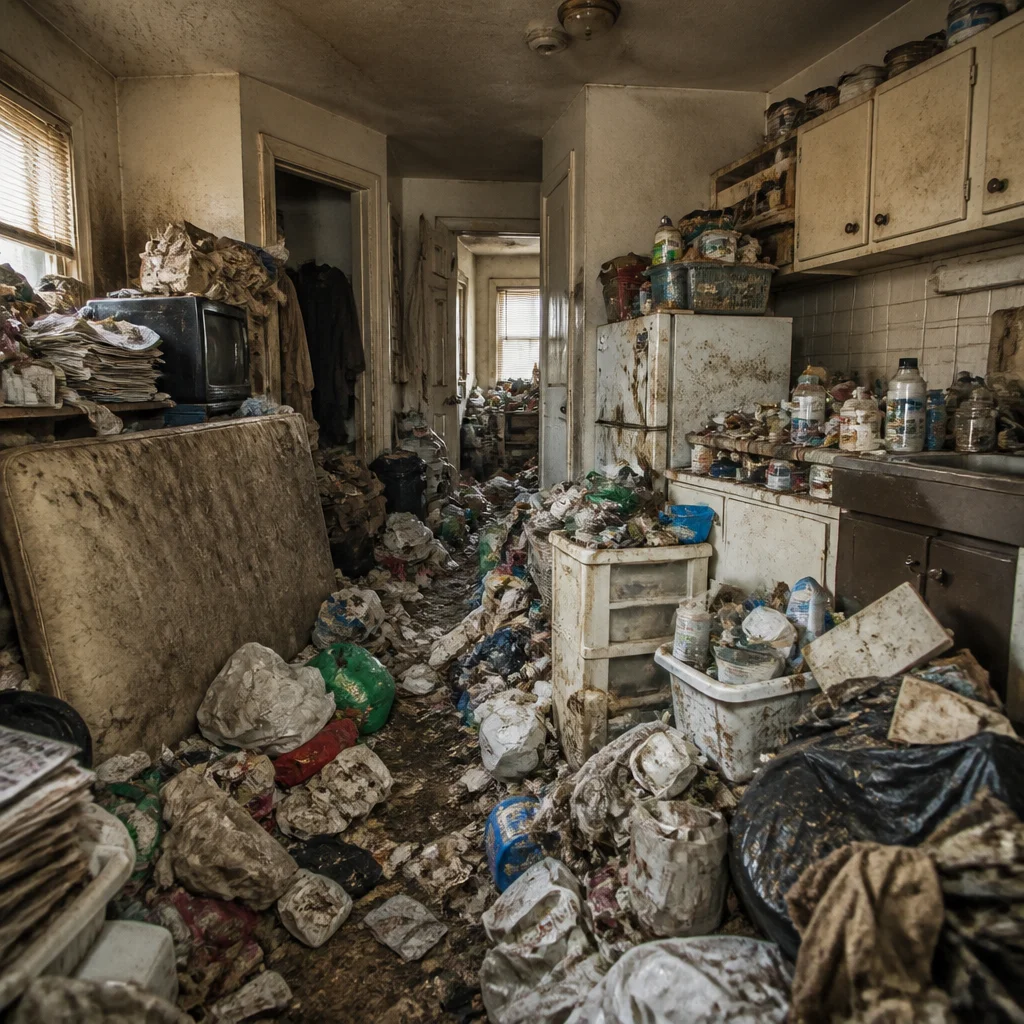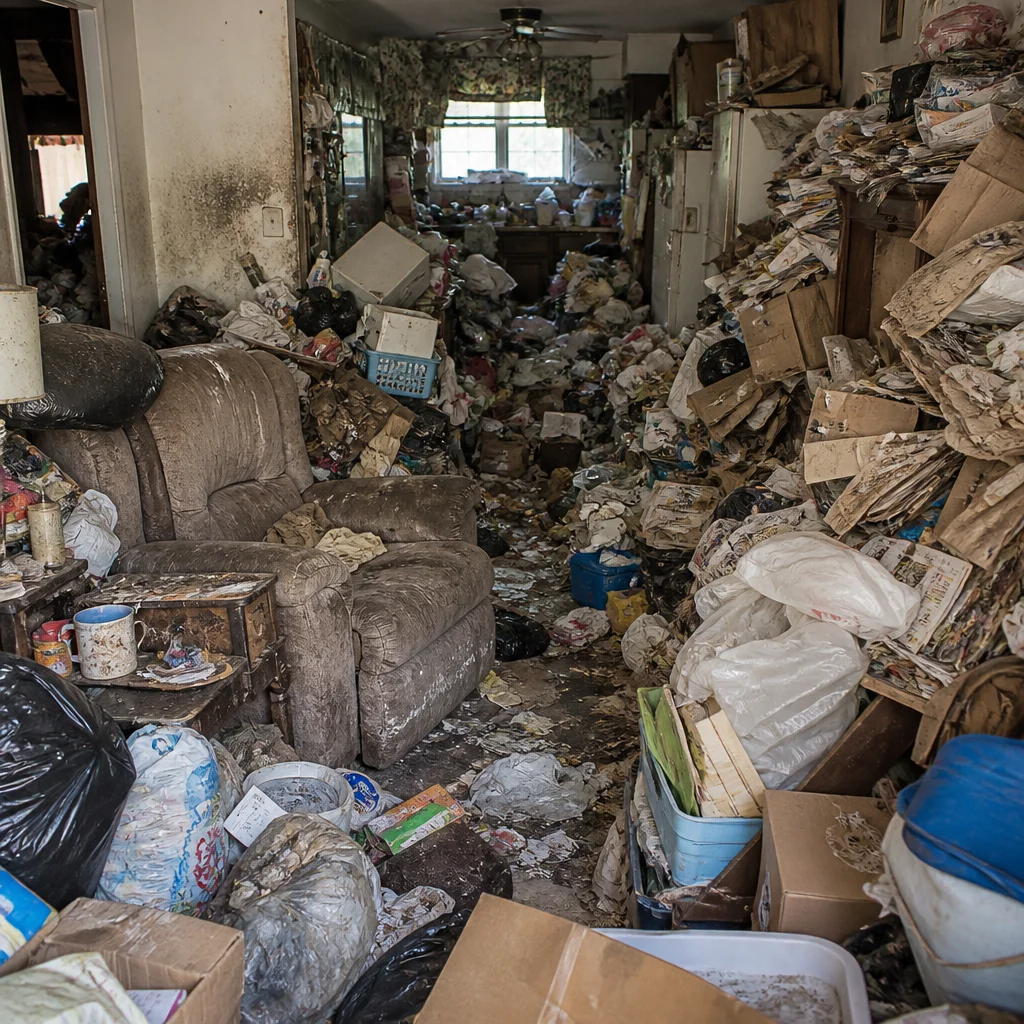

Hoarding cleaning safety protocols are the written procedures a professional crew follows so a heavily cluttered property can be cleared without anyone being injured or exposed to contamination. They cover protective equipment, a hazard walkthrough before anything is touched, containment and regulated disposal of contaminated material, air filtration, and a controlled order of removal. Emergency Cleanings coordinates hoarding cleanup crews that work to these protocols nationwide. The price is a flat fee locked after a free on-site scope.
When a space becomes overwhelmed with accumulated items, the risks often go far beyond what is visible. Hoarding cleaning services isn’t simply an extension of routine housekeeping. In many cases, they fall under biohazard remediation, requiring strict safety procedures to address environmental, structural, and biological hazards that develop over time.
These environments frequently contain contaminants such as mold, waste, and airborne particles, along with physical dangers like unstable piles and blocked exits. Because of this, professional cleanup teams follow structured protocols aligned with standards set by organizations such as OSHA and the EPA. These protocols are designed to protect both the people involved and the integrity of the space throughout the cleanup process.
Why Hoarding Cleaning Services Follow Strict Safety Protocols
Hoarding situations often evolve gradually, which can make the risks less obvious at first. Over time, however, layers of accumulation can conceal serious hazards. Air quality may decline, structural stress may increase, and biological contaminants may spread beneath the surface.
Without proper safety measures, disturbing these environments can release harmful particles into the air, shift unstable materials, or expose hidden dangers. A structured approach ensures that cleanup is carried out safely, reducing the risk of injury, contamination, and further damage.
Personal Protective Equipment in Hoarding Cleaning Services
One of the first steps in any professional cleanup process is the use of appropriate personal protective equipment. This serves as the primary barrier between workers and potentially hazardous materials.
Depending on the severity of the environment, professionals may wear full-body protective coveralls designed to resist chemical and biological exposure. Respiratory protection is also essential, particularly in spaces where mold spores, ammonia from waste, or airborne pathogens are present. In these cases, N95 masks or full-face respirators help reduce inhalation risks.

Hand protection is another critical component. A layered glove system is often used, combining durable outer gloves with inner nitrile gloves to prevent contact with contaminants. Eye protection may also be necessary when there is a risk of splashes or airborne debris. These measures allow cleanup teams to work safely in conditions that would otherwise pose serious health risks.
Hazard Assessment in Hoarding Cleaning Services
Before any items are removed, a thorough assessment of the space is conducted. This step helps identify risks that may not be immediately visible and allows teams to plan a safe and controlled cleanup process.
Structural concerns are often a primary focus. Accumulated weight can cause floors to weaken or walls to shift, creating instability that must be addressed before movement begins. Access points are also evaluated to ensure there are clear pathways for entry and exit, which is essential in case of emergencies.
Other hazards may include pest infestations, which can introduce additional health risks, as well as sharp objects hidden within piles. Broken glass, needles, or other dangerous materials are not uncommon and require careful handling. Identifying these risks early helps prevent injuries and ensures that the cleanup process proceeds safely.
Biohazard Cleanup Protocols in Hoarding Cleaning Services
In many hoarding situations, biological contamination is present at varying levels. Waste, decomposition, and prolonged unsanitary conditions can introduce harmful bacteria and pathogens that require specialized treatment.
Professional protocols focus on proper containment and disposal of contaminated materials. Items exposed to bodily fluids or other biohazards are handled as regulated waste and must be disposed of according to established guidelines. This prevents further exposure and ensures compliance with safety standards.
Cleaning itself involves more than surface-level treatment. Professionals use EPA-registered disinfectants designed to neutralize pathogens, rather than relying on standard household products. Moisture control is also addressed, particularly in areas affected by mold or fungal growth. This may involve antimicrobial treatments and the use of industrial equipment to reduce humidity and prevent further spread.
Environmental Control in Hoarding Cleaning Services
Disturbing accumulated materials can release dust, spores, and contaminants into the air. Managing this aspect of the environment is essential to maintaining safety during the cleanup process.
Professional teams often use high-efficiency filtration systems to capture airborne particles and improve air quality. These systems are capable of trapping extremely small contaminants, reducing the risk of inhalation.
In more severe cases, airflow may be carefully controlled to prevent contaminated air from spreading to unaffected areas. This can include creating pressure differentials that keep hazardous particles contained within the cleanup zone. Odor management is also addressed, particularly in environments affected by waste, where ammonia levels can become harmful if left untreated.
Systematic Approach in Hoarding Cleaning Services
A structured method is critical when working in environments where items are densely packed and potentially unstable. Removing materials without a clear plan can lead to collapses or further contamination.

Professionals typically begin by establishing safe access points, ensuring that exits are clear before proceeding further. This creates a secure pathway in case immediate evacuation is needed. From there, items are removed in a controlled manner, often starting from the top of accumulated piles to reduce the risk of shifting or collapse.
Designated areas may also be set up outside the primary space to sort and decontaminate items. This allows for the careful handling of belongings that may still hold value while maintaining a clean and organized workflow. This approach supports both safety and efficiency throughout the cleanup process.
Supporting Emotional Safety During Hoarding Cleaning Services
While physical safety protocols are essential, the emotional impact of cleanup is also an important consideration. These situations are often tied to complex personal experiences, and the process of removing items can be overwhelming.
A thoughtful approach helps reduce stress and supports a more positive outcome. This may involve working at a manageable pace, respecting personal boundaries, and coordinating with additional support when needed. Creating a structured and respectful environment during cleanup can help prevent setbacks and support long-term progress.
A Safe and Structured Path Forward
Hoarding cleaning services rely on carefully developed safety protocols to manage environments that involve multiple layers of risk. From protective equipment and hazard assessments to air quality control and biohazard remediation, each step is designed to restore safety while minimizing harm.
Frequently Asked Questions
How fast can a crew reach a client’s property?
Call and you get a same-day response in most cases. Once a crew is dispatched you get a two-hour arrival window and a text with the ETA when the technician is on the way.
What documentation does an agency get for the client file?
You can request the written scope from the on-site assessment, the flat price quoted before work began, before and after photos, and disposal records for material hauled away. Proof of licensing and insurance for the assigned technicians is available on request. Say what your file needs at the assessment.
How does a case manager engage Emergency Cleanings for a client?
Call the line, describe the property and who is authorizing the work, and a local technician is scheduled for the assessment. The flat fee is set after that on-site scope, so the number in your approval packet is the number billed. Big jobs can be phased across visits when an approval cycle requires it, and financing is available.
Is feces and urine contamination part of a hoarding cleanup?
Yes. Heavy animal or human waste is handled as biohazard work, with containment and regulated disposal rather than ordinary cleaning, and it can be booked on its own as feces cleanup. Mold remediation and water or fire damage restoration are not services offered.
At Emergency Cleanings, we coordinate professional hoarding cleanup services that follow strict safety standards, including proper containment, regulated disposal, and thorough decontamination. Call 888-560-8488 for a same-day response on a client property. The assessment is free, a local technician scopes the job on site, and the flat price is locked before any work begins.