Cold pushes encampments on commercial property into doorways, loading docks, parking structures and empty buildings, and fire risk climbs. Call local outreach first, follow your city’s notice rules, and plan for personal belongings. Then Emergency Cleanings can handle the winter encampment cleanup of what’s left at one flat price set before work starts.
The first hard freeze changes a property overnight. The tent by the back fence is now pressed against a dock door. You need it resolved in a way you can defend later.
Where People Go When It Gets Cold
People look for anything that blocks wind, usually:
- Recessed doorways and entry vestibules
- Loading docks and dumpster enclosures
- Stairwells and lower levels of parking structures
- Vacant buildings and empty suites with a weak door
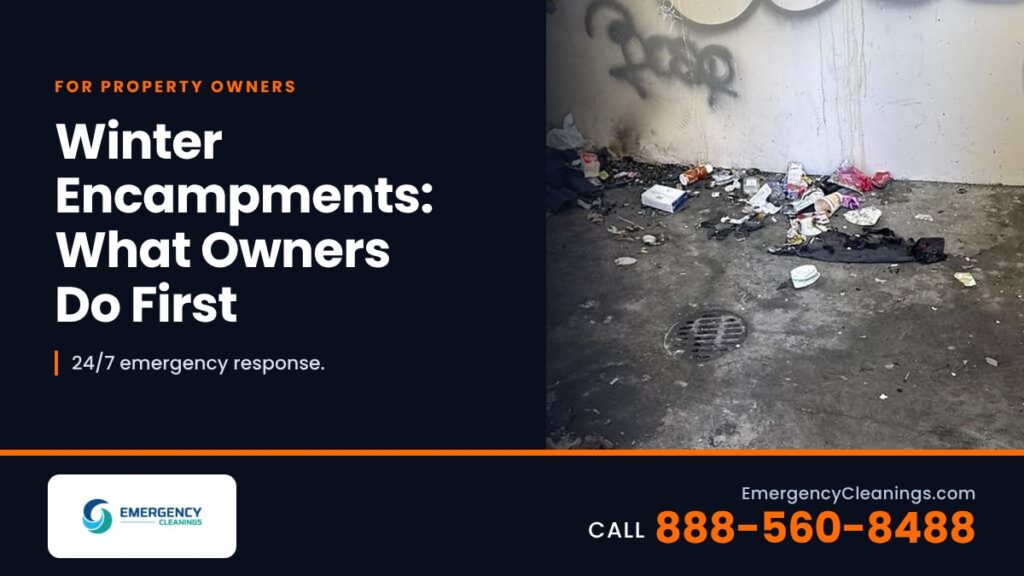
Enclosed spots trap more. Waste piles up in a stairwell corner, and needles end up under bedding where nobody sees them.
Fire Risk Goes Up
Propane heaters, candles, camp stoves and small open fires show up in places never built for them. In a vacant building full of debris, a fire can reach occupied space fast. If you see a flame or heater near bedding, call 911.
Start With Outreach
Call outreach before you think about removal. Many cities add shelter beds and warming centers in cold weather, and outreach teams often know where a bed is open tonight. Dialing 211 also connects people to local shelter help.
Follow Notice Rules and Protect Belongings
Notice rules differ by state and city. Some places expect posted notice for a set number of days. Others handle private property removals through police as trespass. Ask your city or the police non-emergency line what applies to your lot before anyone touches a tent.
In Lavan v. City of Los Angeles, the Ninth Circuit ruled in 2012 that Los Angeles could not summarily seize and destroy unabandoned property homeless people had left briefly unattended on Skid Row. The injunction still let the city act right away on abandoned items and immediate health or safety threats. The ruling bound a city, and private owners answer to state law, so ask your attorney how long to hold property.
A workable plan is to bag and photograph personal items, then store them for a set period with a contact number posted on site.
Cleaning Up What’s Left
Once people have moved on, a crew typically handles:
- Needles and other sharps, in puncture-resistant containers
- Human waste and soiled bedding
- Burned material, pallets and tarps
- Trash and abandoned debris
Emergency Cleanings sends a vetted local crew in protective gear. A technician photographs the site first, then a project coordinator calls with the exact price and plan. You get disposal records you can request. See our homeless encampment cleaning service, or read who pays for encampment cleanup.
Frequently Asked Questions
Can I clear an encampment from my commercial property in winter?
Usually, once you follow your state and city rules. Call outreach first so people have somewhere warm to go.
What should I do with belongings left behind?
Bag and photograph personal items and store them for a set period with a posted contact number. Your state may set its own rules, so check with an attorney.
Is winter encampment cleanup more dangerous?
Often. Enclosed spaces hold more waste and hide needles in bedding. Emergency Cleanings plans the work during a free on-site assessment so the crew knows what it’s walking into.
Get the Site Cleared Before the Next Cold Snap
Call 888-560-8488 once outreach has made contact and the notice period is done. We offer same-day response and a free on-site assessment, and you get a written scope with one flat price locked before any work starts.