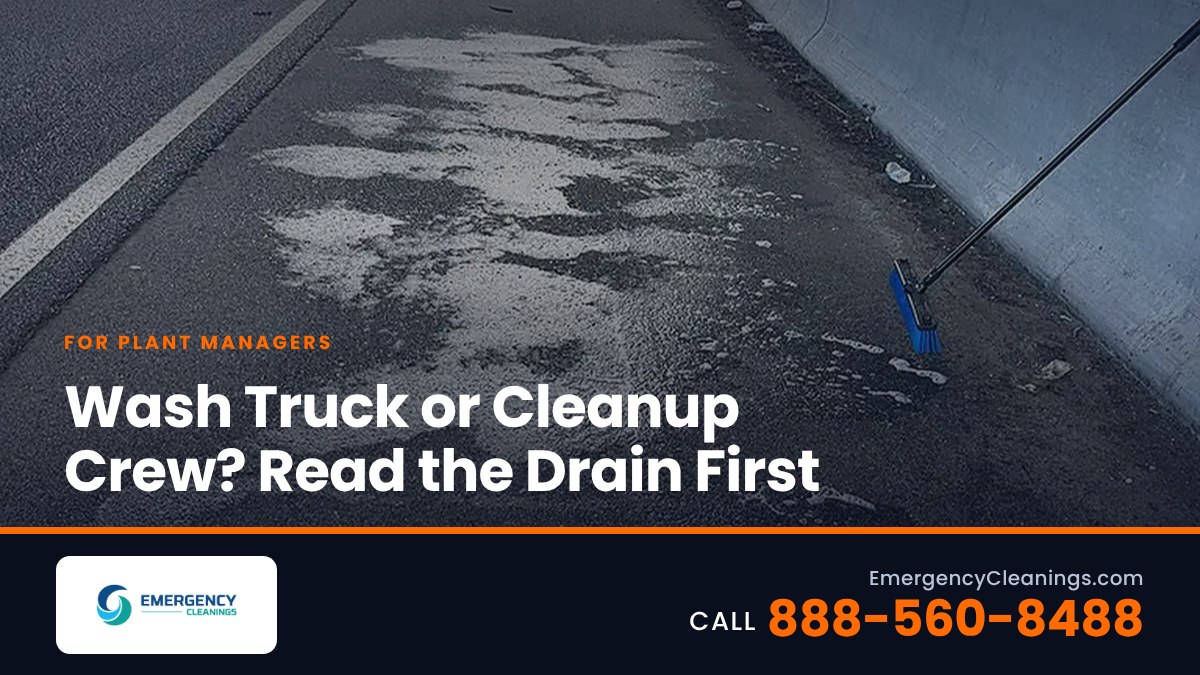
An industrial pressure washing service is enough for exterior walls, docks, lots and routine degreasing where the buildup is ordinary dirt and grease. Once the job involves hazardous residue, combustible dust, oil near floor drains, confined spaces, contaminated equipment or waste that needs proper disposal, call an industrial cleanup crew. Emergency Cleanings coordinates vetted local industrial crews nationwide at one flat price locked before work starts.
The wash vendor can come Tuesday and the quote is easy to approve. Before you cut the PO, picture what the water will pick up off that floor. Then follow it to the nearest drain.
When a Pressure Washing Vendor Is Enough
Plenty of plant work fits a standard wash truck, like siding, loading docks, parking areas, dumpster pads and fleet vehicles. So does routine degreasing of non-hazardous buildup, as long as the runoff is handled the way your permit requires.
A wash vendor is usually the right call when:
- The surface is outside or easy to reach from the ground
- The buildup is dirt, light grease, mildew or bird droppings
- No detergents or harsh chemicals go into the water, or the vendor captures the water
- Nobody has to enter a tank, pit or vault
- What comes off can go out with regular trash
A good industrial pressure washing service will ask where the runoff goes before it sends a quote.
Where the Washwater Goes
The NPDES permit program was created in 1972 by the Clean Water Act to regulate pollutants discharged to waters of the United States. EPA says most industrial facilities get permit coverage through their state, and EPA remains the permitting authority in a few states, most territories and most Indian country.
EPA’s 2021 Multi-Sector General Permit shows how tight washing rules get. It expired in February 2026, and facilities it already covered stay under its terms until EPA issues a replacement. Pavement wash water is allowed only when no detergents or hazardous cleaning products are used. The water also can’t touch oil and grease deposits or other toxic or hazardous materials unless those residues are first cleaned up using dry methods. External building washdown and power wash water carry the same detergent condition. Any non-stormwater discharge the permit doesn’t list is not authorized under it.
So an oil stain by a catch basin gets absorbed and swept up before anyone sprays. State permits set their own terms, so check your facility’s permit and stormwater pollution prevention plan before a wash truck shows up.
When the Job Needs an Industrial Cleanup Crew
- Hazardous residue. Chemical or process residue, or anything that leaked from a drum with a hazard label.
- Combustible dust. Settled dust on beams, ductwork and equipment tops.
- Oil near drains. Leaks or spills close to floor drains, trench drains or catch basins.
- Confined spaces. OSHA lists tanks, vessels, silos, storage bins, hoppers, vaults and pits as examples. A permit-required space can hold a hazardous atmosphere.
- Contaminated equipment. Machines that need decontamination before maintenance or resale.
- Waste disposal. Sludge, absorbents and debris that can’t ride out in the dumpster.
Combustible Dust Changes the Method
High-pressure air or water aimed at dust can throw it into the air. OSHA’s safety bulletin on combustible dust says to “use cleaning methods that do not generate dust clouds, if ignition sources are present.”
OSHA’s 2023 Combustible Dust National Emphasis Program allows compressed air on some dusts only with safeguards in place. Those include rigorous ignition source control, pressure under 30 psi, chip guarding and protective equipment. The same directive lists vacuuming, sweeping and water wash-down as ways to remove settled dust. Some metal dusts react with water, so confirm compatibility first. Our post on combustible dust housekeeping covers depth thresholds and where inspectors look.
A Quick Decision Table
| Situation | Who to call |
|---|---|
| Siding, docks or lots with ordinary dirt | Pressure washing vendor |
| Routine degreasing of non-hazardous buildup, runoff handled per your permit | Pressure washing vendor |
| Oil or chemical residue near a drain | Industrial cleanup crew |
| Combustible dust on overhead surfaces | Industrial cleanup crew |
| Tank, pit, vault or other confined space | Industrial cleanup crew |
| Equipment with process or chemical contamination | Industrial cleanup crew |
| Nobody knows what the residue is | Industrial cleanup crew, assessment first |
How the Industrial Job Gets Scoped
With Emergency Cleanings, a technician walks the site and photographs every area. A Project Coordinator then calls with the exact final price and a step-by-step plan. That price doesn’t change once the final scope is set, which keeps the PO clean. Work can be phased by area at a fixed price per phase to fit an outage window. You get disposal records you can request for your file. Settle prequalification and lockout/tagout paperwork before mobilization. The industrial cleanups page lists what the service covers.
Frequently Asked Questions
Can pressure washing water go down a storm drain?
Only when your stormwater permit allows it. EPA’s 2021 industrial stormwater permit allows pavement and building wash water only when no detergents or hazardous cleaning products are used, and pavement wash water can’t contact oil, grease or hazardous materials unless those are cleaned up dry first.
Can we pressure wash combustible dust off beams?
OSHA advises cleaning methods that do not generate dust clouds when ignition sources are present. Its 2023 National Emphasis Program allows compressed air on some dusts only with safeguards such as ignition control and pressure under 30 psi, and lists vacuuming, sweeping and water wash-down as removal methods.
Who handles oil near a floor drain?
An industrial cleanup crew. The residue should be contained and cleaned up with dry methods before any washing, and the waste needs proper disposal.
Can the work fit our outage schedule?
Yes. Emergency Cleanings can scope the job ahead of time and phase it by area at a fixed price per phase, so the crew works the window you already have.
Get the Right Crew on the PO
If you aren’t sure which side of the table your job falls on, call 888-560-8488. We offer same-day response and a free on-site assessment, and you get a written scope with one flat price locked before any work starts.