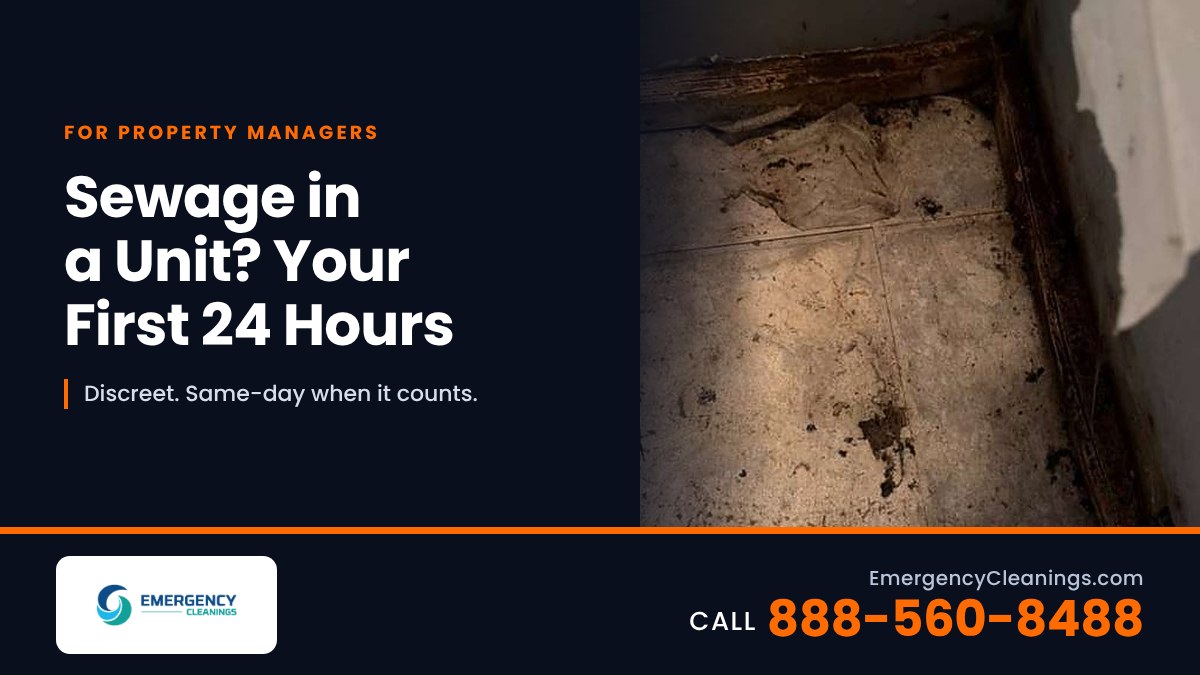
In the first 24 hours of an apartment sewage backup cleanup, stop water use on the affected stack, get a plumber to clear the line, keep residents out, notify tenants and photograph everything. Then bring in a sewage cleanup crew to remove contaminated porous materials and disinfect. Emergency Cleanings can send a vetted local crew the same day at one flat price, while plumbing, structural drying and rebuild stay with other trades.
The call usually comes from the ground floor. A tenant says the tub is filling with something brown, or the laundry room drain is bubbling over. Residents are already asking if the building is safe, and the owner wants an update by lunch.
Hour 0 to 1: Stop the Water and Call the Plumber
In a multifamily building, the units above a backup drain into the same line. Every flush upstairs can push more sewage out at the lowest fixture.
- Stop water use on the stack. Ask residents on the affected line to hold off on flushing, showers and laundry until the plumber gives the all clear.
- Call your plumber first. The blockage has to be cleared before cleanup makes sense, and we don’t do plumbing. Your plumber can tell you whether it sits in the building’s line or the city’s main.
Hour 1 to 2: Keep Residents Out
The CDC’s floodwater safety guidance says floodwater may contain sewage and that eating or drinking anything it contaminates can cause diarrheal disease. It also lists wound infections, skin rash and gastrointestinal illness among the risks of contact. The EPA notes that sewer overflows that back up into homes threaten public health.
Close off the unit and tape off any hallway or laundry room it reached. Keep kids and pets away. Anyone with an open cut stays out.
If the unit can’t be lived in tonight, the tenant needs somewhere to sleep. Your lease and local housing code decide who arranges that, and the rules vary by state and city. Get the owner’s OK before you promise anything.
Hour 2 to 4: Notify Tenants and Document for the Owner
Send written notice by text or email so you have a time stamp. Tell the affected unit what happened and what comes next. Upstairs units on the same stack need a note to keep water off until you clear them.
Then take photos before anything gets moved:
- Wide shots of each room, then close-ups
- The water line on walls and cabinets
- The drain where it came up
- The plumber’s notes on the cause
The owner and the insurer will both want this file. Our sewage backup insurance claims guide covers what adjusters usually ask for.
Hour 4 to 24: Bring In the Sewage Cleanup Crew
A proper apartment sewage backup cleanup starts with tearing out what soaked up the waste. The CDC says to throw away items that cannot be disinfected, like wall coverings, cloth, rugs and drywall. Then the crew disinfects hard surfaces and treats the odor. You get disposal records you can request for the owner’s file.
With Emergency Cleanings, a technician does a free on-site assessment and photographs the damage. You get a 2-hour arrival window and a text when the tech is on the way. A project coordinator then calls with the exact flat price and plan. Once the owner approves, work often starts the same day, and the price holds once the final scope is set. See our sewage backup cleanup service page for what the crew handles. For retail or office space, see the commercial sewage backup guide.
These are separate trades you’ll book around the cleanup:
- Plumbing repair
- Water damage restoration and structural drying
- Drywall, flooring and other rebuild work
Tenant Belongings and Renters Insurance
Residents will ask who pays for their couch. The NAIC states that your landlord’s insurance doesn’t cover the things you own. Point tenants to their own renters insurance carrier, and don’t promise coverage. Whether sewer backup is covered depends on the policy.
Ask tenants to photograph their damaged belongings before anything is thrown out. The crew can set tenant items aside until the tenant decides.
When Residents Can Move Back In
A unit is ready once the line is fixed, cleanup and disinfection are done, and any drying or repairs your local code requires are finished. A small backup on tile can turn around fast. When sewage soaked into drywall and subfloor, a restoration contractor dries the structure before rebuild starts. Hold off on a move-in date until every trade signs off.
Frequently Asked Questions
Does Emergency Cleanings fix the plumbing?
No. Call your plumber first to clear the blockage. Emergency Cleanings handles the sewage cleanup, including removal of contaminated porous materials, disinfection and odor control.
Do tenants upstairs need to stop using water?
If they share the affected stack, yes, until the plumber clears the line. Each flush or shower upstairs can push more sewage out at the lowest drain.
Will the building’s insurance cover tenant belongings?
The NAIC says a landlord’s insurance does not cover a renter’s personal belongings. Tenants should contact their own renters insurance company, and whether sewer backup is covered depends on the policy.
How soon can a unit be reoccupied?
After the line is repaired, cleanup and disinfection are complete, and any drying or repairs required by local code are done. A small backup on hard floors can be quick, while sewage that soaked into drywall or subfloor takes longer.
Get the Unit Cleaned and Back in Service
Call 888-560-8488 once your plumber has the line clear, or while they’re on the way. We offer same-day response and a free on-site assessment, and you get a written scope with one flat price locked before any work starts.