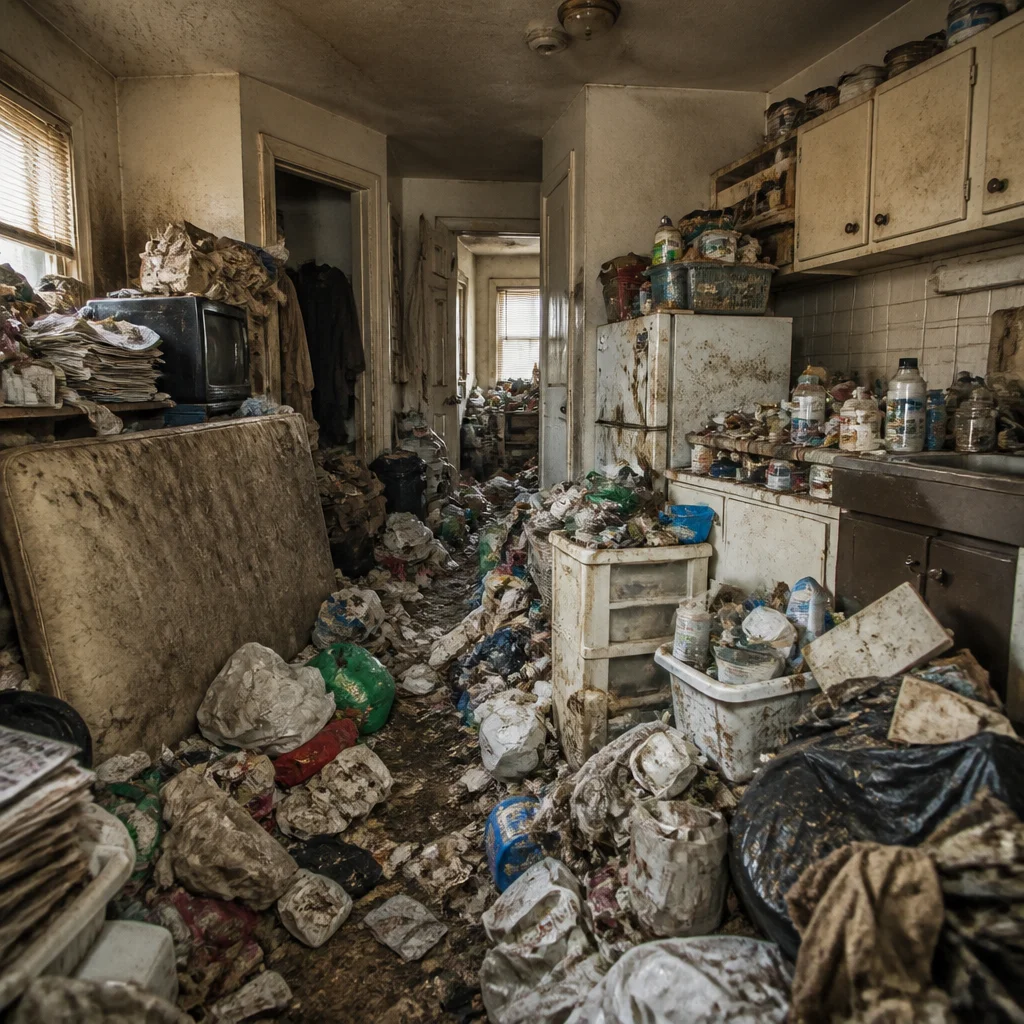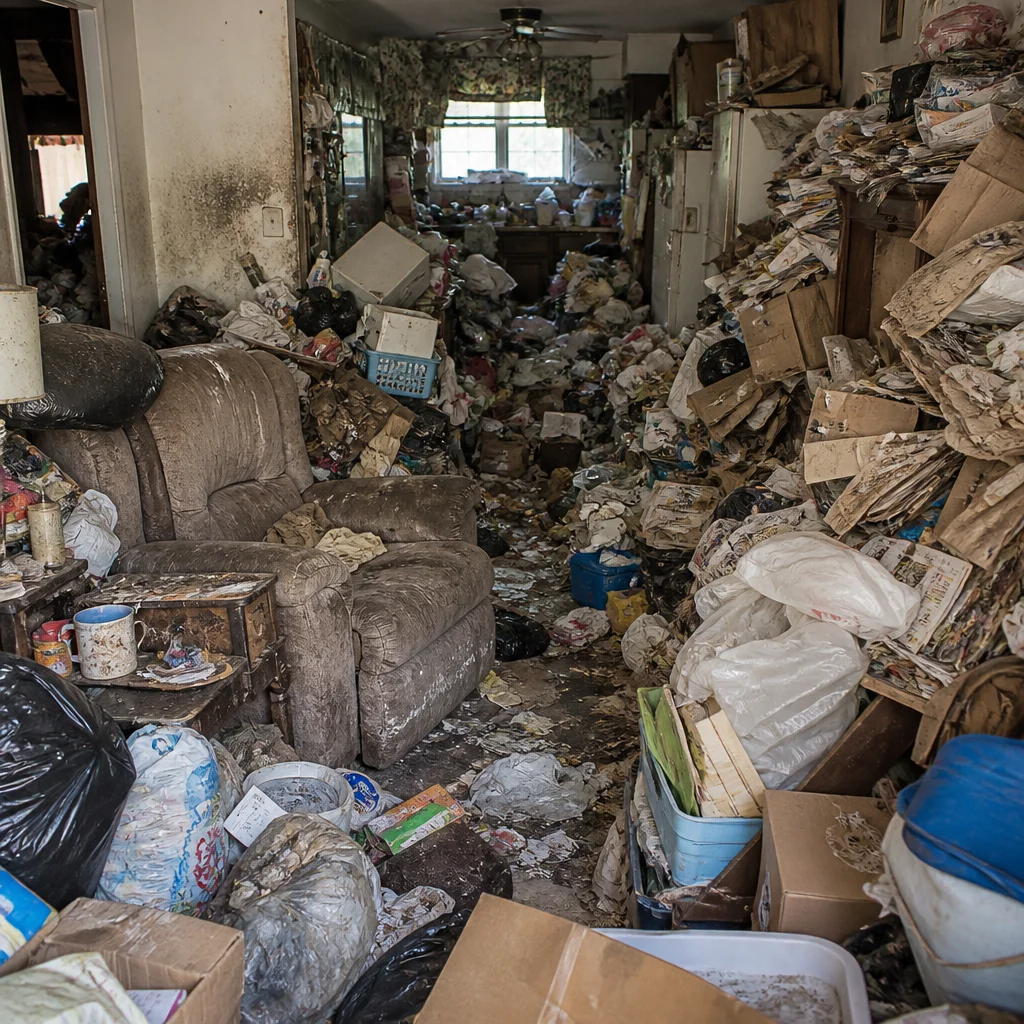

Prepper hoarding disorder is what people call it when emergency stockpiling outgrows the space available to store and rotate it, so the supplies themselves become the hazard. It shows up in homes that started with sensible preparedness and now have blocked exits and rooms nobody can walk through. Emergency Cleanings handles this as a hoarding cleanup project, with a free on-site scope and a flat price locked before work begins.
Stockpiling supplies can feel like a responsible response to uncertainty. Extra food, bottled water, tools, or medical items often start with good intentions tied to safety and self-reliance. Over time, preparation can quietly cross a line into disaster hoarding, where accumulation grows faster than organization or use. That shift usually happens gradually, making it hard to recognize until daily living becomes difficult or unsafe.
This type of hoarding often develops during periods of heightened fear, natural disasters, economic instability, or prolonged emergencies. Studies following major events such as hurricanes and pandemics show sharp increases in household stockpiling behaviors, especially among people already experiencing anxiety. When fear remains long after the immediate threat, supplies continue to pile up. Awareness helps separate reasonable preparedness from patterns that increase risk instead of reducing it.
How Disaster Hoarding Differs From Preparedness
Preparedness has clear limits tied to realistic scenarios and storage capacity. Disaster hoarding tends to ignore those limits, focusing on accumulation rather than usability. Items may be expired, inaccessible, or duplicated far beyond practical need. Living spaces shrink as supplies spill into hallways, kitchens, and bedrooms.

Disaster hoarding is often driven by the belief that throwing anything away could lead to danger later. This mindset can override evidence such as expiration dates or changing circumstances. Over time, the fear of being unprepared becomes stronger than the original disaster risk itself. Awareness reframes safety as balance rather than excess.
Organization also plays a key role. Emergency supplies stored neatly with rotation plans support preparedness. Disaster hoarding lacks systems, leaving items buried or forgotten. This disorganization reduces actual readiness during emergencies, since needed supplies cannot be located quickly.
Psychological Triggers
Disaster hoarding is frequently connected to anxiety, trauma, or loss of control. After experiencing or witnessing a crisis, accumulating supplies can create a sense of stability. The behavior offers temporary relief, reinforcing the urge to keep collecting. Without intervention, that cycle can intensify.
Research published in behavioral health journals links disaster-related hoarding to prolonged stress responses. Individuals may overestimate future threats while underestimating current risks inside the home. This imbalance keeps accumulation going even when conditions stabilize. Compassionate awareness addresses the emotional driver rather than focusing solely on the clutter.
Shame also plays a role. Many people recognize that their stockpiles have grown unmanageable but fear judgment if they ask for help. Disaster hoarding thrives in isolation. Education and non-judgmental support reduce that isolation and make it easier to take corrective steps.
Safety Risks Associated With Disaster Hoarding
Disaster hoarding often undermines the very safety it aims to protect. Blocked exits, narrow walkways, and unstable stacks of supplies increase fall and injury risks. Emergency responders may struggle to navigate the space during medical or fire emergencies. Awareness highlights these dangers before they become crises.
Fire risk increases when combustible materials are stored near heat sources or electrical outlets. Excess weight from stored goods can strain floors and shelving. Moisture trapped behind stacked items can lead to mold growth, affecting air quality and respiratory health. These hazards frequently go unnoticed until damage is severe.
Food and medical supplies stored improperly may expire or become contaminated. During an actual emergency, relying on unsafe supplies creates new health risks. Disaster hoarding replaces functional preparedness with hidden vulnerabilities, making professional evaluation critical.
Addressing Disaster Hoarding With Structure and Respect
Disaster hoarding requires an approach that respects the original intent to stay safe. Abrupt removal of supplies without explanation can intensify fear and resistance. A structured cleanup process begins with an assessment to evaluate hazards, usable items, and overall safety concerns. Clear planning reduces uncertainty.

Containment may be necessary to prevent dust, mold, or contaminants from spreading during cleanup. This step protects unaffected areas and maintains order. Cleanup focuses on removing unsafe, expired, or excess materials while preserving items that genuinely contribute to preparedness. Respectful communication throughout the process builds trust.
Decontamination addresses bacteria, allergens, and odors that remain after clutter is removed. Proper sanitation restores healthy living conditions and reduces ongoing health risks. A final inspection confirms that safety objectives have been met and that the space supports both daily living and realistic emergency readiness.
Rebuilding Healthy Preparedness After Disaster Hoarding
Recovery from disaster hoarding includes redefining preparedness in practical terms. Limiting supplies to what can be safely stored and regularly maintained restores balance. Clear labeling and rotation schedules prevent future accumulation. Awareness emphasizes use and accessibility over volume.
Support systems benefit from education as well. Loved ones often want to help but may push for drastic changes too quickly. Disaster hoarding awareness encourages patience, collaboration, and gradual progress. These strategies reduce relapse and protect relationships.
A safer environment often brings emotional relief. Reduced clutter improves mobility, sleep, and focus. Disaster hoarding awareness connects physical cleanup with long-term well-being, reinforcing that safety comes from livable spaces rather than endless accumulation.
Frequently Asked Questions
Is disaster hoarding the same as being prepared?
No. Preparedness stays inside the space you have and can be reached in a hurry. When supplies block exits or fill rooms past the point of use, the stockpile has stopped protecting the household. Emergency Cleanings looks at the space and its safety, not at the reason behind it.
How quickly can someone come out to look at the home?
Same-day response is available in most areas. Once a technician is dispatched you get a two-hour arrival window and a text with the ETA when they are on the way. The walkthrough and assessment cost nothing.
How does pricing work on a job like this?
A technician scopes the property on site, then you get one flat price locked before anyone starts working. There is no hourly meter running. Financing is available, and larger properties can be phased room by room.
Will everything I stored just get hauled away?
No. Sorting happens with the resident, and supplies that are still usable and safely storable stay. What leaves is the expired, contaminated, or unsafe material, and disposal records are available if you want them. Cleanup is not treatment, and our technicians are not there to diagnose anyone.
Moving From Excess to Safety With Care
At Emergency Cleanings, we approach disaster hoarding cleanup with structure, care, and respect. Our process includes assessment, containment, cleanup, decontamination, and final inspection to restore safety without judgment. When specialized services are required, we coordinate with licensed and insured partners to meet all regulatory standards. Call Emergency Cleanings at 888-560-8488 for a same-day response and a free assessment. We scope the property on site and lock your flat price before work begins.