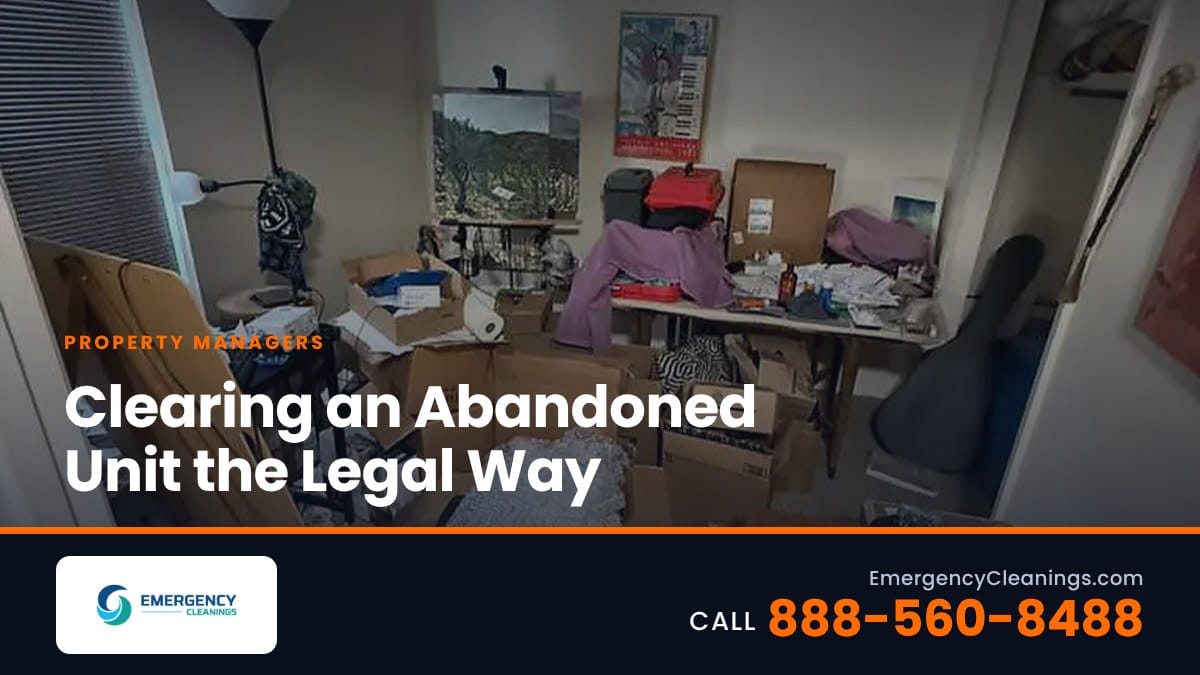

An estate hoarding cleanout is the full clearing of a heavily cluttered property that an executor is responsible for settling, from sorting and inventorying belongings through hauling, cleaning and decontamination. It is the job executors turn over when a house is packed to the walls and probate deadlines are moving. Emergency Cleanings handles this work for estates nationwide through hoarding cleanup crews who scope the property on site first, then lock a flat price before anyone starts.
Executors often inherit more than just responsibility; they face overwhelming clutter and emotional stress. Managing a hoarding cleanout after a loved one’s passing requires careful planning and structured steps. Efficiency, safety, and respect for sentimental items remain essential throughout the process.
Hoarding cleanout situations involve more than debris removal; they demand understanding, empathy, and practical strategies. Executors must navigate emotional attachments while maintaining legal and property responsibilities. Recognizing early signs of unsafe accumulation allows executors to prevent hazards before problems escalate.
Understanding the Scope of Hoarding in Estates
Estate hoarding often includes rooms filled beyond functional use, creating hazards and complicating sorting efforts. Executors should assess each area systematically, prioritizing high-risk sections while noting fragile or valuable belongings. Awareness of structural damage, blocked pathways, and compromised living spaces is essential for strategic planning.
Accumulation patterns often develop over time, shaped by emotional triggers and resistance to discarding items that hold deep personal meaning. Executors benefit from understanding that hoarding behaviors can stem from trauma and emotional attachment, which make decisions about disposal particularly difficult. This perspective supports compassionate handling of belongings while preserving family relationships.
Distinguishing clutter from hoarding is critical; everyday mess differs from persistent accumulation that affects safety and function. Identifying early warning signs like unusable living areas or hidden hazards helps executors act before conditions worsen. Executors can approach the process with confidence when they understand how hoarding severity escalates in identifiable stages.

Hoarding Cleanout: Sorting and Categorizing Belongings Efficiently
Creating categories for valuables, donations, and discard items reduces confusion and increases productivity. Executors seeking hoarding help can designate specific areas for sorting while labeling containers to maintain clarity and accountability. Consistent categorization prevents important belongings from being misplaced or lost during the hoarding cleanout process.
Separating sentimental items from practical ones allows for thoughtful handling of heirlooms and keepsakes. Family input during sorting supports respectful decision-making and reduces the risk of conflict. When executors encourage open communication, they uphold both emotional and legal responsibilities during a hoarding cleanout.
Detailed inventories promote transparency and accountability, particularly for probate purposes. Tracking items ensures that distribution is fair and documented for all stakeholders. Organized recordkeeping also minimizes misunderstandings about ownership or intended beneficiaries throughout the hoarding cleanout.
Safety and Professional Intervention for Hoarding Cleanout
Hoarded properties present hidden hazards that can threaten safety and complicate estate management. Executors overseeing a hoarding cleanout must understand the potential risks and necessary precautions. Professional intervention ensures both protection and efficiency while addressing challenging living conditions.
To ensure safety during a hoarding cleanout, consider these key interventions:
- Identify hidden hazards such as mold, pests, fire risks, or structural weaknesses before beginning cleanup.
- Use proper protective equipment and containment strategies to safeguard workers and preserve sensitive belongings.
- Follow safety protocols for biohazards, sharp objects, and compromised flooring to prevent accidents.
- Employ professional decontamination to restore livable conditions, remove odors, and prevent further property damage.
- Assess hoarding severity using the stages and levels of hoarding to determine the safest intervention methods.
These safety measures allow executors to proceed confidently while minimizing risk to people and property. Structured professional support makes the hoarding cleanout process faster, safer, and more thorough.
Managing Timelines and Workflows
Hoarding cleanouts can quickly become overwhelming without proper planning and organization. Executors benefit from a structured approach that clarifies tasks and timelines. Establishing clear workflows reduces stress and improves efficiency throughout the process.
To help manage the hoarding cleanout effectively, consider the following strategies:
- Break the project into clear phases to track progress and ensure no areas are overlooked.
- Set achievable daily goals for each phase, allowing steady progress without becoming overwhelmed.
- Assign responsibilities logically among family members or assistants to maintain accountability and clarity.
- Monitor progress consistently and adjust the workflow when unexpected challenges or delays arise.
- Hold regular check-ins with all stakeholders to maintain communication and prevent bottlenecks.
Implementing these strategies allows executors to maintain organization while respecting both the property and family dynamics. Clear timelines and structured workflows make the hoarding cleanout process safer and more efficient.

Addressing Emotional Challenges
Hoarding cleanouts often evoke grief, guilt, and anxiety for executors and family members alike. Understanding the psychology of hoarding helps prepare for emotionally charged decisions and encourages empathy throughout the process. Awareness of triggers and attachments allows for compassionate handling of sensitive belongings.
Offering emotional support or counseling can help family members navigate difficult decisions during cleanup. Open discussions about keeping or discarding items help reduce tension and encourage cooperation. Executors who balance empathy with structure can preserve relationships while completing necessary tasks.
Recognizing when professional guidance is needed prevents emotional stress from impeding progress. Specialists can advise on handling delicate situations or suggest strategies that respect family emotions while maintaining forward momentum. This balance ensures both safety and sensitivity throughout the estate process.
Coordinating Donations and Valuables
Organizing items for donation maximizes charitable impact while minimizing waste. Executors should separate usable items from those requiring disposal or recycling. Thoughtful coordination ensures valuable possessions benefit organizations and the environment responsibly.
Handling valuables such as jewelry, artwork, or collectibles protects their integrity and supports accurate estate valuation. Executors may consult appraisers or family members to determine rightful ownership and value. Proper handling prevents loss and preserves estate assets during distribution.
Responsible disposal of unsalvageable items reduces environmental and health risks. Executors should follow local regulations for electronic and hazardous waste removal. Ethical stewardship demonstrates a commitment to restoring the property’s condition safely and respectfully.
Supporting Executors Through a Hoarding Cleanout
Managing a hoarding cleanout combines practical, emotional, and legal responsibilities. Executors benefit from structured workflows, safety protocols, and sensitivity to family needs. Understanding the progression of hoarding and recognizing warning signs supports a respectful and effective process.
Responsible disposal of unsalvageable items reduces environmental and health risks. Executors should follow local regulations for electronic and hazardous waste removal. Ethical stewardship demonstrates a commitment to restoring the property’s condition safely and respectfully.
Frequently Asked Questions
How fast can a crew get to an estate property?
Call and you can get a same-day response. Once a technician is dispatched you get a two-hour arrival window and a text with the ETA when they are en route. The walkthrough and assessment cost nothing.
How does pricing work for an estate hoarding cleanout?
Emergency Cleanings charges a flat fee. A technician scopes the property in person, and the price is locked before work begins, so the estate is not billed for surprises later. Financing is available, and a large property can be phased room by room.
What does the crew handle, and what falls outside the job?
The crew sorts and removes contents, hauls out junk, and cleans and decontaminates the space, including biohazards such as feces, urine and sewage. Disposal records you can request are available for probate. Mold remediation, water damage restoration, fire restoration and plumbing repair fall to other trades.
Will the neighbors know what is happening at the property?
Discretion is part of the job. Technicians keep the reason for the visit between themselves and the executor. Anything found during sorting that looks valuable or personal is set aside for the executor rather than tossed.
At Emergency Cleanings, we assist executors with compassionate hoarding cleanouts for estates. Our trained team carefully handles assessment, removal, and decontamination while respecting sensitive belongings. Call 888-560-8488 for a same-day response and a free assessment of the property. A technician scopes the estate hoarding cleanout on site, and your flat price is locked before any work begins.