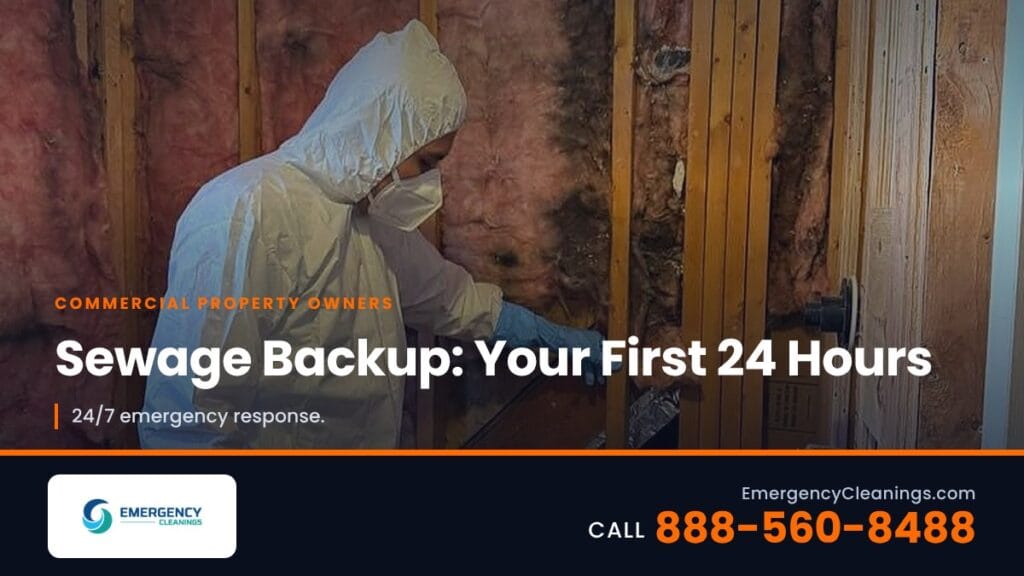
In the first 24 hours of a commercial sewage backup, keep people out of the affected area, get a licensed plumber to clear the line, notify your tenants and your insurer, and photograph everything before cleanup starts. After that, contaminated porous materials come out and every hard surface gets cleaned and disinfected. Emergency Cleanings handles commercial sewage backup cleanup nationwide at one flat price agreed in writing before work starts.
The call usually comes from a tenant. A floor drain is pushing sewage into a restaurant kitchen, or an office restroom has overflowed into the hallway carpet. Every hour that suite stays dark costs rent, and every person who walks through it is a liability question.
Hour 0 to 1: Keep People Out
Treat the area as contaminated from the first minute. The IICRC S500 consensus body classifies sewage as Category 3 water, which it defines as “grossly contaminated” and able to carry pathogenic, toxigenic or other harmful agents.
- Close off the affected suite or area with doors, tape or signage.
- Move staff and customers away, and keep them from tracking it into clean areas.
- If water is near outlets, equipment or a panel, shut power to that area at the breaker only if it can be done safely and dry.
- Tell people to stop using sinks, toilets and drains that tie into the backed-up line.
Hour 1 to 3: Stop the Source
Nothing gets cleaned until the line is cleared. Call a licensed plumber or drain contractor. Emergency Cleanings does not do plumbing, so book the plumber first and ask them to note where the blockage was and what caused it. That note helps your insurance claim.
Hour 2 to 4: Notify Tenants and Your Insurer
- Tell affected tenants in writing which areas are closed and when you will update them next.
- Call your insurance carrier or agent and open a claim. Ask whether they want to send an adjuster before anything is removed.
- Ask your agent whether your policy covers sewer or drain backup.
Hour 3 to 6: Document Everything
Before a single bag of debris leaves the building, take photos and video of every affected room, wall base, floor and fixture. Get the high-water line on drywall. Photograph damaged contents with serial numbers visible, and log every call you make. The crew that cleans up should photograph its work too, so your file shows the before, during and after.
Hour 4 to 12: Contain and Remove Contaminated Materials
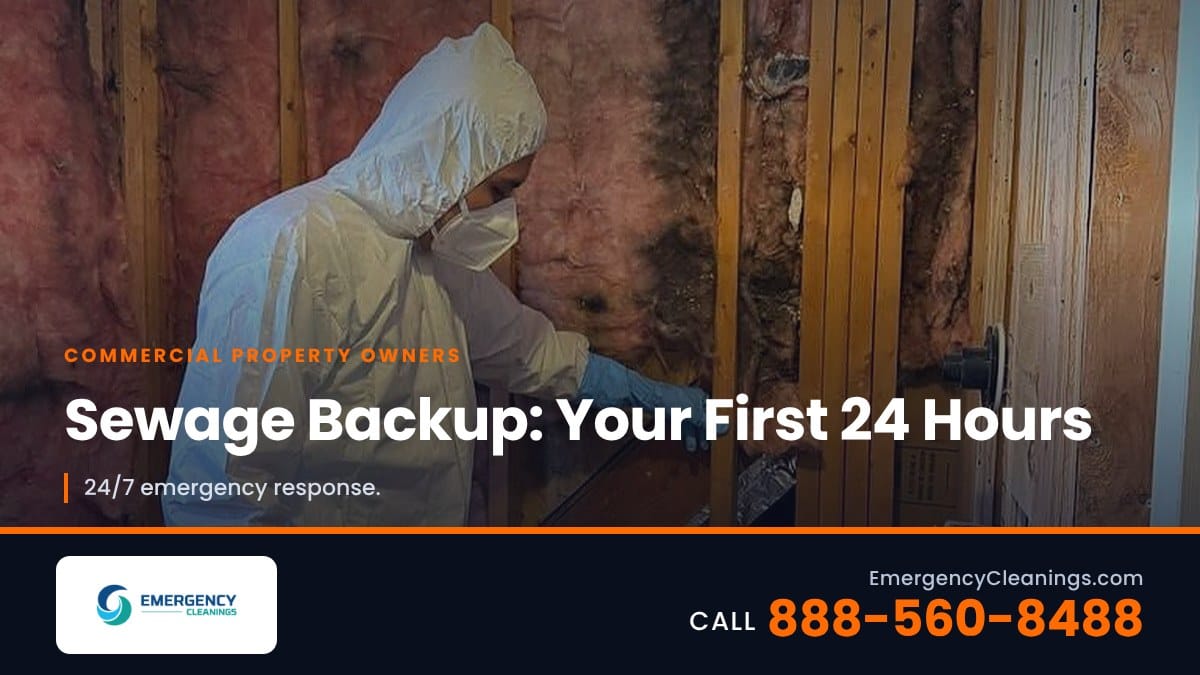
Porous materials soak up sewage and hold onto it. Carpet and pad, ceiling tile that got wet, upholstered furniture, cardboard and paper goods usually go. The crew sets up containment so nothing spreads into clean parts of the building, then bags and hauls the debris for disposal.
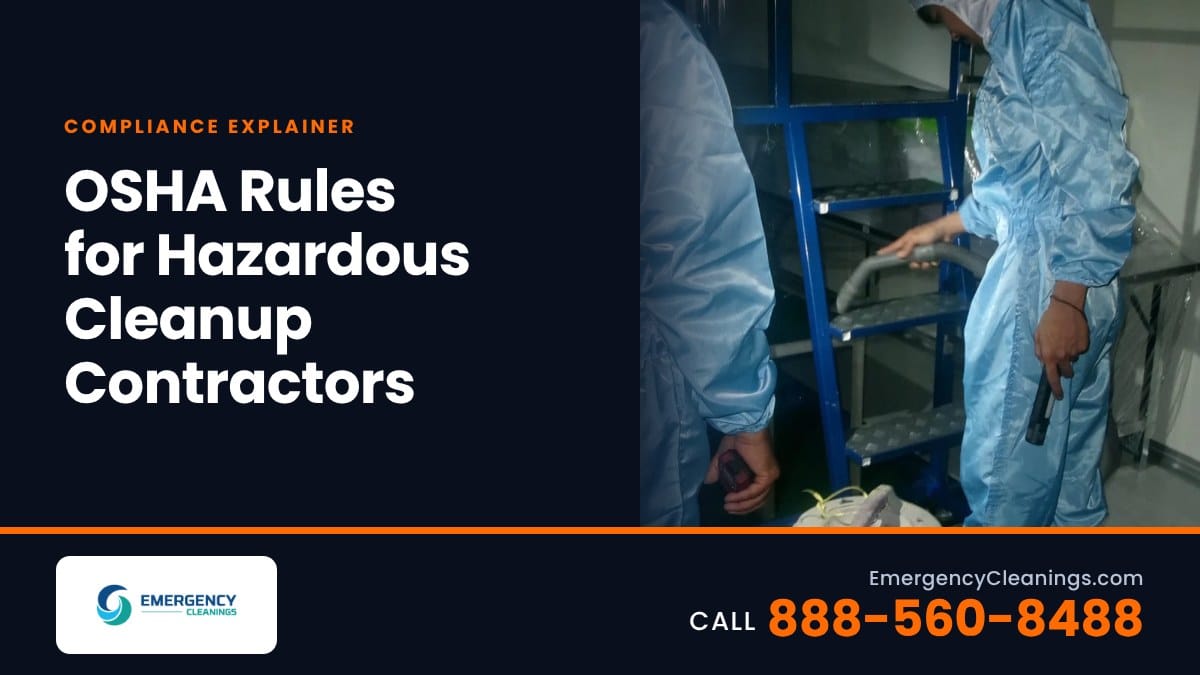
The CDC’s guidance for workers handling human waste calls for goggles, a face mask or splash-proof face shield, liquid-repellent coveralls, waterproof gloves and rubber boots, and warns of added risk from waterborne disease. Hand this step to a trained crew.
Hour 8 to 24: Clean and Disinfect
Once the soaked materials are out, hard surfaces get cleaned of all visible soil and then disinfected. Surface mold that turns up during the work gets cleaned too. Reconstruction is a separate job. Drying out a structure, replacing drywall and rebuilding are water damage restoration and contractor work, and Emergency Cleanings stays on the sewage cleanup side of that line.
What Reopening Depends On
For an office or retail suite, you and your tenant decide when the space is safe to use, guided by your insurer and any local building official involved. Food businesses face a stricter test. Minnesota’s food code, for example, requires a licensee to immediately discontinue operations and notify the regulatory authority when a sewage backup may create an imminent health hazard. Indiana’s state health department guidance says a food establishment required to stop operating may not reopen until the regulatory authority authorizes it. Rules vary by state, county and city, so your food tenant should call the local health department early.
Frequently Asked Questions
Is a sewage backup the same as water damage?
No. Sewage is classified as Category 3 water, meaning grossly contaminated. Sewage cleanup removes contaminated materials and disinfects the space. Drying the structure and rebuilding are separate restoration and construction trades.
Who clears the drain line, the plumber or the cleanup crew?
A licensed plumber or drain contractor clears the line. The cleanup crew comes in after the source is stopped. Emergency Cleanings does not do plumbing.
Should I take photos before the cleanup starts?
Yes. Photograph every affected area, the water line on walls and all damaged contents before anything is removed, and ask your insurer whether they want an adjuster on site first.
When can a restaurant tenant reopen after a sewage backup?
That decision usually belongs to the local health department. State food codes such as Minnesota’s require the business to stop operating and notify the regulator, and in states such as Indiana it stays closed until the regulator approves reopening. Rules vary by location.
Get the Space Back in Service
If a tenant just called about sewage on the floor, call 888-560-8488. We offer same-day response and a free on-site assessment, one crew of insured technicians, and one flat price locked in writing before any work starts. See our sewage backup cleanup service for what the crew handles.