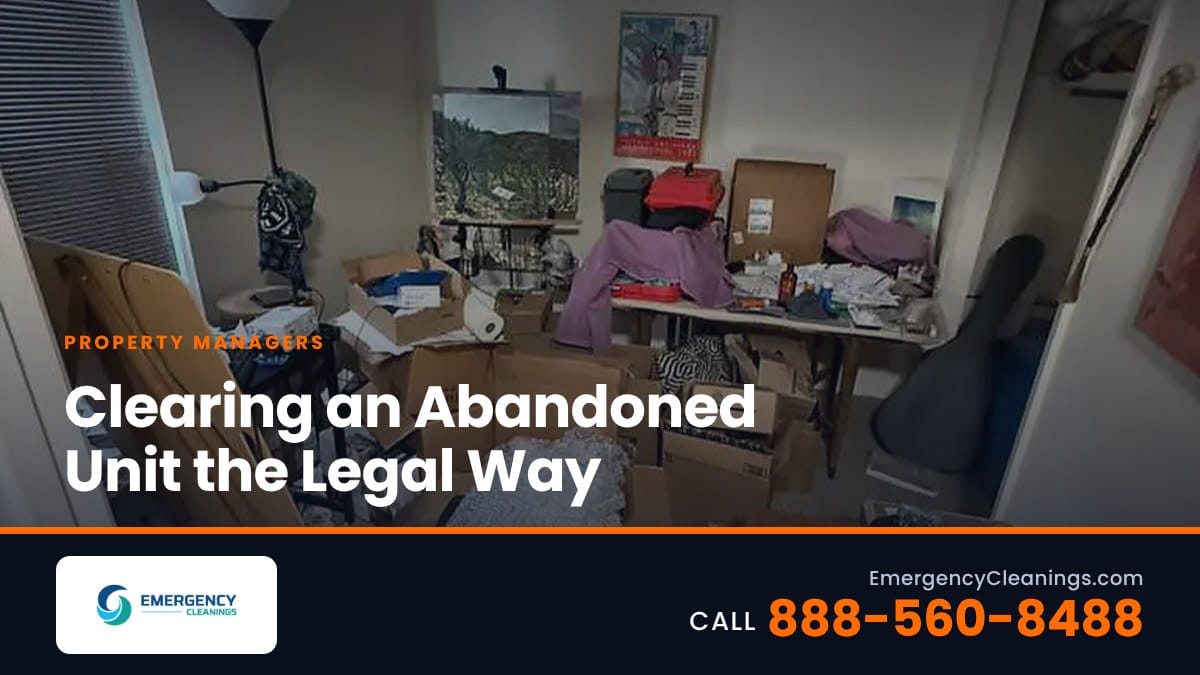

Landlord rights in a hoarding situation rest on two duties that run at the same time: keeping the unit safe and habitable, and treating the tenant fairly under fair housing and reasonable accommodation law. Those duties are written into state and local law and read differently from one place to the next, so have your own attorney review any notice or eviction step first. Emergency Cleanings handles the cleanup side for owners and managers with hoarding cleanup service, priced as a flat fee locked in after an on-site scope.
Rental properties occasionally present complex challenges when severe hoarding begins affecting tenant safety and living conditions. Property owners must respond carefully when unsafe accumulation creates hazards while also respecting tenant rights. Clear policies and early awareness help landlords manage hoarding before risks threaten tenants, neighbors, and property.
Property managers often encounter cases that involve emotional, health, and legal considerations simultaneously. Understanding responsibilities helps owners protect residents while maintaining compliance with housing standards and safety codes. Balanced responses help resolve these concerns without unnecessary conflict or delayed action.
Balancing Tenant Privacy With Property Safety
Landlords must maintain safe living conditions while respecting tenant privacy rights protected under housing laws. Safety hazards sometimes require property managers to inspect units experiencing severe clutter or hoarding conditions. Lease agreements often outline reasonable inspection rights when health or structural concerns arise.
Respectful communication helps prevent conflict when discussing hoarding conditions with affected tenants. Compassionate conversations encourage cooperation while emphasizing safety concerns impacting the building and neighboring residents. Guidance about when collecting becomes hoarding helps landlords recognize behavioral changes that may increase safety risks within rental units.
Documentation plays an important role when addressing hoarding responsibly and fairly. Property managers should record safety observations, inspection results, and tenant communications carefully. Organized documentation supports consistent decisions while protecting landlords from legal disputes later.

Fire and Structural Risks Linked to Hoarding
Severe hoarding conditions can increase fire hazards within residential buildings and shared housing environments. Excessive materials often block exits, cover electrical outlets, or accumulate near heating sources. Fire officials frequently warn about fire hazards and hidden dangers in cluttered homes because blocked exits and stacked materials slow emergency response.
Heavy accumulations may strain flooring, weaken structural supports, or block access to essential utilities. Maintenance crews sometimes struggle to inspect pipes, wiring, or appliances when hoarding obstructs work areas. Delayed repairs can worsen building conditions and increase safety risks for multiple residents.
Property managers should respond quickly when hoarding threatens building safety or emergency access. Fire codes, housing regulations, and insurance policies frequently require landlords to address hazardous conditions promptly. Early response helps reduce danger while protecting occupants throughout the property.
Lease Agreements and Property Damage Responsibilities
Lease agreements play a critical role in defining tenant responsibilities for maintaining safe and sanitary living environments. Excessive accumulation can violate cleanliness standards or occupancy rules outlined in standard rental contracts. Clear lease provisions help landlords address hazardous conditions effectively while minimizing disputes.
When addressing lease obligations, property managers should consider the following key responsibilities:
- Lease agreements may allow landlords to require cleanup or professional intervention when hoarding creates safety risks.
- Tenants are responsible for damages caused by clutter, blocked ventilation, or pest infestations.
- Well-written agreements clarify tenant responsibilities and encourage cooperation when hoarding begins affecting property conditions.
- Some behavioral patterns shift toward the opposite extreme, such as compulsive decluttering, reflecting similar emotional stress.
- Consistent enforcement of lease terms protects landlords from claims of unfair treatment or selective rule application.
Balanced lease enforcement encourages early resolution and helps prevent hoarding from escalating into larger safety or legal problems. Clear communication and documented policies support compliance while maintaining respectful relationships with tenants.
Health Risks, Pest Infestations, and Environmental Hazards
Severe hoarding can create unsanitary conditions that threaten tenant health and compromise building environments. Accumulated items may conceal food waste, moisture, or mold growth, increasing risks for residents. Pests such as rodents or insects can quickly spread through affected units, creating additional hazards.
Property managers should focus on the following key health and environmental responsibilities:
- Units affected by hoarding require timely inspection to identify potential contamination and structural hazards.
- Accumulated clutter can hide mold or moisture problems that promote pest infestations and disease.
- Public health authorities may intervene when environmental risks extend beyond a single apartment or unit.
- Understanding emotional stressors helps staff respond empathetically, as trauma and loss often lead to hoarding behavior.
- Prompt intervention and safe cleanup prevent contamination, odor migration, and property damage from spreading to neighbors.
Addressing health and environmental hazards proactively protects both residents and property value. Compassionate, structured responses encourage tenant cooperation while maintaining safe living conditions.

Early Intervention Protects Property and Tenants
Early action often prevents hoarding conditions from becoming dangerous or legally complicated situations. Small clutter patterns may gradually develop into serious hoarding without supportive guidance or intervention. Recognizing early warning signs allows property managers to address concerns before safety risks escalate.
Property managers who understand early intervention strategies for compulsive collecting can often prevent clutter from becoming dangerous hoarding conditions. Education and respectful support can encourage tenants to accept assistance voluntarily. Preventive support benefits tenants while protecting landlords from escalating hazards or costly repairs.
Respectful communication also requires setting healthy boundaries when seeking hoarding help while maintaining building safety standards. Balanced approaches create solutions that protect residents without unnecessary confrontation. Early intervention helps maintain property value and reduces risk of legal exposure.
Coordinating Professional Hoarding Cleanup Support
Complex clutter cases sometimes exceed the resources available to property managers or maintenance staff. Large accumulations may involve hazardous materials, biohazards, or structural access challenges. Professional cleanup teams provide specialized equipment and safe disposal procedures when conditions reach dangerous levels.
Licensed cleanup providers follow safety protocols designed for large scale hoarding removal and sanitation. Experienced teams can also recover important documents or personal items during organized cleanout processes. Careful sorting helps protect meaningful belongings while restoring safe living conditions.
Emergency Cleanings works with landlords and property managers handling challenging hoarding situations nationwide. Our team provides discreet hoarding cleanup services that restore safety while respecting tenant privacy and dignity. Experienced specialists coordinate removal, sanitation, and recovery support for properties requiring immediate assistance.
Creating Safe Housing Through Responsible Hoarding Management
Managing clutter within rental housing requires careful balance between compassion, legal compliance, and safety obligations. Property managers who recognize risks early can reduce hazards affecting tenants, neighbors, and building structures. Thoughtful policies help prevent unsafe accumulation from escalating into costly legal or safety emergencies..
At Emergency Cleanings, we support property owners facing complex hoarding situations that require professional care and discretion. Our trained team handles large scale hoarding cleanouts while protecting property safety and tenant dignity. Compassionate specialists help restore safe, functional living spaces within residential and multi tenant environments.
Frequently Asked Questions
Can a landlord evict a tenant over hoarding?
Sometimes, though it depends on where the property sits. Hoarding disorder can qualify as a disability, which may trigger a duty to consider a reasonable accommodation such as extra time to clear the unit. Those standards live in state and local law, so ask your own attorney what applies at your address rather than relying on a general rule.
Who pays for a hoarding cleanup in a rental unit?
That usually turns on the lease and on what local law lets a landlord recover. Many owners pay up front, then pursue the cost under the damage terms. You get a free assessment and a flat price locked after the on-site scope, so the number is firm before work starts.
How fast can a crew reach the property?
Same-day response is available in most areas through a nationwide network of vetted, licensed, insured local technicians. You get a two-hour arrival window and an ETA text once the technician is en route. Larger jobs can be phased.
Does the cleanup cover biohazards under the clutter?
It can. Animal waste, human waste, and contamination hidden behind the piles fall under emergency cleanup service, scoped alongside the hoarding removal. Emergency Cleanings cleans surface mold as part of a cleanup. Deep mold mitigation, water damage, fire restoration, and plumbing repair are separate trades we do not perform. Work stays discreet, and disposal records are available on request.
Call 888-560-8488 for a same-day response on a hoarding unit. The assessment is free, a technician scopes the property on site, and the flat price is locked before work begins.