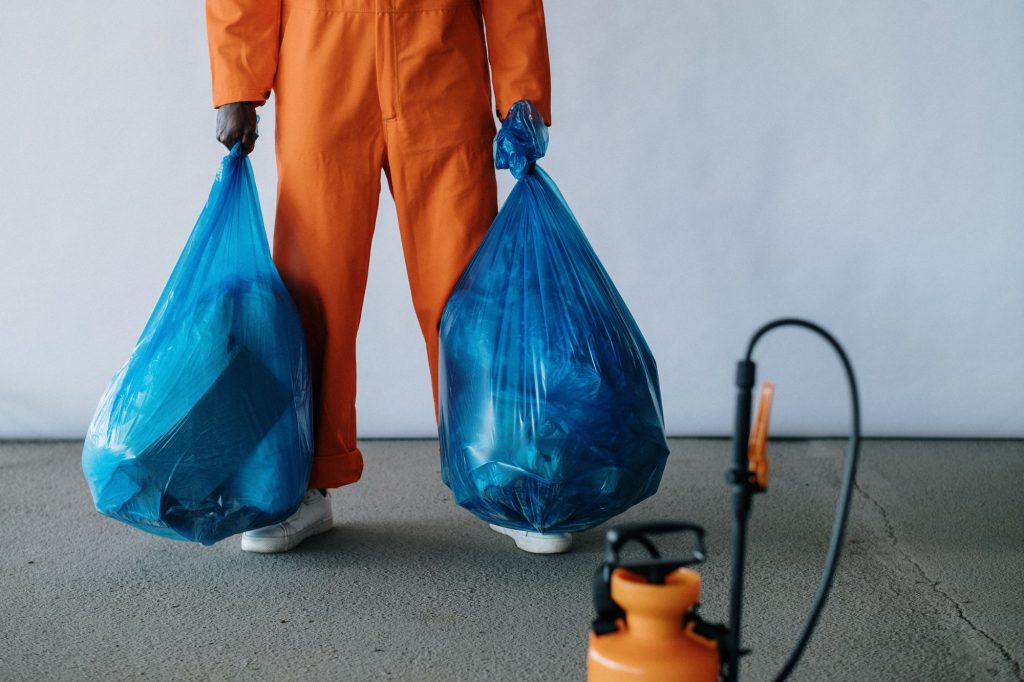
Hazardous material disposal services cover the identification, packaging, licensed transport, and permitted disposal of regulated waste found on a property, from old solvents and lead paint debris to biohazard contamination. Commercial property owners use them when a space holds material that cannot legally go in a dumpster or down a drain. Emergency Cleanings scopes the site, coordinates licensed carriers and permitted disposal facilities, and handles the cleanup itself through industrial cleanups, with a flat price locked after the on-site scope.
Property ownership comes with responsibilities that extend well beyond maintenance and repairs. When a space contains materials that pose health or environmental risks, the obligation to address them falls squarely on the owner, regardless of how those materials got there. Hazardous material disposal is a regulated process governed by federal, state, and local rules, and the consequences of handling it incorrectly range from fines and liability exposure to serious harm for anyone who enters the space. Knowing what qualifies as hazardous, how disposal is supposed to work, and when to call a professional is practical knowledge every property owner needs.
What Qualifies as a Hazardous Material
The Resource Conservation and Recovery Act, administered by the EPA, defines hazardous waste as any material that poses a substantial threat to human health or the environment due to its quantity, concentration, or physical and chemical properties. In practical terms for property owners, this covers a broader range of materials than most people expect.
Common hazardous materials found in residential and commercial properties include lead-based paint, asbestos-containing insulation or floor tiles, mercury from older thermostats or fluorescent lighting, pesticides and herbicides, solvents and paint thinners, motor oil and automotive fluids, and certain batteries. Properties with a history of hoarding frequently contain concentrated accumulations of these materials, including expired chemicals, deteriorating containers, and stockpiles of items that would otherwise be disposed of gradually over time.
Biohazardous materials, including blood, bodily fluids, and decomposition-related contamination, fall under a separate regulatory framework but are equally subject to strict disposal requirements. These materials cannot be placed in standard trash or disposed of through municipal waste channels.

Why Improper Hazardous Material Disposal Creates Serious Liability
Federal and state environmental regulations impose significant penalties for improper hazardous material disposal. The EPA's enforcement authority under RCRA allows for fines of up to $93,058 per day per violation for knowing violations. State agencies often maintain parallel enforcement programs with their own penalty structures. Property owners who dispose of regulated materials through standard trash pickup, pour them down drains, or bury them on the property are exposed to both civil penalties and, in egregious cases, criminal liability.
Liability extends beyond the disposal event itself. If hazardous materials migrate from a property into soil, groundwater, or adjacent properties, the originating property owner may bear remediation costs under the Comprehensive Environmental Response, Compensation, and Liability Act, commonly known as Superfund. Courts have held property owners liable for contamination even when they were not the original source of the hazardous materials, if they failed to address known contamination after acquiring the property.
For multi-unit residential properties, the stakes are compounded. A hazardous material situation in one unit that affects neighboring residents creates exposure to tenant claims, habitability disputes, and potential regulatory action from local housing authorities.
Hazardous Material Disposal Requirements by Category
Different categories of hazardous materials follow different disposal pathways, and conflating them leads to compliance failures. Lead-based paint disturbed during renovation or cleanup must be handled according to EPA's Renovation, Repair, and Painting rule, which requires certified contractors and specific waste containment procedures. Asbestos-containing materials require licensed abatement contractors and disposal at approved facilities.
Universal wastes, a regulatory category that includes batteries, fluorescent lamps, mercury-containing equipment, and certain pesticides, can be managed under a streamlined set of requirements that allow for collection and recycling through designated programs. This category was created specifically to encourage proper disposal by reducing the regulatory burden compared to full hazardous waste management.
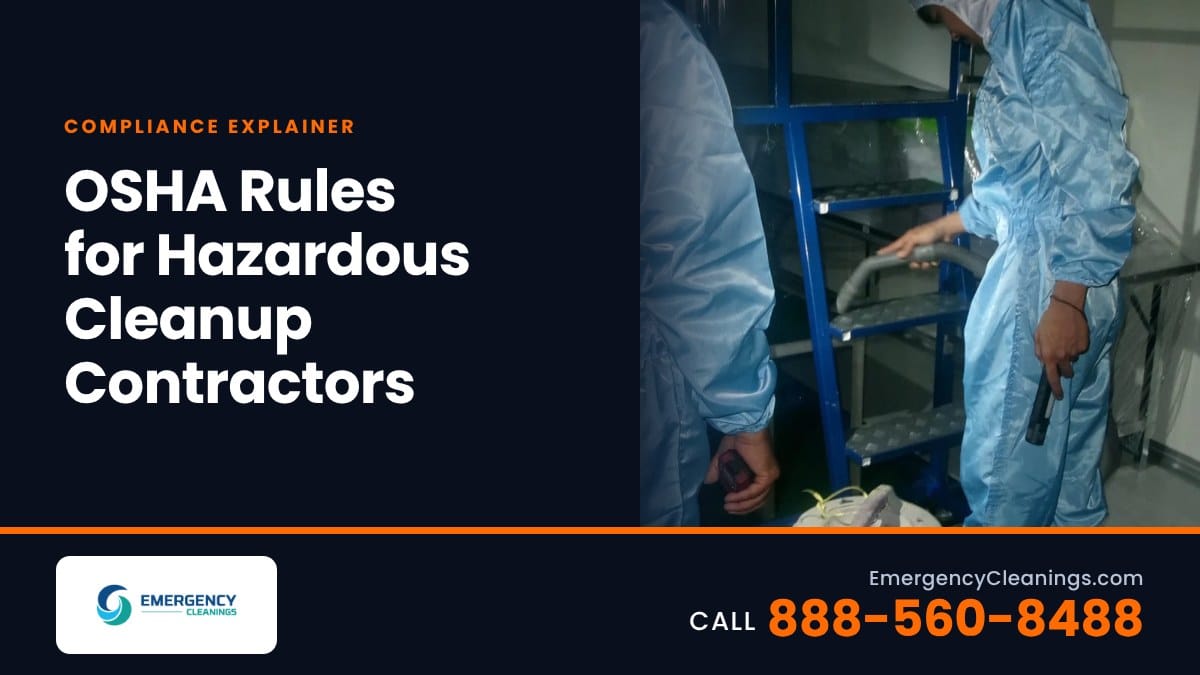
Biohazardous waste, including materials contaminated with blood or other potentially infectious materials, must be placed in appropriate containers, labeled according to OSHA standards, and transported by a licensed medical waste hauler for treatment and disposal. Property owners who attempt to manage this waste stream without proper authorization face both OSHA and EPA enforcement exposure.
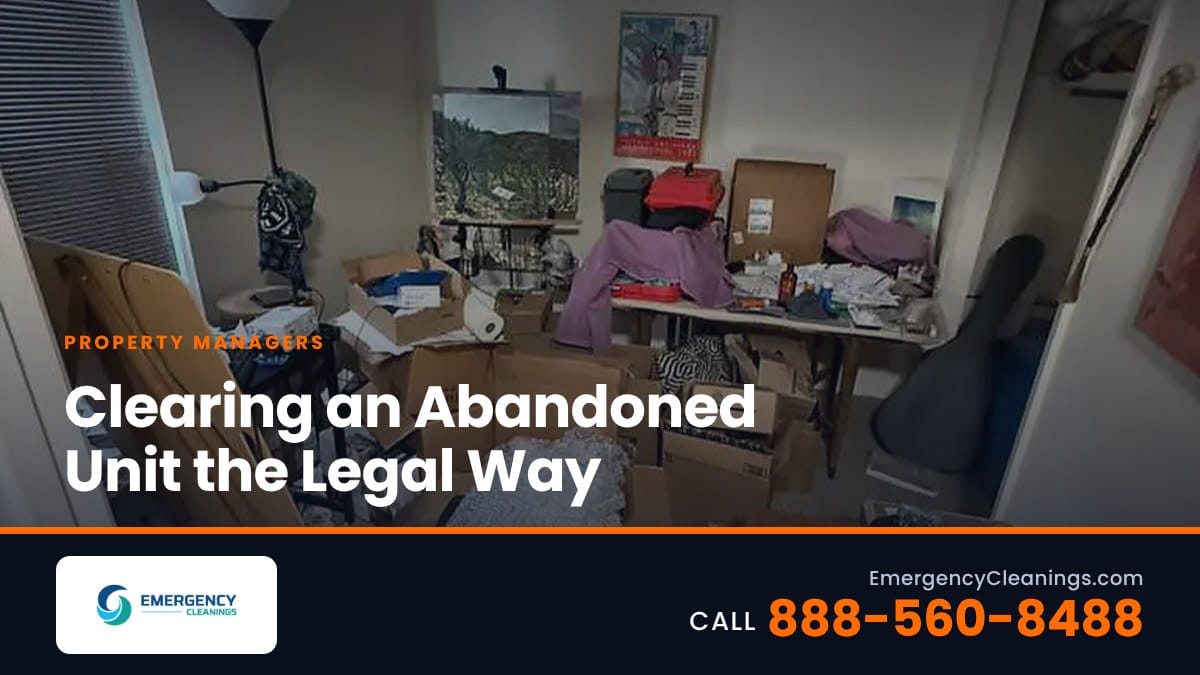
Chemical waste from hoarding situations often involves mixed or unknown materials, which creates additional complexity. Deteriorated containers, unlabeled substances, and reactive materials require assessment by a qualified professional before any handling or disposal takes place. Attempting to move or combine unknown chemicals without that assessment has caused injuries and fatalities.
When to Call a Professional for Hazardous Material Disposal
The threshold for professional involvement should be low. Any situation involving unknown substances, deteriorated containers, biohazardous contamination, asbestos or lead-based materials, or quantities beyond what a household hazardous waste collection program can accept warrants professional assessment. The cost of professional disposal is almost always lower than the cost of regulatory noncompliance, remediation of secondary contamination, or medical treatment resulting from exposure.

Professional hazardous material disposal providers bring several things that property owners cannot replicate independently: proper personal protective equipment, knowledge of regulatory requirements across multiple waste categories, licensed transportation, access to permitted disposal facilities, and documentation that demonstrates compliance. That documentation matters for insurance purposes, property transactions, and any future regulatory inquiry.
Properties undergoing hoarding cleanup frequently require professional hazardous material disposal as part of the broader project. The accumulation of materials over years or decades often includes items that cannot simply be loaded into a dumpster. Identifying, segregating, and disposing of regulated materials requires trained eyes and proper protocols from the outset.
Compliant Hazardous Material Disposal Through the Right Team
At Emergency Cleanings, we work with licensed and insured subcontractors to handle hazardous waste removal, regulated disposal, and biohazard transport in full compliance with applicable federal and state requirements. Our hazard cleaning services routinely involve the identification and proper disposal of hazardous materials accumulated over extended periods. We also provide chemical and oil spill cleanup and industrial cleanups for properties where contamination has reached a scale requiring a specialized response.
For situations involving biohazardous contamination, our crime and after-death cleaning and feces and urine cleaning services address regulated waste streams with the proper protocols and disposal pathways these materials require. Our same-day emergency cleaning is available when a hazardous situation demands immediate attention.
Frequently Asked Questions
What does a hazardous material disposal service actually do?
It starts with an on-site assessment of what is present and how it is stored. The crew then segregates and packages the regulated material, arranges licensed transport, and routes each waste stream to a permitted facility that accepts it. There are disposal records you can request for your own files or a future property transaction.
Does Emergency Cleanings operate its own disposal facility?
No. Transport and final disposal are handled by licensed carriers and permitted facilities. We coordinate that side of the job while our technicians do the on-site cleanup and packaging, so the property owner is not left lining up vendors.
How fast can someone get to the property?
Same-day response is available. Once a technician is dispatched you get a two-hour arrival window and a text with the ETA when they are en route. If the situation is spreading or blocking access to a unit, call so it can be dispatched right away.
How is the job priced?
Pricing is a flat fee, set after a free on-site assessment of the volume, the material types, and the disposal pathways involved. The number is locked before any work starts, so it does not move as the job goes on. Financing is available, and larger properties can be phased.
Property owners should not sort through hazardous material disposal rules alone. Call Emergency Cleanings at 888-560-8488 for a same-day response and a free assessment of the property. A technician scopes the site in person, and the flat price is locked before any work begins.