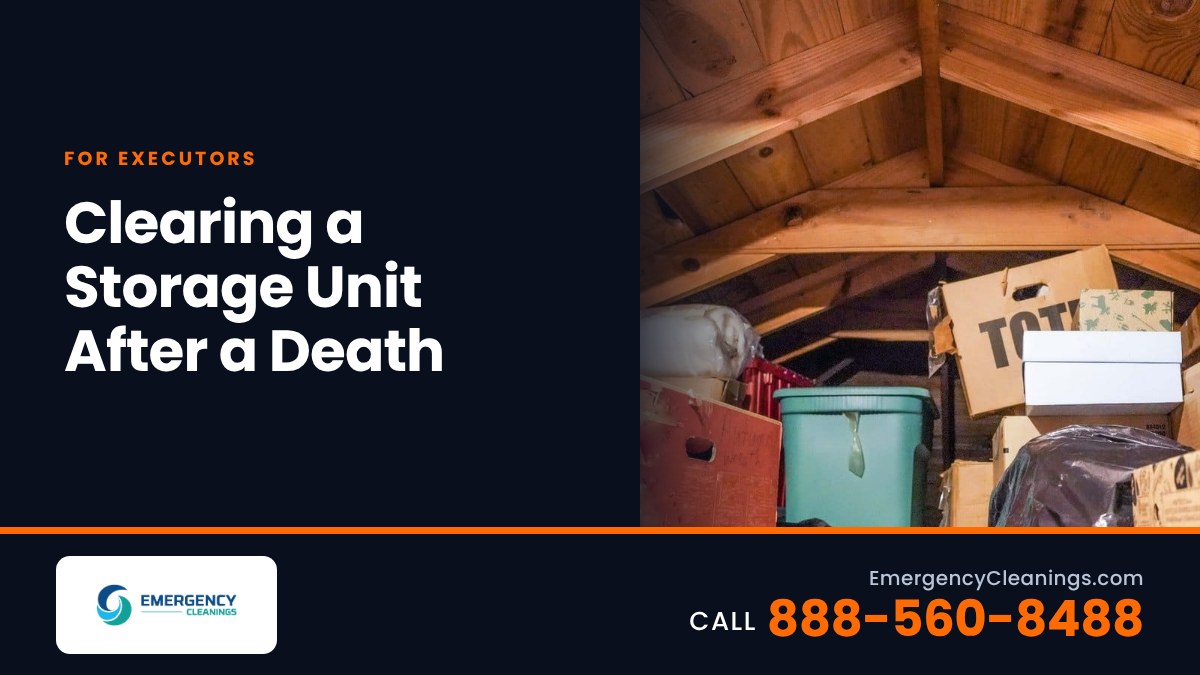
A storage unit cleanout after death starts with the lease. Call the facility, show the death certificate and your letters testamentary or letters of administration, and keep the rent paid so the unit doesn’t drift toward a lien sale while you sort. Once the family has what it wants, Emergency Cleanings can empty the unit for one flat price, with disposal records you can request for the estate file.
Maybe a bank statement showed the same charge every month to a storage company nobody mentioned. You’re the executor now, and a room full of someone’s life sits behind a roll-up door across town. The rent keeps coming due whether anyone opens it or not.
First Steps in a Storage Unit Cleanout After Death
Find the rental agreement in their files or email. Then gather what the manager will probably ask for:
- The rental agreement or a recent invoice
- The unit number and gate code, if you can find them
- A certified copy of the death certificate
- Letters testamentary or letters of administration from the probate court
- Your photo ID
Call the facility and ask exactly what they need. Policies vary a lot. A few will let an alternate contact named on the lease in quickly, and many want to see court papers naming you as the estate’s representative before anyone cuts a lock.
If probate hasn’t opened yet, say so and ask what they’ll accept in the meantime. Write down who you spoke with.
Keep Paying the Rent While You Sort It Out
This part catches families off guard. A storage facility can hold a lien on the contents when rent goes unpaid, and after giving notice it may sell them to cover the debt. Notice periods and sale rules vary by state.
Texas is one example. Under Texas Property Code Chapter 59, the facility holds a lien on all property in the unit for charges that are due and unpaid (section 59.021). Once written notice of the claim is delivered, the tenant has until the 14th day after delivery to pay before the facility moves on to advertising a sale (section 59.042). Paying the lien amount plus the facility’s reasonable expenses before the sale redeems the property under section 59.008.
Your state may give you more time or less. Keep the rent current from estate funds, or save receipts if you pay out of pocket so the estate can reimburse you.
Walking Through the Unit
Once you’re in, hold off on hauling anything. Photograph the unit as it sits. Then work in this order:
- Documents first. Wills, deeds, vehicle titles, tax returns and insurance policies turn up in storage more often than you’d expect. Box anything with a name or account number on it.
- Valuables. Jewelry, coins and cash hide in dresser drawers and coat pockets.
- Photos and keepsakes. Albums, letters and military papers go in their own box for the family to look through together later.
- Firearms and ammunition. Leave them where they are until you know your state’s rules on who can possess and transfer them. Your probate attorney or the local police non-emergency line can tell you how to proceed.
- Hazardous items. Storage leases commonly ban them, and people store them anyway. Old paint, gas cans and pesticides need separate handling. The EPA says to contact your local environmental, health or solid waste agency about household hazardous waste collection near you.
Write down what you find and where it goes. Our Executor’s Cleanout Checklist covers what to document before anything leaves.
Deciding What to Donate, Sell or Discard
Check with the other heirs and the estate attorney before anyone hauls. Some items may need an appraisal or have to wait for the court. If the unit holds furniture or collections worth real money, a sale might bring in more for the estate. We compare the options in Estate Sale, Auction, or Cleanout.
Usable household goods can go to donation. Ask for a receipt each time and file it with the estate records.
How Emergency Cleanings Handles the Haul-Out
A storage unit is a good fit for our junk removal service once the family has pulled what it wants. Emergency Cleanings sends a vetted local technician to walk the unit and photograph it. A project coordinator then calls with one flat price covering labor, loading, transport and disposal. That price does not change once the final scope is set.
The crew sets aside anything that looks like paperwork or photos so it comes back to you. You get disposal records you can request for the estate file, and when the unit is broom clean you can turn in the key.
Frequently Asked Questions
Can I get into a storage unit after someone dies?
Usually, once you show the facility what it asks for. Expect to need a death certificate and letters testamentary or letters of administration. Policies vary by facility, so call first.
What happens if the storage unit rent isn’t paid after a death?
The facility can hold a lien on the contents and may sell them after giving notice. Rules vary by state. Keep the rent current while the estate is open.
What should I look for first when clearing the unit?
Start with documents like wills, deeds and insurance papers, then valuables and family photos. Leave firearms and hazardous items alone until you know how your state wants them handled.
Can a crew empty the unit after the family takes what it wants?
Yes. Emergency Cleanings gives you one flat price after a free on-site assessment, hauls away the rest, and provides disposal records you can request for the estate file.
Get the Unit Cleared Before Another Month Comes Due
Call 888-560-8488 when you’re ready. We offer same-day response and a free on-site assessment, and you get a written scope with one flat price locked before any work starts. We can schedule around the facility’s hours and yours.