Table of Contents
- Why Garages Become Hazard Zones: Understanding the Risks
- The Hidden Dangers of Improper Chemical Storage
- When Family Members Discover the Problem
- Our Comprehensive Hazardous Materials Assessment Process
- Safe Removal and Disposal Protocols We Follow
- Documentation and Legal Compliance for Your Protection
- Why DIY Hazardous Waste Disposal Puts You at Risk
- Our Flat-Rate Pricing and Same-Day Assessment Advantage
- How We Handle Complex Garage Remediation Situations
- Next Steps: Getting Your Garage Safely Cleared Today
- Frequently Asked Questions (FAQ)
Why Garages Become Hazard Zones: Understanding the Risks
Garages often become storage repositories for items we forget about until a crisis forces us to face what’s accumulated. When you inherit a property, move an aging parent into care, or simply need to reclaim your space, discovering hazardous materials in the garage can feel overwhelming. We understand that moment of standing in the doorway, realizing you’re looking at years of chemical buildup, rusted containers, and unknown substances. The path forward requires more than a dumpster and elbow grease. This guide walks you through what you’re facing, why professional help matters, and how we handle these situations safely.
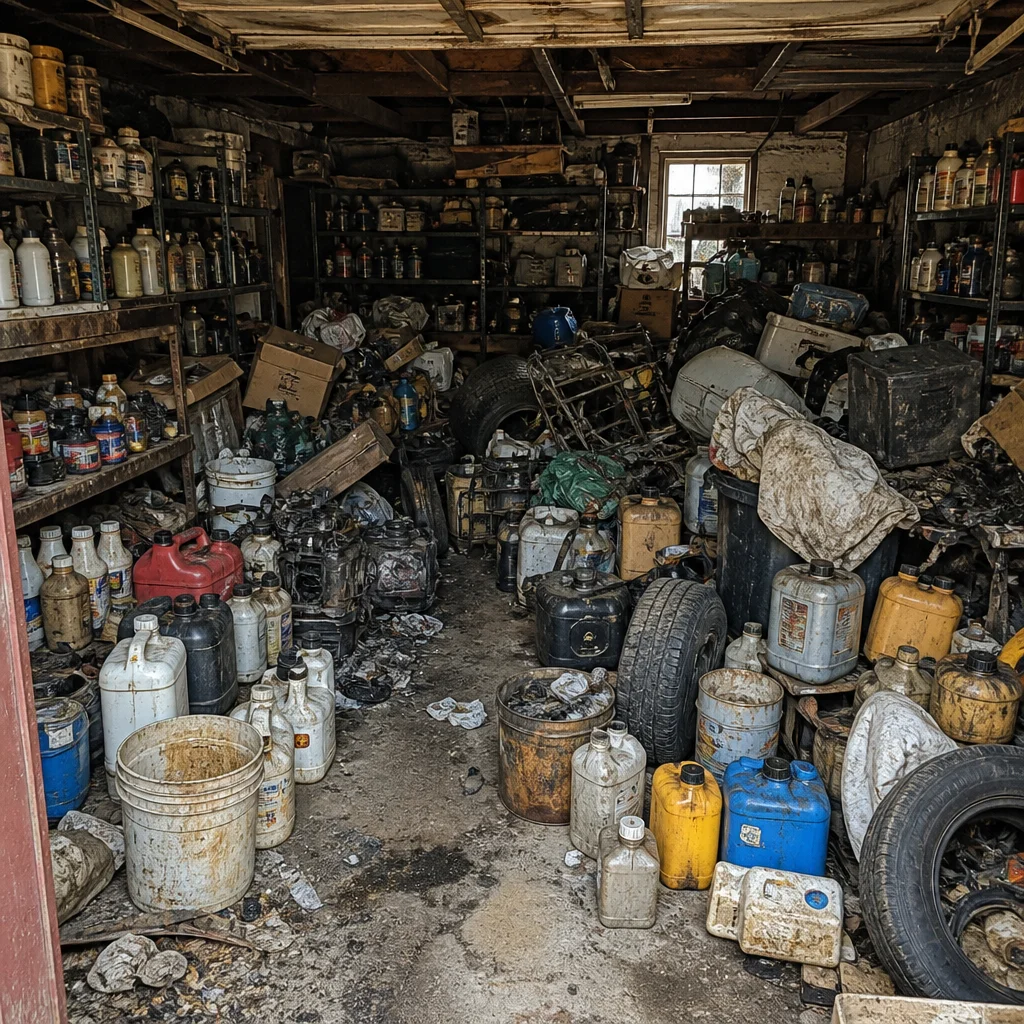
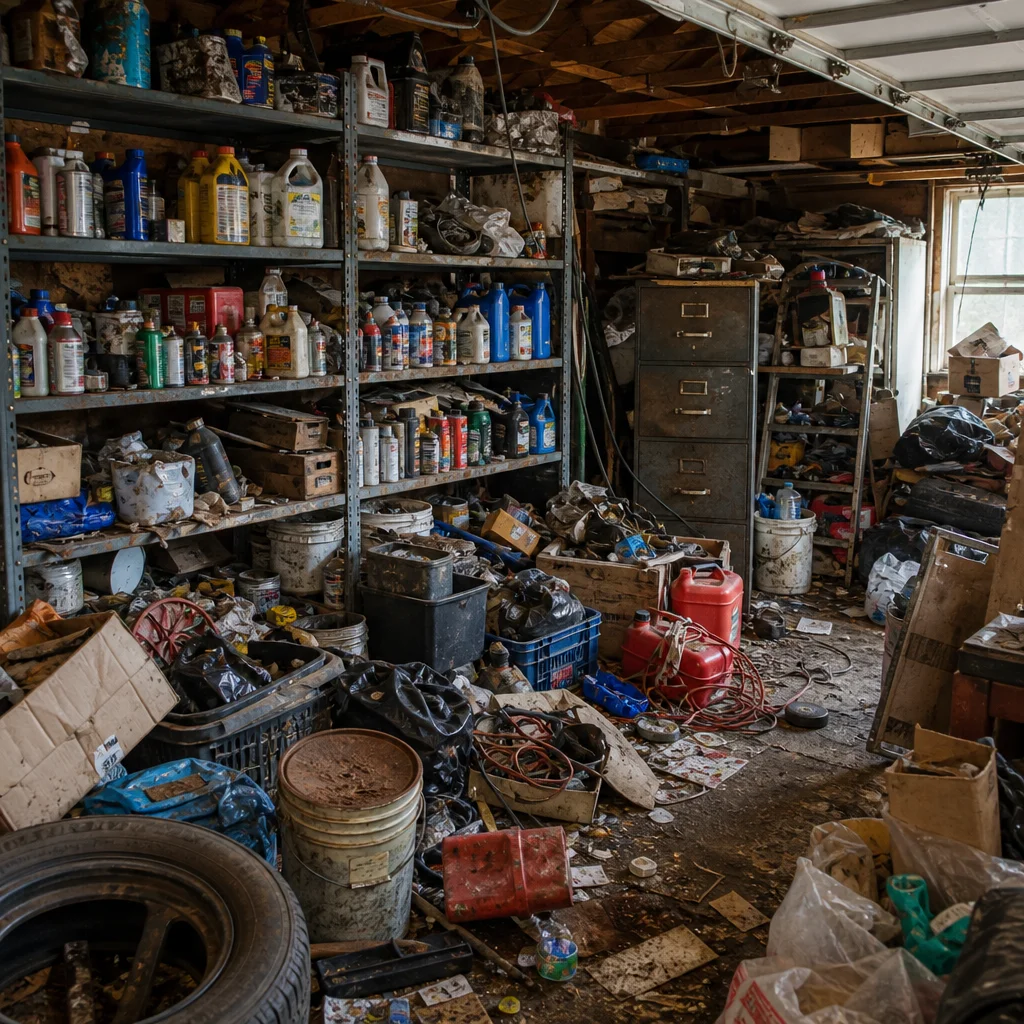
Garages function as catch-alls. A homeowner stores motor oil, old paint cans, pesticides, batteries, and automotive fluids without much thought. Over decades, containers deteriorate. Labels fade or disappear. Liquids separate or crystallize. What seemed manageable in year one becomes a confusing, potentially dangerous accumulation by year twenty.
The risk escalates when nobody’s maintained the space or documented what was stored. We’ve walked into garages where several generations added their own materials without clearing the old. Beneath workbenches, stacked in corners, and on upper shelves sit containers that nobody’s opened in years. Some have leaked. Others have created fumes that permeate the walls and flooring.
Beyond chemical hazards, garages often contain:
- Asbestos in old insulation, floor tiles, or pipe wrapping
- Lead-based paint on older stored items or structural elements
- Contaminated soil or flooring from decades of spills
- Corroded propane tanks or pressurized containers
- Animal waste or nesting materials in undisturbed areas
A single inspection may reveal multiple hazard categories. The health inspector who flags the property, the concerned family member who walks in after years, or the real estate agent preparing for sale all recognize that remediation is necessary before the property can be used safely. Attempting to handle this yourself without proper equipment and training exposes you to respiratory issues, chemical burns, skin reactions, and potential long-term health effects.
The Hidden Dangers of Improper Chemical Storage
Many hazardous materials become more dangerous as they age. Paint thinners separate. Batteries corrode and leak acidic or alkaline compounds. Oil-based products attract moisture. When containers break down or interact with one another, the garage becomes a chemistry experiment nobody intended.
Improper disposal compounds the problem. Pouring used motor oil down a drain, dumping paint into the soil, or placing unknown chemicals in regular trash can contaminate groundwater, harm wildlife, and create liability for the property owner. Local regulations treat these actions seriously. Fines can reach thousands of dollars, and environmental cleanup costs can escalate to tens of thousands.
The immediate danger to you, your family, and future occupants is equally serious. Vapors from stored chemicals can cause headaches, dizziness, respiratory irritation, and neurological effects with repeated exposure. Skin contact with residues may trigger allergic reactions or chemical burns. Mixing incompatible substances, even accidentally during cleanup, can generate toxic fumes or fires.
For families handling a parent’s home, these risks feel especially acute. You may not know what’s stored there. The previous occupant didn’t document the contents. Labels are unreadable or missing entirely. Guessing at what something is or how to dispose of it safely is not worth the risk.
When Family Members Discover the Problem
The discovery moment often arrives suddenly. A parent falls and goes into the hospital. A move to assisted living becomes necessary. A sibling visits for the first time in years and opens the garage door. Suddenly, you’re facing a property that must be prepared for sale, cleaned for insurance purposes, or made safe before grandchildren visit.
In many cases, professionals have already been inside. A first responder noted the conditions. An inspector documented hazardous materials. A real estate agent informed you that the property cannot be listed until the garage is remediated. These external pressures add urgency to an already stressful situation.
We also hear from families where concern for the primary occupant is driving the timeline. Someone recognizes that the living conditions pose health risks. Or adult children realize that their aging parent cannot safely maintain the space and needs intervention. The emotional weight of these situations is real, but it doesn’t change the practical reality: professional remediation is the safest path forward.
You’re not overreacting by calling us. You’re making a responsible choice.
Our Comprehensive Hazardous Materials Assessment Process
We begin every garage remediation with a thorough assessment. Our technicians arrive in an unmarked vehicle, understand your privacy concerns, and spend time evaluating what’s present before any removal begins. This step is crucial because it informs everything that follows.
During the assessment, we:
- Identify and document all hazardous materials by category
- Photograph conditions for your records and insurance purposes
- Note structural damage, contamination of flooring or walls, and any biohazard indicators
- Determine whether subcontractors or additional specialists are needed
- Develop a removal plan specific to your situation
- Provide you with a detailed, flat-rate quote with no surprises
We don’t make assumptions about what’s in an unmarked container. We don’t guess at disposal methods. We treat every garage as a unique remediation project with its own requirements. This careful approach takes time upfront, but it prevents mistakes, ensures compliance, and protects everyone involved.
Many families worry about judgment during this process. We don’t carry that attitude into anyone’s home. We’ve seen garages in every conceivable condition. Our role is to assess, plan, and execute safely and discreetly.
Safe Removal and Disposal Protocols We Follow
Once we’ve assessed the situation, our removal process follows strict safety protocols. Our technicians use appropriate personal protective equipment, including respirators, gloves, and protective clothing suited to the specific hazards present. We don’t cut corners on safety gear.
Removal begins with containment. We isolate the workspace, control dust and vapor, and manage the flow of materials to prevent cross-contamination. Each hazard category is handled according to its specific requirements. Liquids are transferred to certified containers. Solids are segregated by type. Pressurized or reactive items receive specialized handling.
We transport all materials to licensed disposal facilities equipped to handle the specific waste streams. We verify that each disposal partner is properly certified and compliant with state and federal regulations. This chain of custody documentation becomes part of your property record.
For residential properties, we also address lingering odors and residual contamination. If spills have soaked into the concrete or soil, we arrange for remediation or removal. If walls or structural elements need attention, we coordinate with specialists or document the requirements for your contractor.
The entire process maintains the discretion you deserve. Your neighbors don’t know specialized work is happening. The timeline is efficient. When our crew leaves, the garage is safe and ready for the next phase of your project.
Documentation and Legal Compliance for Your Protection
We provide detailed documentation for every remediation. This creates a clear record of what was present, how it was handled, and where it was disposed. Property owners need this documentation for several critical reasons.
Insurance companies may require proof that hazardous materials were professionally removed before they’ll process claims or approve coverage. Real estate transactions often depend on evidence that the property has been remediated to standards. Future owners or occupants benefit from knowing the property has been properly handled. If environmental agencies ever inquire, you have proof of responsible action.
For compliance matters in biohazard cleanup, the stakes are high. Cutting corners or attempting DIY removal exposes you to regulatory penalties and potential liability if someone is harmed by improper handling.
We maintain records that satisfy legal requirements, insurance expectations, and real estate transaction needs. Our documentation is thorough, professional, and ready to present to any party that needs verification of proper remediation.
Why DIY Hazardous Waste Disposal Puts You at Risk
The temptation to handle this yourself is understandable. You want to save money. You think the materials don’t seem that dangerous. You’ve handled chemicals before in smaller quantities. None of these reasons make DIY remediation safe.
Professional hazardous waste disposal exists because the risks are real and the regulations are complex. Hazardous materials in a garage are typically in larger quantities and worse condition than what you’d encounter in normal household cleaning or maintenance. The cumulative exposure, the lack of proper equipment, and the uncertainty about what you’re handling combine to create serious dangers.
Local disposal regulations require materials to go to certified facilities, not regular landfills or trash services. Attempting to dispose of hazardous materials improperly can result in fines, legal action, and the knowledge that you’ve created environmental or health risks for your community. If someone is harmed by improper handling, your liability is significant.
Beyond the legal and financial risks, the personal health consequences can be severe and sometimes delayed. Chemical exposures can trigger respiratory conditions that develop months or years after contact. Skin sensitization can cause problems in future encounters with similar substances. Neurological effects from solvent exposure may not be immediately obvious.
We’ve seen families attempt this work and end up calling us after someone gets sick or they realize they’re overwhelmed. Starting with professionals from the beginning is safer, faster, and ultimately more affordable than partial remediation followed by emergency repair work.
Our Flat-Rate Pricing and Same-Day Assessment Advantage
We offer same-day assessments for properties requiring hazardous waste disposal in the garage. When you call us, we understand the urgency. Whether you’re facing an insurance deadline, a real estate transaction timeline, or a family health concern, we move quickly.
Our flat-rate pricing eliminates the anxiety of wondering how much this will cost. We assess the full scope of work upfront, provide you with one comprehensive price, and complete the project without surprise charges. No hidden fees. No unexpected price increases midway through. You know exactly what you’re paying before we begin.
This pricing model works because we’re experienced at estimating remediation scope accurately. We’ve done hundreds of garage cleanups. We know what to expect. We budget appropriately for the work required, and we deliver within that commitment.
Same-day assessments mean you don’t wait days or weeks for someone to evaluate your situation. If you call in the morning, we can often provide a quote and timeline by evening. This speed reduces your stress and lets you make decisions quickly.
How We Handle Complex Garage Remediation Situations
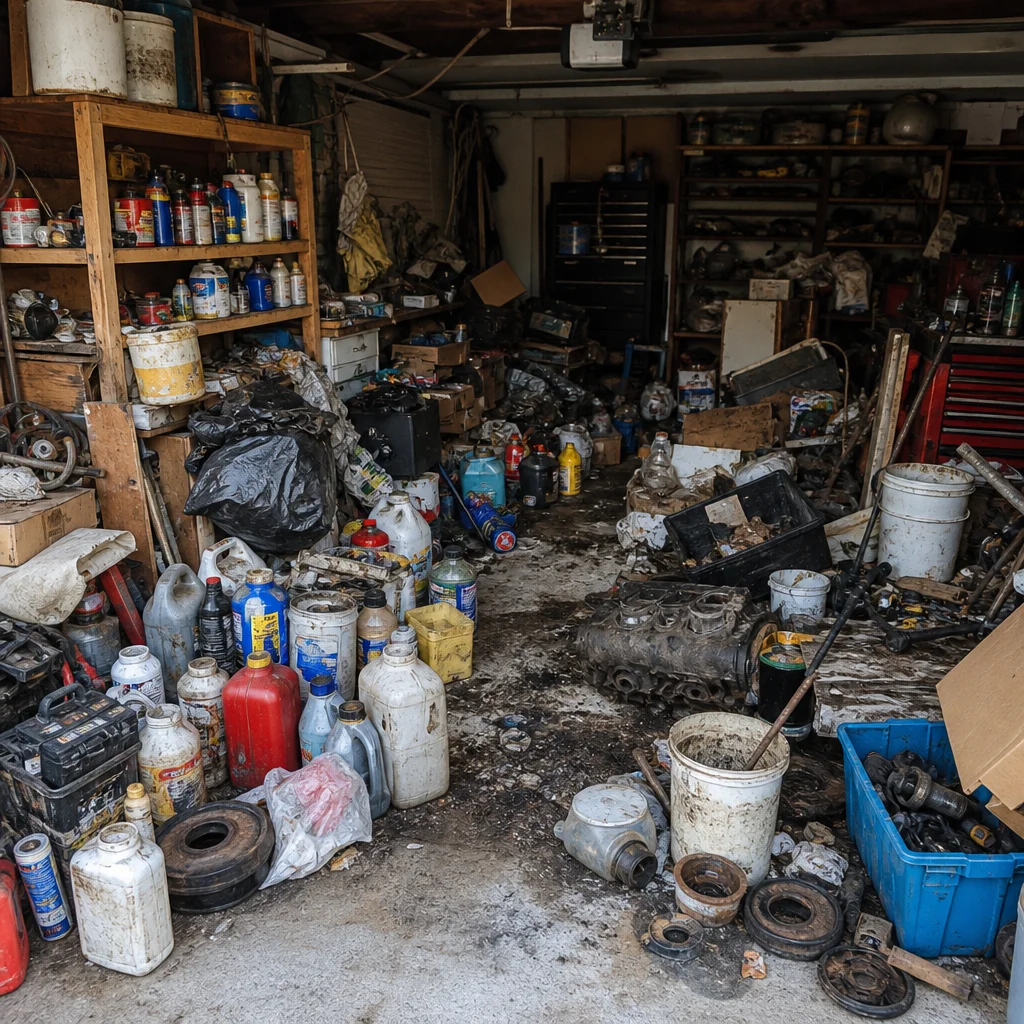
Not every garage presents a straightforward cleanup. Some require coordination with multiple specialists. A garage with extensive mold, structural damage from spills, and chemical contamination may need environmental specialists, restoration contractors, and structural assessments.
We manage these complex situations by coordinating the full remediation effort. We arrange for licensed and insured subcontractors where specialized work is needed. We schedule sequentially so that each phase builds on the previous one. We maintain communication with you throughout so you understand what’s happening and why.
Some garages belong to properties with legal holds, ongoing investigations, or CPS involvement. We’ve handled these sensitive situations with the discretion and professionalism they demand. We document everything according to legal requirements. We work with your attorney, caseworker, or other professionals as needed.
The complexity never changes our core approach: thorough assessment, careful execution, detailed documentation, and complete discretion. Whether the garage requires one day of work or a coordinated multi-week project, we deliver the same professional standard.
Next Steps: Getting Your Garage Safely Cleared Today
If you’re facing a garage remediation project, the first step is a phone call or message to us. Describe your situation as much or as little as you’re comfortable sharing. Let us know your timeline and what prompted the urgency.
We’ll schedule an assessment that works with your availability. Our technician will arrive discreetly, evaluate the garage thoroughly, and provide you with a detailed quote and timeline. If you’re ready to move forward, we can often begin work quickly.
You don’t have to handle hazardous materials yourself. You don’t have to guess at disposal requirements or worry about regulatory compliance. We’re here to manage the technical, legal, and safety aspects of garage remediation so you can focus on moving forward with your property and your family situation.
Contact Emergency Cleanings today for a same-day assessment and flat-rate quote. Let us handle the hazardous waste disposal safely, professionally, and discreetly.
Frequently Asked Questions (FAQ)
What makes our garage hazardous materials removal different from handling it ourselves?
We handle the assessment, removal, and proper disposal so you don’t have to navigate complex regulations or expose yourself to chemical burns, respiratory damage, or legal liability. Our team is trained to identify materials that look harmless but require specialized disposal, and we document everything for your protection and any future property sales or legal matters.
How quickly can we assess and clear a garage full of hazardous materials?
We offer same-day assessments in most cases, which means we can evaluate the scope of your situation and provide you with a flat-rate quote immediately. Once you approve, we schedule removal at your convenience, and many jobs are completed within days depending on the extent of contamination and materials involved.
Why is documentation important when we remove hazardous waste from your property?
We provide detailed records of what we removed and how we disposed of it, which protects you legally and is often required by local authorities or needed when you sell the property. Without proper documentation, you could face liability issues or inspection failures that delay home sales or transfers to family members.