Emergency cleaning for senior living and managed properties means a specialty crew that handles unattended deaths, bodily fluid spills, hoarded units, sewage backups and outbreak rooms in buildings where most residents are older and more vulnerable. Emergency Cleanings sends vetted local technicians the same day, gives you a flat price after a free walkthrough, and cleans so your staff can get back to running the building.
You manage a building where the residents are older, many live alone, and some are frail. When something goes wrong in one unit, the hallway outside it is shared by people whose immune systems may not handle a stomach virus or a sewage smell the way a thirty year old’s would. That changes how fast the mess has to go away and how carefully it has to be handled.
This guide is for managers of senior apartments, 55+ communities and assisted living buildings. It covers the calls you are most likely to get, where your maintenance team’s job ends, and what a specialty cleanup looks like from the first phone call.
Why Senior Properties Carry Different Rules
A 55+ community is a legal category. Under federal fair housing rules, housing for older persons must meet an occupancy test: at least 80 percent of its occupied units must be occupied by at least one person 55 years of age or older. That concentration of older residents is the whole point of the building.
Assisted living sits under a different roof. The federal government’s own research office notes that residential care settings are licensed and regulated at the state level, so your state licensing rules set the housekeeping and sanitation expectations your surveyors will check. Nursing homes that take Medicare or Medicaid answer to a federal rule requiring each facility to establish and maintain an infection prevention and control program.
Your infection preventionist, your licensing consultant or your local health department decides what the plan is. Emergency Cleanings does the physical cleanup inside that plan. We do not write infection control policy or give medical advice, and you should be wary of any vendor that offers to.
Rules vary by state, and nothing here is legal advice.
The Five Calls Senior Properties Get Most
An unattended death
A neighbor mentions a smell. A family member cannot reach their father. By the time the door is opened, days may have passed, and fluids have soaked into carpet, pad and sometimes subfloor. After the medical examiner releases the unit, the work is removal of affected materials, cleaning and disinfection, and odor control. Our walkthrough on the first 24 hours after a tenant dies in a unit covers the calls you make before any cleaning starts.
Bodily fluids in a unit or common area
Vomit in the dining room. Diarrhea on a hallway carpet. Blood from a fall in a bathroom. Your staff may handle small, fresh spills. Larger spills, soaked upholstery, or a spill that sat overnight belong to a crew with the right protective gear and disinfectants.
A hoarded unit
Blocked exits and piled paper are fire and fall hazards in any building. In a senior building the resident is often the most at risk from their own unit. More on handling this with care in a section below.
A sewage backup
A backed up main line in an older building can put waste into several ground floor units at once. Contaminated drywall, flooring and belongings have to be removed and the area cleaned and disinfected before anyone moves back in. A plumber repairs the line itself; our crew handles the waste it left behind.
An outbreak room
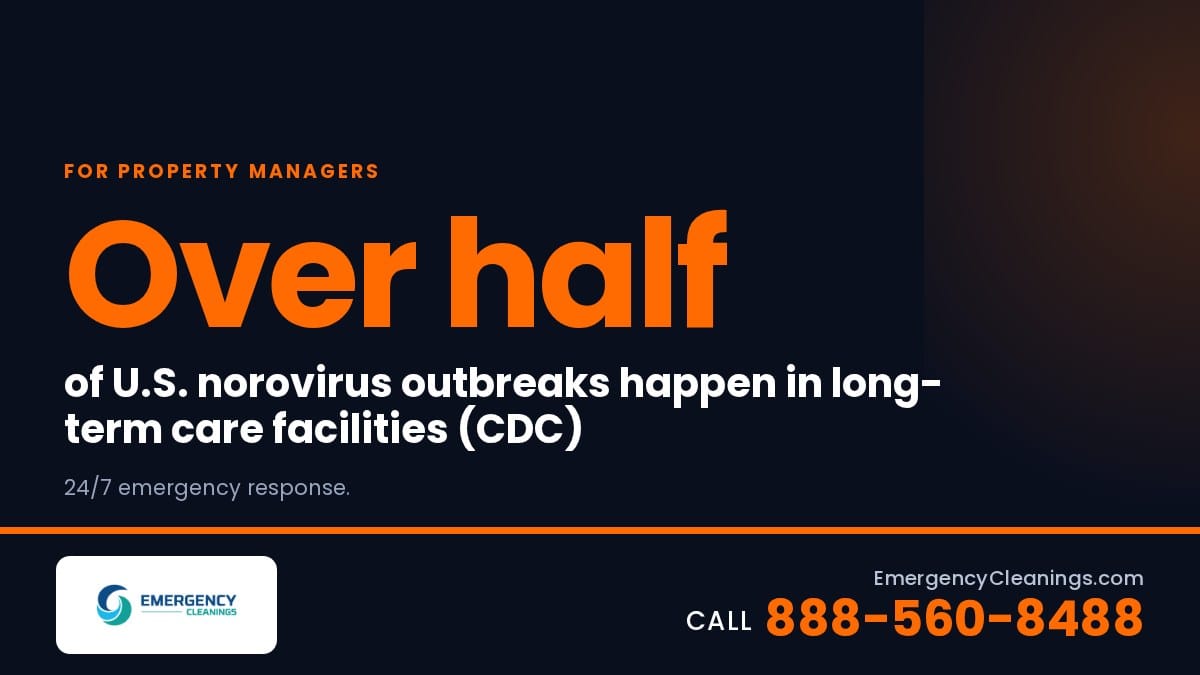
Norovirus is the one to plan for. The CDC reports that over half of all norovirus outbreaks reported in the United States occur in long-term care facilities, and that those outbreaks can last for months. For cleanup after vomiting or diarrhea, CDC guidance calls for a chlorine bleach solution of 1,000 to 5,000 ppm, or 5 to 25 tablespoons of household bleach per gallon of water, left on the surface at least five minutes, or a product from EPA’s List G of disinfectants registered against norovirus. When a room needs a deep clean after an illness, your team decides when. We show up and do it to that standard.
Where Your Maintenance Team Stops
Your staff can do a lot. The line usually falls at exposure. OSHA’s bloodborne pathogens standard applies to all occupational exposure to blood or other potentially infectious materials, and it requires contaminated surfaces to be decontaminated with an appropriate disinfectant. If you send a maintenance tech into a death scene, you take on the training, gear and exposure planning that standard expects.
Urine and feces work differently under that rule. OSHA has said that urine and feces are not “other potentially infectious materials” unless they are visibly contaminated with blood. So a soiled mattress is not automatically a bloodborne pathogens job. It still carries germ exposure, and it wears down good maintenance staff fast.
A practical rule for your team: small and fresh, they can handle it with gloves and the right product. Soaked in, spread out, or involving blood, call a crew. Our guide to what property staff can handle goes into more detail on the handoff.
Scope matters too. Surface mold gets cleaned as part of the work. Deep mold mitigation, water damage restoration, fire restoration, plumbing repair, and rebuilding are separate trades that Emergency Cleanings does not perform.
The Hoarded Unit and Fair Housing Timing
Hoarding disorder is listed as a mental disorder in the DSM-5, and a resident living with it may ask for a reasonable accommodation. HUD and the Justice Department have stated that the Fair Housing Act does not require that a request be made in a particular manner or at a particular time.
If a resident asks for more time to make the unit safe, that time can be put to good use. A cleanup done one room at a time, with the resident involved in decisions, is often how a unit gets safe while the tenancy stays intact. We can phase the work room by room at a fixed price per phase, which gives you and the resident a written plan with clear steps. If the resident wants support beyond cleaning, the International OCD Foundation’s hoarding resources are a good place to point them. We never present cleanup as treatment.
Keep your counsel close on these files. How and when you bring in a cleaning crew during an accommodation period is a decision for your management team and your attorney.
How a Call Works With Emergency Cleanings
You call. We confirm a two hour arrival window, usually the same day. You get a text with an ETA when the technician is on the way. For a gated property, tell us the gate code or who meets us at the office.
The technician walks the unit with you or your maintenance lead and takes photos. A Project Coordinator then calls you with the exact final price and the step by step plan. The price is one flat fee covering labor, disposal, transportation, equipment and insurance. It is set after the walkthrough and locked before work begins. Once you approve, work often starts that same day.
Senior buildings are small communities, and residents talk. Unmarked vehicles are available on request, and crews keep a low profile in hallways and elevators. You get photo documentation when the job is done, which helps with your records, the family, and any surveyor who asks what happened in that unit. Disposal records are available if you request them. Financing is available if an owner or an estate needs it.
For the full list of situations we handle, see our emergency cleanup service page.
Frequently Asked Questions
Can you clean a unit while neighbors are still living on the floor?
Yes. Crews work inside the affected unit, keep doors closed, and move waste out in sealed bags or containers. Tell us about residents with mobility or breathing issues nearby, and we will plan the route and timing around them.
Will you tell us how to handle an outbreak?
No. Your infection preventionist, licensing consultant or local health department sets the plan. We do the cleaning and disinfection to the standard they set, including CDC guidance and EPA registered products when that is what they call for.
Do you work in assisted living and memory care buildings?
Yes. Let us know about any building rules, sign in steps or escort requirements before we arrive, and we will follow them.
How do you price the job?
After a free on site walkthrough, you get one flat price that covers labor, disposal, transportation, equipment and insurance. It is locked before work begins. Large jobs can be phased room by room at a fixed price per phase.
When something happens in one of your units, call 888-560-8488. You get a same-day response, a free assessment on site, a written scope, and one flat price locked before work starts.