Table of Contents
- The Reality of Clothing in Hoarded Environments
- Why Standard Cleaning Won't Work for Contaminated Fabrics
- Health and Safety Concerns We Address First
- How Our Restoration Process Protects Your Wardrobe
- What We Can and Cannot Save During Cleanup
- Documentation and Insurance Claims for Your Belongings
- The Emotional Relief of Professional Remediation
- Getting Started With Our Flat-Rate Assessment
- Frequently Asked Questions (FAQ)
The Reality of Clothing in Hoarded Environments
When you step into a hoarded home for the first time, clothing often covers every available surface. Piles accumulate in bedrooms, hallways, and living areas. Some of it belonged to the person who lived there. Some might be yours from years ago. The question that follows is almost always the same: can any of this be saved?
The answer is nuanced, and it depends entirely on the condition of the garments and the contamination present in the environment. We work with families regularly who face this exact dilemma, and we’ve developed a careful, systematic approach to clothing recovery that prioritizes both safety and sentiment.
Hoarded clothing doesn’t sit in a sealed container. It sits in an environment where moisture, dust, pest activity, mold spores, and odors have accumulated over months or years. Fabrics absorb everything around them. A shirt hanging in the corner absorbs the same musty air that fills the entire space. A pair of pants folded on a pile absorbs the bacteria and fungi that thrive in these conditions.
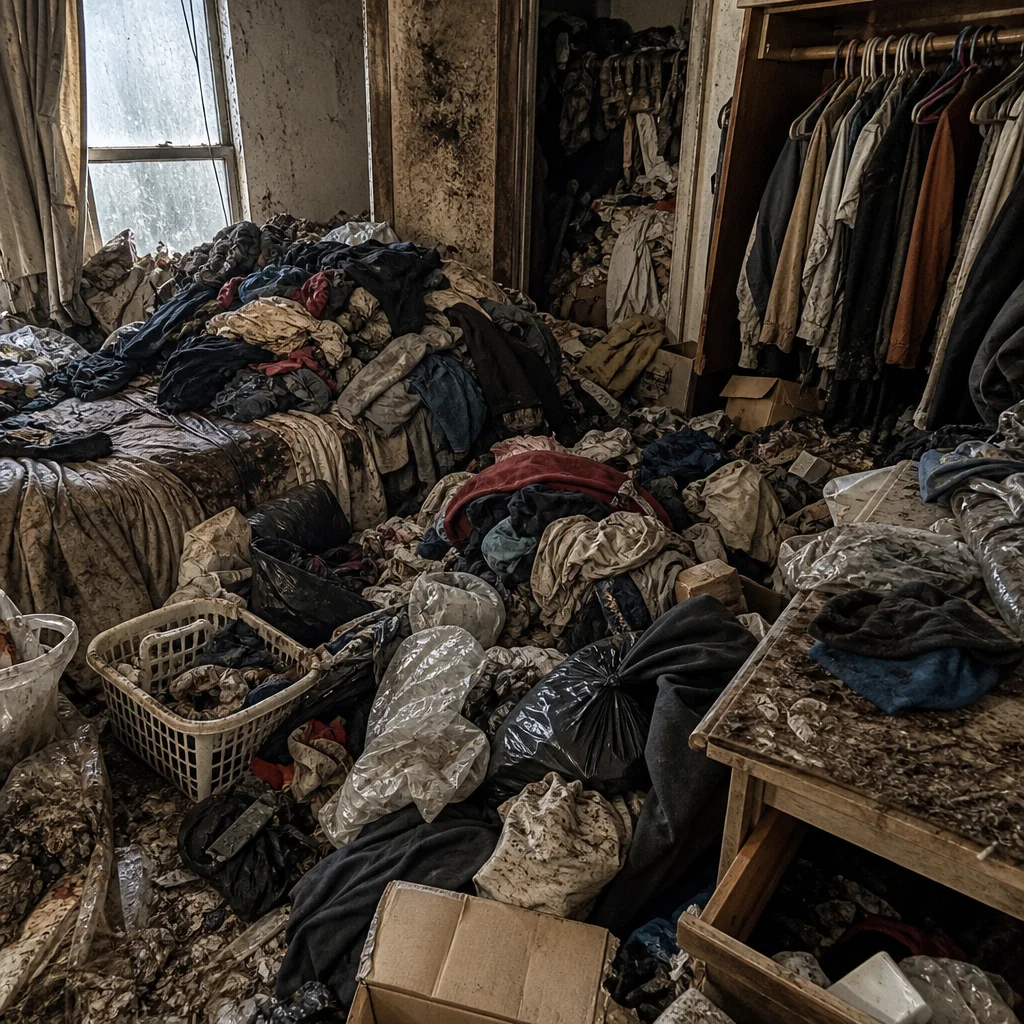
What we observe most often is this: the outer layers of clothing may look relatively intact, but their condition worsens the deeper you go into each pile. Items at the bottom experience compression, moisture wicking from floors or humidity, and direct contact with contaminated surfaces. Delicate fabrics like silk or wool deteriorate faster than sturdy cotton or synthetic blends.
The sheer volume complicates matters too. A single bedroom might contain 500 to 1,000 garments. Sorting, inspecting, and treating that many items requires time, space, and expertise most families don’t have access to. That’s where our hoarding cleanup service becomes practical, not just helpful.
Your immediate action: Before you touch anything in the space, assess whether the clothing touches known contamination sources like pet waste, sewage stains, or visible mold. If it does, that fabric requires professional remediation or disposal.
Why Standard Cleaning Won’t Work for Contaminated Fabrics
Tossing contaminated clothing into a washing machine at home won’t solve the underlying problem. Standard laundry won’t address embedded mold spores, bacterial colonies, or chemical residues that have settled into fibers over months. Worse, running that load risks spreading contamination through your home’s water system and introducing pathogens into your clean laundry.
Professional textile restoration requires specialized equipment and treatment methods. We work with certified restoration partners who understand how to treat fabrics based on fiber content, contamination type, and damage severity. A silk blouse needs different handling than a cotton work shirt. A garment with mold exposure needs different treatment than one with odor alone.
Standard dry cleaning, while useful for everyday stains, isn’t equipped to handle biohazard-level contamination. Dry cleaners operate under different regulatory standards and lack the protocols needed for materials exposed to hoarding conditions, sewage, or pest activity. Asking them to process contaminated clothing puts their staff at risk and usually results in refusal.
We’ve also seen families attempt to restore heavily soiled clothing through extended soaking or aggressive scrubbing. This damages fibers further and creates exposure risk during the process. The fabric might visibly improve, but you’ve introduced new problems rather than solved the original ones.
Your next step: Separate clothing into three categories right away: visibly clean items with possible odor, items with light staining or visible wear, and items touching contaminated surfaces. This sorting makes your restoration plan clearer.
Health and Safety Concerns We Address First
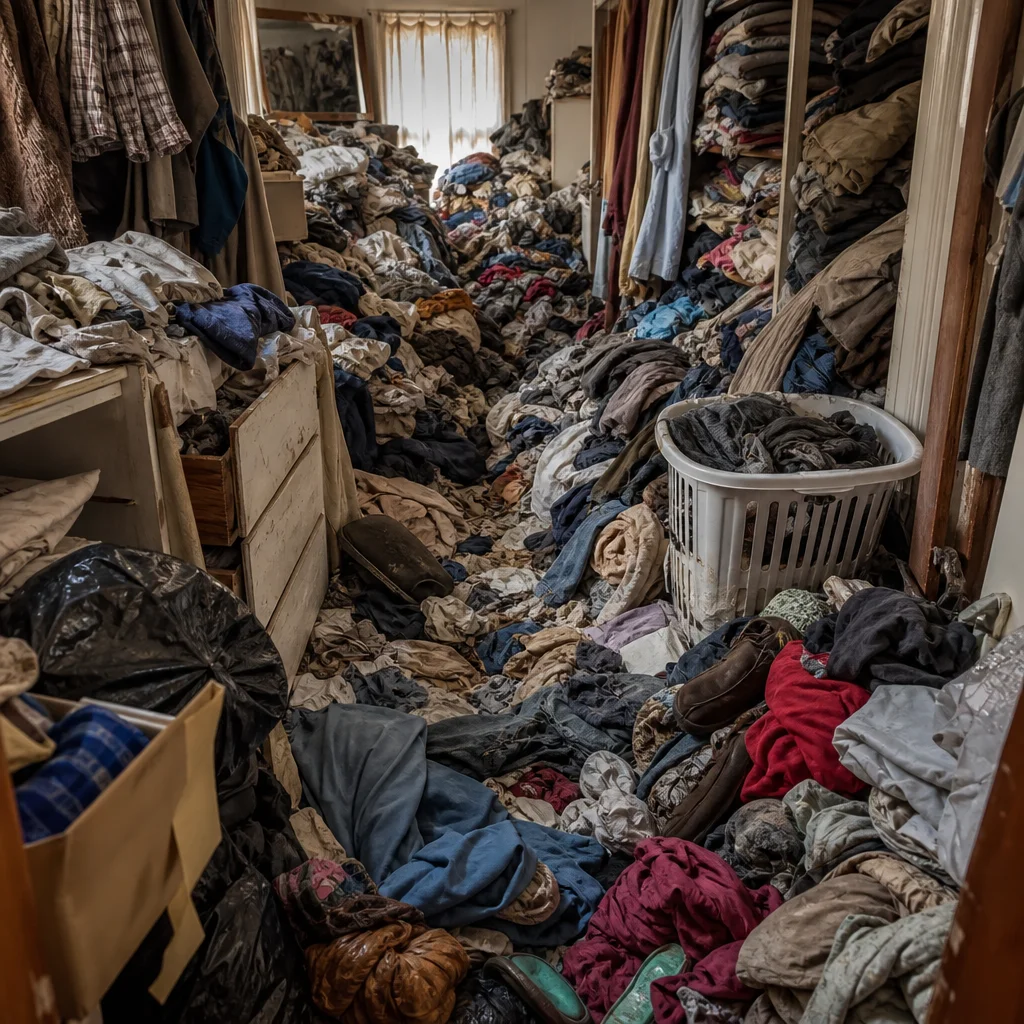
Before any clothing leaves a hoarded space, we identify what contaminated it. Pet waste, mold, dust mites, cockroach debris, rodent droppings, and bacterial growth all pose real health risks. Some clothing may have absorbed odors from sewage backup or decay. The person living there might not have disclosed everything that happened in that space.
Respiratory exposure is the most immediate concern. Handling heavily contaminated textiles releases spores, allergens, and microbes into the air. Anyone with asthma, immunocompromised status, or respiratory sensitivity risks serious reaction. Children and elderly relatives face heightened vulnerability.
Skin contact with contaminated fabrics can cause rashes, fungal infections, or secondary bacterial infections, especially if you have cuts or open areas on your hands. We always recommend gloves and mask protection, but even that protection is incomplete without proper ventilation and handling techniques.
This is why we don’t recommend DIY restoration for clothing exposed to hoarding conditions. Our team follows established contamination protocols. We use respiratory protection, appropriate disposal containers, and documented handling procedures. When specialized hazardous-waste removal is needed for heavily contaminated materials, we coordinate with licensed and insured subcontractors to ensure responsible disposal.
We also create documentation of what was present in the space, what was removed, and what was treated. This matters not just for your peace of mind, but for insurance claims and medical records if health issues emerge later.
What to do now: If you’re handling clothing from a hoarded space, use nitrile gloves, wear a mask rated N95 or higher, and work in a well-ventilated area. If anyone in your household has respiratory issues or immune concerns, let us handle it instead.
How Our Restoration Process Protects Your Wardrobe
Our approach starts with a detailed assessment of the clothing collection and the contamination sources in the space. We photograph items, note their condition, and determine which pieces are candidates for restoration versus safe disposal. Nothing leaves without this evaluation.
For clothing with good structural integrity and light contamination, we arrange professional restoration through specialized textile remediation. These facilities use techniques like ozone treatment, specialized laundering, and climate-controlled drying that regular cleaners can’t provide. The goal is to eliminate odor, microbial contamination, and allergens while preserving the garment.
Moderately contaminated or delicate pieces sometimes require conservation-level cleaning. A wedding dress, heirloom clothing, or expensive garments warrant this investment. These facilities treat each item individually, often by hand, assessing damage and determining the gentlest effective treatment.
We pack and transport clothing in sealed, labeled containers to prevent cross-contamination during the remediation process. Climate and humidity control during storage prevents mold growth and fabric deterioration while items await treatment or sorting. When clothing is returned to you, it comes with a detailed report about what was done and any limitations we encountered.
We’re also transparent about what can’t be saved. Heavy staining that won’t lift, advanced mold penetration, fabric rot, and insect damage sometimes mean a garment simply won’t recover functionally or aesthetically. We make that call before time and money get spent on impossible restoration.
Action item: Request detailed photos and a restoration plan from any service you hire. Understand exactly what treatment each category of clothing will receive and what the expected outcomes are.
What We Can and Cannot Save During Cleanup
Honestly, not everything survives. Natural fibers like wool and silk are more vulnerable to mold and bacterial damage than synthetics. Fine materials tear more easily during handling than sturdy fabrics. Items stored in direct contact with the floor or contamination sources rarely recover fully.
We can almost always save:
- Garments with odor alone (no visible contamination or damage)
- Structurally sound items with minor staining
- Clothing made from durable, tightly-woven fabrics
- Pieces in sealed bags or boxes that kept contamination at distance
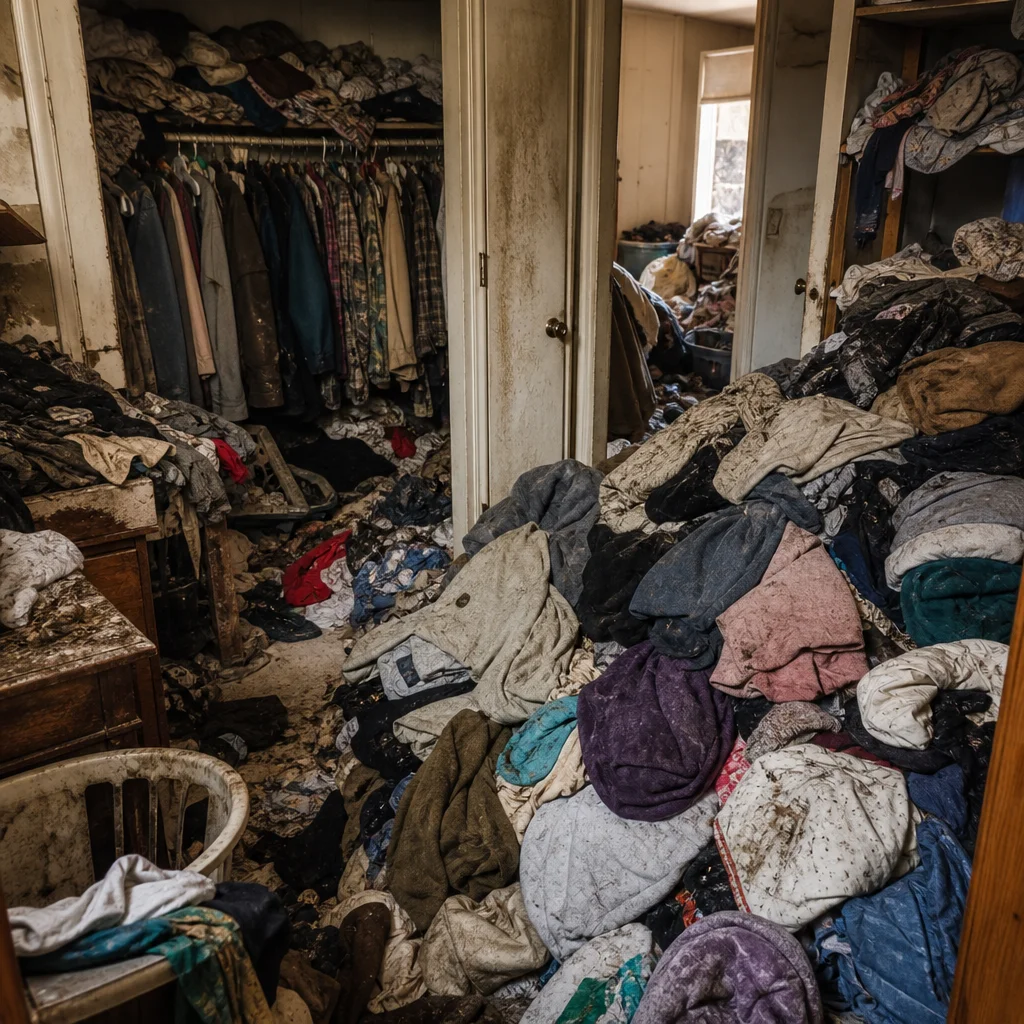
We often struggle to save:
- Clothing visibly stained with organic matter or mold
- Delicate fabrics or vintage pieces exposed to severe moisture
- Items matted, compressed, or showing fabric breakdown
- Garments stored against pet waste, sewage, or visible decay
Sometimes the emotional value of an item exceeds its restoration potential. A childhood sweater or a parent’s coat might be worth attempting even if recovery is uncertain. Other times, letting go is the healthier choice. That’s a personal decision we support either way.
We never throw anything away without your explicit approval. Every decision about restoration versus disposal is transparent and yours to make. Some families photograph items before disposal, creating a record if they want to remember the garment differently.
Next step: Make a list of clothing items with personal or financial significance before we arrive. This helps us prioritize which pieces to focus restoration efforts on.
Documentation and Insurance Claims for Your Belongings
If the property was damaged through no fault of your own (pipe burst, storm damage, unattended death), your homeowner’s or renter’s insurance might cover restoration costs. This requires detailed documentation of what was in the space, what condition it was in, and what happened to it.
We photograph every clothing category and major item before and after our work. We document contamination sources we identified. We create an itemized list of pieces sent to restoration, disposed of, or returned as-is. This documentation becomes your evidence for insurance claims.
Insurance adjusters want specifics: the number of items, their approximate condition before remediation, and the restoration or disposal method used. Vague descriptions don’t work. They need to know whether a pile contained 50 work shirts or 200 mixed garments. They need to know if something was discarded because it was unsalvageable or because restoration exceeded reasonable value.
We’ve worked with families whose claims were approved because we provided this level of detail. We’ve also seen claims delayed or denied when documentation was incomplete. The difference often comes down to whether you have a professional assessment.
Keep copies of all documentation and invoices. Insurance companies often request supporting evidence months after the initial claim. Having our detailed reports ready accelerates that process.
Do this today: Check your insurance policy for coverage of personal property damaged in your home. Note any documentation requirements or claim deadlines listed in your policy.
The Emotional Relief of Professional Remediation
Walking into a hoarded space stirs up complicated feelings. There’s often grief about what happened, frustration about what needs to be done, and sometimes guilt about feeling frustrated. That weight intensifies when you’re trying to salvage clothing and other belongings yourself.
We’ve watched families exhale once they hand this responsibility over. You don’t have to touch contaminated materials. You don’t have to make impossible sorting decisions alone. You don’t have to figure out whether a dress is savageable or just hold onto something broken. We handle it, document it, and show you exactly what happened.
There’s also relief in knowing that handling was done safely. Your children didn’t breathe mold spores while you were sorting. Your elderly parent didn’t strain their back lifting heavy piles. Nobody got an infection or rash from exposure. That peace of mind matters more than people often realize.
The emergency cleanup service we provide extends beyond clothing to everything in the space. Once the emotional burden lifts, families often find it easier to make decisions about the rest of the property. Cleaning your parent’s house moves from an impossible project to a manageable one.
Some families also use this process as a turning point. A parent in assisted living no longer carries shame about the state of their home. Adult children aren’t triggered by memories or ongoing stress. Grandchildren inherit a clean, safe space instead of complicated family history tied to the property.
What to acknowledge: It’s okay to feel relief when professional help arrives. It’s okay to not handle this yourself. Asking for help is practical, not a failure.
Getting Started With Our Flat-Rate Assessment
We start with a no-pressure assessment of what you’re facing. Our team visits your property, evaluates the space, photographs key areas, and provides a clear flat-rate quote. You’ll know exactly what the work costs before you decide to proceed. No surprise invoices. No hidden fees.
During the assessment, we’ll specifically evaluate your clothing situation. We’ll identify items worth pursuing for restoration, be honest about what’s likely unsalvageable, and explain what our process would cost. We’ll answer questions about timelines, logistics, and what happens to items during remediation.
We operate with discretion built into everything we do. Our vehicles are unmarked. Our team is trained to work respectfully in sensitive situations. We won’t discuss your situation with neighbors or post anything on social media. Your privacy is protected.
Same-day or next-day assessments are available in most areas. If you’re facing urgency due to a hospital stay, property sale timeline, or health inspection, we prioritize getting to you quickly. Once we understand what you need, we can often begin work within days.
To get started, contact us with a brief description of what you’re facing. We’ll schedule an assessment at a time that works for you. Bring photos if you have them, but they’re not necessary. We’ll document everything during our visit.
Your immediate action: Call or email us with the address and a general description of the situation. Mention any specific concerns about clothing or other belongings you want to prioritize. We’ll confirm availability and schedule your assessment.
Hoarding cleanup and clothing restoration don’t have to be impossible projects you handle alone. We’re equipped, trained, and ready to help you recover what can be saved and responsibly handle what can’t.
Frequently Asked Questions (FAQ)
Can we really restore clothes from a hoarded environment, or should everything be discarded?
We can often save clothing, but it depends on the contamination level and fabric type. During our assessment, we evaluate each item for mold, pest damage, chemical exposure, and odor saturation. We use professional cleaning, specialized treatments, and proper storage methods to restore what’s salvageable, while we responsibly dispose of items that pose health risks. Our documentation also helps you understand what was saved versus what couldn’t be recovered, which is important for insurance purposes.
What makes your clothing recovery process different from just washing items at home?
Home washing won’t address deep contamination like mold spores, pest residue, or biohazard exposure that can be embedded in fibers. We use industrial-grade cleaning, climate-controlled storage, and specialized decontamination techniques that home equipment cannot achieve. We also handle the full remediation of your space first, so clothing isn’t re-contaminated during the cleanup process itself.
How does documentation help when we’re dealing with clothing loss and insurance claims?
We photograph and catalog items throughout our process, creating detailed records of what we recovered and what couldn’t be saved. This documentation gives your insurance company clear evidence of loss and the scope of damage, which strengthens your claim significantly. We’ve found that detailed records make the claims process faster and often result in better settlements for our clients.