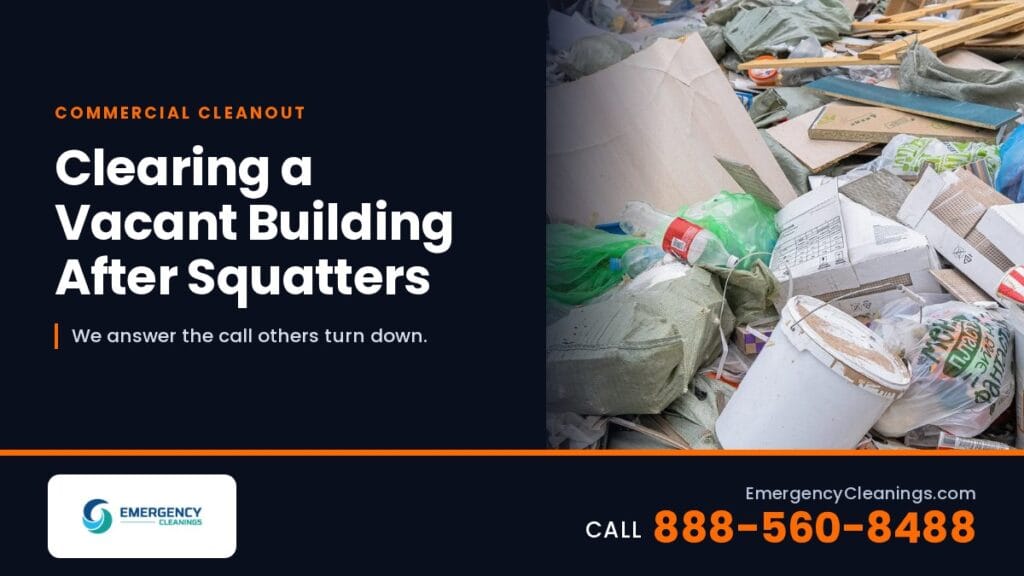
To clear a vacant commercial building after squatters, dumping, or vandalism, get the occupants out through police or the courts first, document the condition, and then bring in one crew that handles sharps, human waste, and bulk debris in a single visit. Emergency Cleanings runs that as commercial junk removal with a flat price locked after a free on-site walkthrough, and it is a one-time job with no recurring contract attached.
Before anyone touches a bag: occupants and paperwork
You drive by your building on a Tuesday and the side door is pried open. There are mattresses in the back office. Someone has piled tires and drywall behind the loading dock. Hold off on calling a hauler.
If anyone is still living inside, removing them is a legal step, and the cleanup waits for it. How fast that goes depends on your state and on whether the occupant claims to be a tenant. Florida, for example, gave owners a sheriff removal process in section 82.036 of its statutes, and that process only covers property that includes a residential dwelling. A retail strip or warehouse may fall back on trespass enforcement or a regular eviction case. Rules vary by state and this is not legal advice, so talk to your attorney and the local police before you change locks on someone inside.
Belongings left behind raise a second question. Some states set out notice steps before a commercial owner can dispose of property left on the premises. California’s version lives in Civil Code section 1993.04, which requires a written notice giving at least 15 days to reclaim after personal delivery, or 18 days if mailed.
Step one on site: secure it and photograph everything
Once the building is empty of people, the job starts with a camera. Our technician arrives inside a 2-hour window, and you get a text with an ETA when they are on the way. They walk every room with you or your representative and photograph the damage, the entry points, the dumped material and anything that looks like evidence of a break-in.
Those photos matter to you more than to us. Your insurer and the police will both want them.
After the walkthrough, a Project Coordinator calls you with the exact final price and the step-by-step plan. You approve it, and work often starts the same day. That price is one flat fee covering labor, disposal, transportation, equipment and insurance. It does not grow by the hour.
Sharps and human waste come out first
Occupied vacant buildings almost always have needles somewhere. They turn up under mattresses and inside ceiling tiles. The crew sweeps for them before anyone starts grabbing debris by the armful. The FDA’s guidance on getting rid of used needles calls for placing sharps straight into a proper sharps container to cut down on needle sticks from loose ones. Our technicians bag them that way.
Next comes human waste. OSHA has stated that urine and feces fall outside its definition of other potentially infectious materials unless they are visibly contaminated with blood. The crew removes the waste, cleans and disinfects the surfaces, and bags soiled porous items like carpet pads and bedding for disposal. If the building has heavy contamination, our feces and urine cleanup team handles that part of the scope.
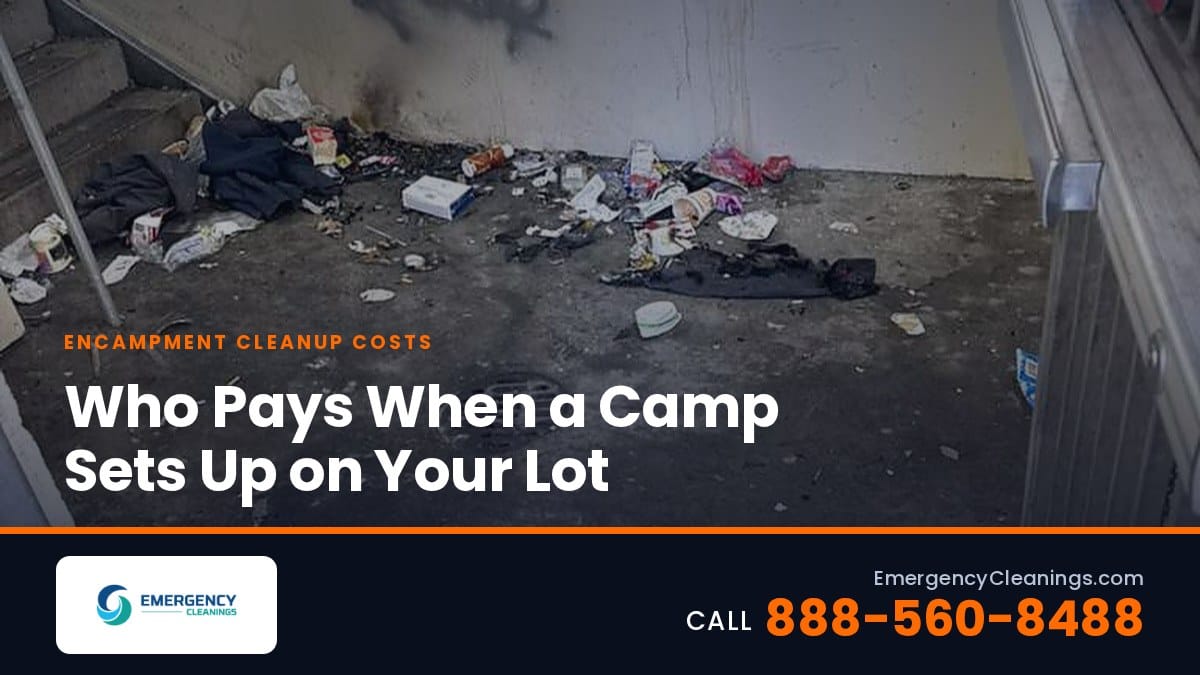
If people were camping outside on the lot or under an overhang, the same approach applies to the exterior. We cover that in more detail in our guide to encampment cleanup on private property, and it is part of our homeless encampment cleaning service.
Bulk debris and dumped material
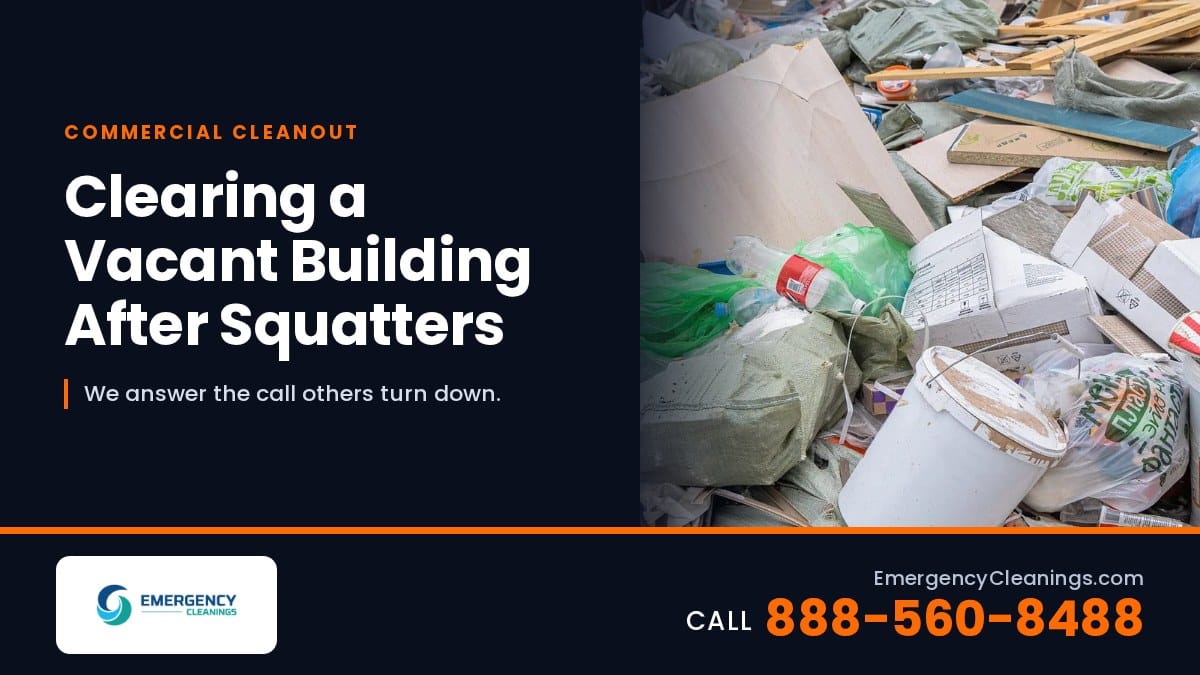
With the hazards gone, the heavy lifting begins. This is where most of the volume sits. Mattresses, broken shelving, and renovation debris a contractor dumped at night because your lot was dark.
Our commercial junk removal service loads it, hauls it and takes it to the appropriate disposal or recycling facility. Items that need special handling, like paint cans, car batteries or propane cylinders, get separated out rather than thrown in with the general load. You can request disposal records afterward for your files.
The EPA notes that illegal dumping can threaten public health, safety and property values.
One thing we will not do is try to sign you up for monthly hauling. You have a one-time problem. We clear it and leave. We do not rent dumpsters either, and we are not a property-preservation network looking for recurring work orders.
Handing the space back to you
At the end of the job, you get a building that can be shown. The technician photographs the finished space in the same order as the first walkthrough, so you have a before and after set for your broker, your lender or your insurer.
Some damage belongs to other trades. Surface mold gets cleaned as part of the work. Deep mold mitigation, water damage restoration, fire restoration, plumbing repair, and rebuilding are separate trades that Emergency Cleanings does not perform. Line up your locksmith or contractor for new locks and boarded openings the afternoon the crew finishes.
For the insurance question most owners ask first, request a certificate of insurance before the crew arrives. Tell us the limits and additional insured language your lender or your own policy requires, and we will confirm what can be provided. Our post on commercial emergency cleaning for offices, retail and warehouses covers more of what owners check before letting a crew on site.
Frequently Asked Questions
Can you start cleanup while squatters are still inside?
No. Occupants have to be removed through police or a court process first, depending on your state. Once the building is empty, we can schedule the walkthrough and often start the same day.
Do I have to sign a recurring contract for commercial junk removal?
No. Emergency Cleanings treats a vacant building cleanout as a single job with one flat price. There is no monthly hauling plan or dumpster rental attached.
Will you provide a certificate of insurance?
Ask for one when you book. Give us the limits and additional insured wording you need, and we will confirm what can be issued before the crew arrives.
What happens to needles found in the building?
Technicians place them directly into sharps containers as they find them and remove them for proper disposal before the bulk debris work begins.
Can I get photos for my insurer?
Yes. The technician photographs the building during the first walkthrough and again when the job is finished, and those photos are yours to use.
If your vacant building has been broken into, dumped on or lived in, call Emergency Cleanings at 888-560-8488. You get a same-day response, a free assessment on site, a written scope, and one flat price locked before work starts.