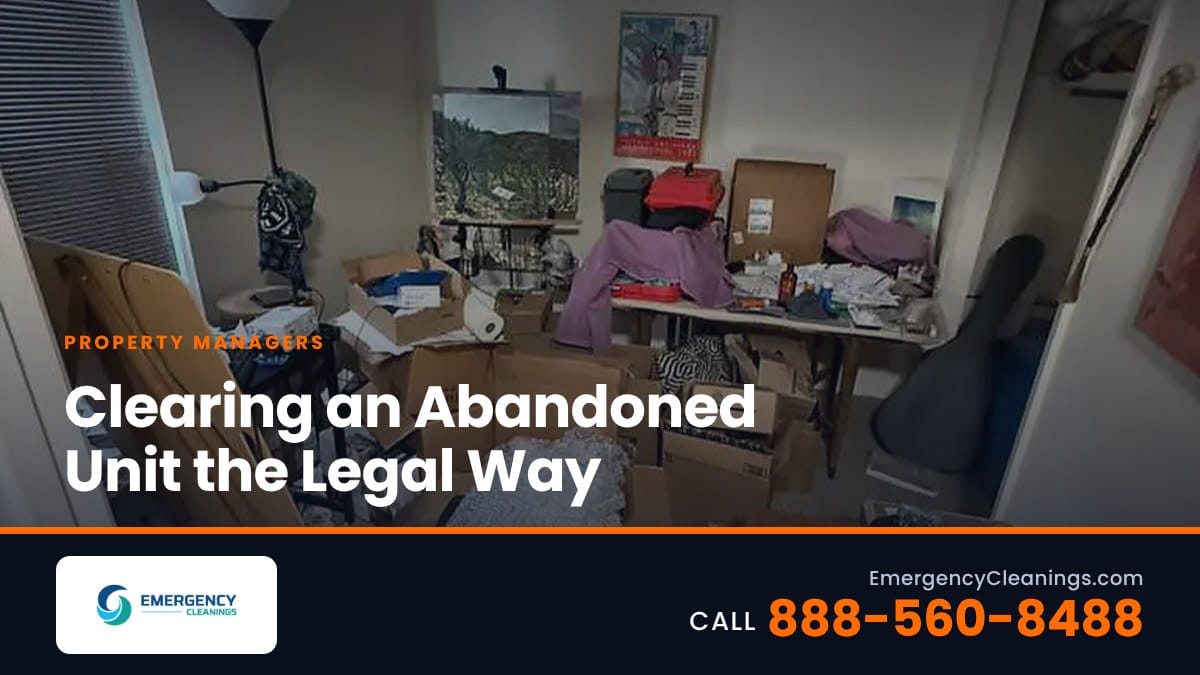

A standard homeowners policy usually does not cover hoarding cleanup itself, because insurers treat clutter that piles up over years as accumulation rather than a sudden accidental loss. A covered peril that happens inside a hoarded home, like a sewage backup, a fire, or water from a burst pipe, can be a different matter, and your carrier makes that call. Emergency Cleanings prices hoarding cleanup as a flat fee locked after a free on-site scope, so families know the number before any work starts.
Cleanup for hoarding situations often involves significant time, labor, and potential safety hazards for residents and workers. Insurance policies may offer some financial support, though coverage limits and exclusions vary widely by provider. Understanding the role of hoarding cleanup insurance helps families plan responsibly before undertaking complex cleanup efforts.
Many homeowners assume hoarding situations automatically qualify for insurance claims, yet companies usually require clear evidence. Policies often demand proof of property damage, health risks, or fire hazards to approve cleanup costs. Early awareness of policy requirements ensures families avoid unexpected financial burdens during emotionally challenging situations.
Homeowners Insurance and Hoarding Situations
Homeowners insurance may cover certain damages resulting from hoarding, depending on policy terms and conditions. Policies typically address structural damage, fire hazards, or plumbing issues caused by accumulated clutter. Claims may be denied if insurers consider the situation preventable through standard maintenance or intervention.
Documentation of damage is essential when submitting insurance claims related to hoarding cleanup. Photographs, professional assessments, and written statements provide the evidence insurers require for consideration. Without proper records, families risk paying out-of-pocket for necessary cleaning and restoration services.
Liability coverage within homeowners insurance can apply if hoarding poses a risk to visitors or workers. Injuries from tripping hazards, falling debris, or unsanitary conditions may trigger certain protections. Awareness of liability clauses helps residents understand which costs could be reimbursed after an incident occurs.

Proof of Damage and Health Hazards
Insurance policies often require demonstrable evidence of damage or health hazards before approving claims. Mold growth, pest infestations, or blocked exits are common triggers for coverage. Comprehensive assessments from professionals strengthen claim approval chances while ensuring safety during cleanup.
Medical reports or environmental inspections may also support claims for hoarding cleanup. Demonstrating risks to residents or visitors substantiates the need for immediate intervention. Families can coordinate with licensed inspectors to produce detailed documentation for insurers.
Even minor damages can affect claim outcomes when combined with health or safety risks. Insurers may cover debris removal, surface cleaning, or pest control if evidence confirms harm. Accurate reporting prevents surprises when scheduling professional cleanup services and financial planning.
Liability Considerations During Cleanup
Hoarding cleanup involves specialized labor and equipment, which can create potential liability concerns for homeowners and workers. Unstable piles, hidden hazards, and biohazardous materials increase the risk of accidents during cleanup. Understanding liability considerations helps families plan safely and coordinate with insurance policies effectively.
When addressing liability during hoarding cleanup, consider the following key points:
- Insurance policies may offer limited protection if cleanup prevents injury to invited guests or contractors.
- Coverage can sometimes extend to third parties who sustain injuries on the property due to hoarding conditions.
- Homeowners and property managers should document hazards thoroughly to support potential insurance claims.
- Prioritizing the removal of high-risk areas first can reduce accidents and maintain compliance with policy requirements.
- Hiring trained professionals ensures safe handling of biohazards and mitigates exposure to legal or financial risks.
Careful attention to liability coverage reduces the likelihood of costly incidents during cleanup. Proactive planning ensures both safety and financial security throughout the entire process.
Exclusions in Hoarding Cleanup Coverage
Insurance policies often have specific exclusions that homeowners should understand before scheduling hoarding cleanup. Extreme clutter, biohazards, or chemical exposure can fall outside standard coverage limits. Reviewing policy details helps families prepare financially and avoid unexpected expenses.
When considering exclusions in hoarding cleanup coverage, keep the following points in mind:
- Many policies exclude situations involving extreme clutter or biohazardous materials from reimbursement.
- Claims may be denied if items block fire exits or create flammable conditions.
- Mold, rodent infestations, or other environmental hazards might only be covered if linked to property damage.
- Cleanup costs related to decomposing materials or chemical spills are frequently excluded from standard coverage.
- Lack of documentation or failure to demonstrate responsible property management can result in claim denial.
Being aware of these exclusions allows families to plan cleanup efforts responsibly and reduce stress. Clarifying coverage with insurers before work begins ensures smoother financial and logistical coordination.

Planning and Preparing Financially
Knowing what insurance covers enables families to budget effectively for hoarding cleanup services. Estimating costs in advance helps prevent delays caused by insufficient funding or misunderstood policy limitations. Early financial planning ensures that cleanup can proceed safely and without prolonged disruption.
Families should review policies and consult agents to clarify coverage, limits, and exclusions. Comparing multiple cleanup scenarios can identify gaps where out-of-pocket expenses may arise. Understanding responsibilities before work begins ensures informed decisions and reduces potential disputes with insurers.
Scheduling professional inspections in advance provides critical documentation for insurance claims. Detailed reports validate the need for cleanup and reinforce compliance with policy conditions. Such preparation ultimately protects both residents and service providers during complex hoarding interventions.
Professional Hoarding Cleanup and Insurance Compliance
Professional hoarding cleanup services help families navigate complex insurance requirements efficiently. Experts document property conditions, remove hazards, and provide evidence needed for claim approval. Their knowledge supports compliance with policy standards while ensuring safe, thorough cleanup.
Cleaners coordinate with families to identify which areas qualify for insurance reimbursement. Proper documentation of debris, damage, and environmental hazards enhances claim accuracy. Comprehensive service reduces emotional stress while streamlining communications with insurers and other stakeholders.
Hoarding cleanup often involves unique safety risks and legal considerations beyond ordinary cleaning. Professionals provide risk mitigation, adhere to industry standards, and help families plan financially. Leveraging expert support ensures thorough remediation while aligning with coverage requirements.
Understanding Coverage and Taking Action
Insurance policies vary widely, and families must understand coverage, limits, and potential exclusions thoroughly. Proactive planning reduces financial surprises and facilitates safer, more efficient hoarding cleanup efforts. Awareness of policy nuances ensures residents can approach cleanup with confidence and peace of mind.
Frequently Asked Questions
Does homeowners insurance cover hoarding cleanup?
Usually not for the cleanup itself. Most policies pay for sudden accidental losses, and belongings that built up over years do not fit that description. Ask your agent to walk you through your own policy language before you count on a claim.
What if sewage backs up or a pipe bursts inside a hoarded home?
That can be handled differently, because the trigger was a sudden event and not the hoarding. Your carrier decides what it will pay and how much, so photograph the damage and hold on to any professional assessment. Emergency Cleanings covers the sewage backup cleanup side of that work and can provide disposal records you can request.
How does pricing work when insurance will not pay?
A technician walks the property and scopes the job in person, and that assessment is free. The price is then set as a flat fee and locked before anyone starts. Financing is available, and a large house can be phased.
Will the neighbors know what is happening?
Discretion is part of how the job runs, and crews keep the details of the property confidential. You get a two-hour arrival window and a text with an ETA when the technician is on the way. The family decides what gets saved.
At Emergency Cleanings, we handle hoarding cleanup services quietly and thoroughly, and our specialists are ready for immediate support and expert cleanup solutions. Call 888-560-8488 for a same-day response. The assessment is free, a technician scopes the home on site, and your flat price is locked before work begins.