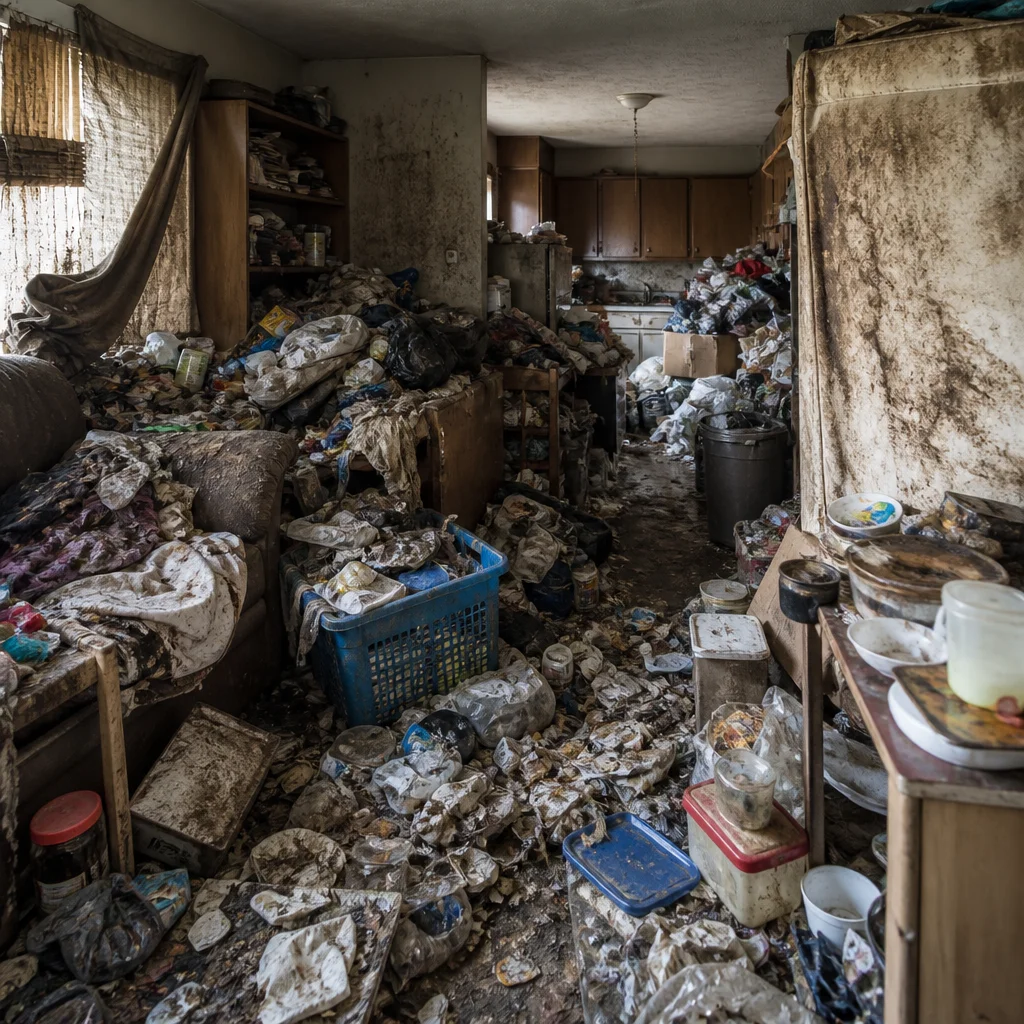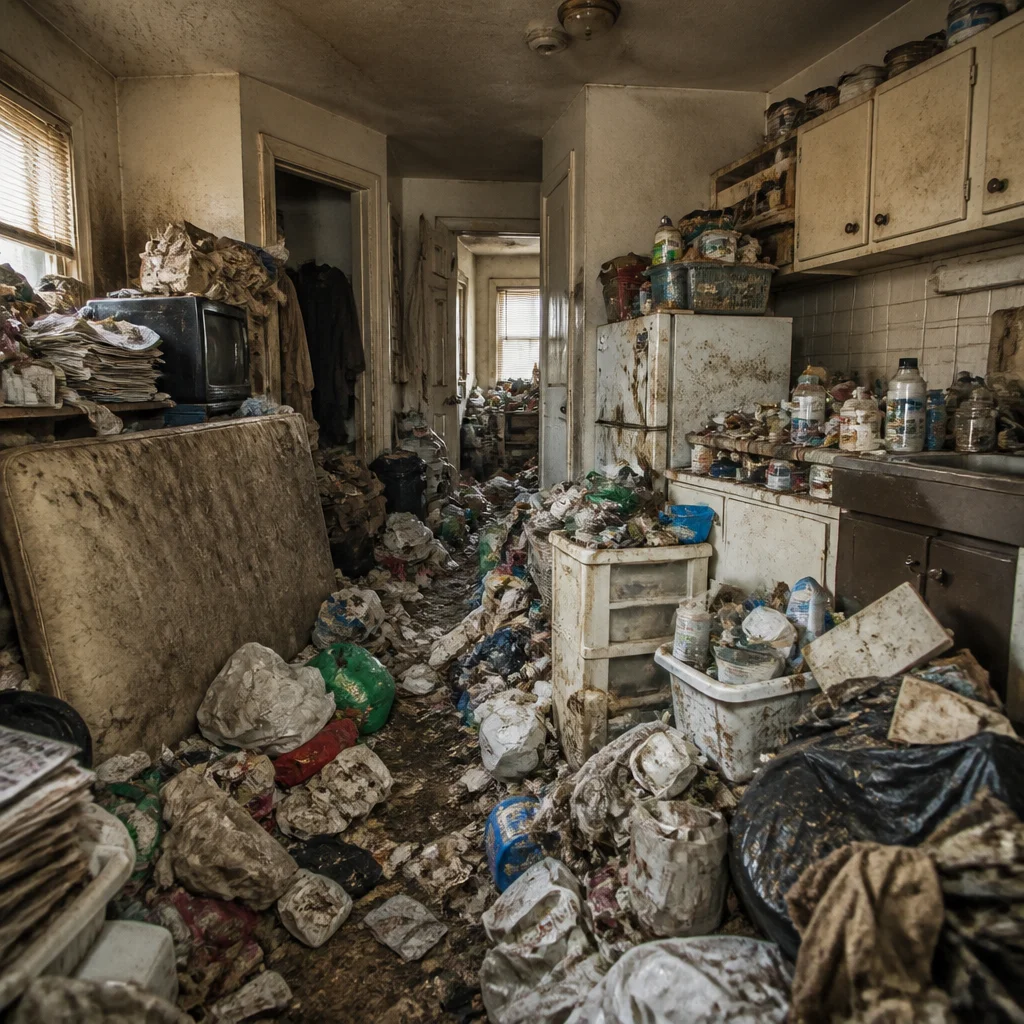

Talking to a hoarder goes better when you lead with what you can see, keep the focus on safety, and leave the decisions about belongings with the person who owns them. That approach is for family members and caregivers who are worried about a loved one and do not want the conversation to turn into a fight. Emergency Cleanings handles the physical side of hoarding cleanup once the person is ready, after a free on-site scope that locks a flat price before any work begins.
The question of how to talk to a hoarder often arises during moments filled with tension and concern. A cluttered space may begin to pose safety risks. Access points disappear. Health conditions worsen quietly. Conversations feel urgent, yet the emotional weight tied to belongings makes the situation fragile. What determines whether progress happens is rarely the concern itself. It is how that concern is communicated.
Hoarding-related conversations succeed when they preserve dignity, reduce fear, and create space for cooperation rather than control. Shame and resistance tend to surface when people feel judged, rushed, or misunderstood. Thoughtful communication helps shift the focus toward safety, stability, and achievable next steps.
How to Talk to a Hoarder Starts With Emotional Safety
Emotional safety sets the tone for everything that follows. Hoarding behaviors are frequently associated with anxiety, trauma, or significant loss. When conversations feel threatening, defensive responses appear quickly. Calm language, neutral observations, and patience lower emotional barriers.
Tone matters as much as wording. Speaking slowly, avoiding raised voices, and maintaining a non-confrontational posture communicates respect. Conversations grounded in concern for well-being are more likely to continue than those framed around frustration or urgency. Trust builds when the person feels heard rather than evaluated.

How to Talk to a Hoarder Using Observation Instead of Accusation
Observations reduce conflict because they focus on what is visible and measurable. Statements such as walkways being blocked or appliances being inaccessible describe conditions without assigning blame. Accusatory language often shuts down dialogue, while factual descriptions invite discussion.
Open-ended questions encourage participation. Asking which areas feel most stressful or which belongings feel hardest to part with acknowledges autonomy. These questions shift the dynamic from enforcement to collaboration and help identify realistic starting points.
How to Talk to a Hoarder Without Forcing Immediate Change
Pressure can stall progress. Conversations that demand rapid, full cleanouts often increase resistance and emotional distress. Gradual steps create momentum without overwhelming the person involved. Addressing one room, one hazard, or one access issue at a time keeps the process manageable.
Timing influences outcomes. Discussions held during inspections, emergencies, or emotional highs often escalate tension. Choosing a calmer moment allows for clearer thinking and more productive planning. Progress grows when expectations align with emotional readiness.
How to Talk to a Hoarder About Safety and Shared Responsibility
Safety concerns provide a neutral foundation for discussion. Fire hazards, blocked exits, sanitation issues, and structural access are practical topics that affect everyone connected to the space. Framing these risks as shared responsibilities reduces the sense of personal failure.
In shared living or managed environments, one affected space can impact others. Explaining how conditions may affect neighboring units, maintenance access, or emergency response introduces context without assigning blame. Clear expectations paired with support reduce fear and defensiveness.
How to Talk to a Hoarder When Cleanup Becomes Necessary
Eventually, conversation must lead to action. Introducing professional cleanup services as support rather than enforcement helps ease anxiety. Explaining that trained teams handle removal, disinfection, and recycling responsibly reduces fear of judgment or loss.
Professional hoarding cleanup services typically include removal and disposal of objects and debris, coordination of recycling, and careful efforts to locate valuable or sentimental items. Discreet service protects privacy. Sympathetic staff understand the emotional complexity involved. Around-the-clock availability and same-day service help stabilize urgent situations without prolonged disruption.
How to Talk to a Hoarder About Health Risks Without Escalation
Health risks often drive the need for intervention. Feces and urine contamination, sewage backups, mold growth, and pest activity can compromise indoor air quality and sanitation. Chemical storage issues or fuel accumulation introduce additional hazards. Discussing these risks factually helps maintain focus on prevention rather than fault.
Containment and decontamination play key roles in restoring safe environments. Professional cleanup follows structured processes that include assessment, containment when needed, thorough cleanup, and decontamination. A final inspection confirms that conditions meet safety standards and reduce the risk of recurrence.

How to Talk to a Hoarder in Complex or High-Risk Environments
Some situations involve more than household clutter. Vehicles, garages, campers, storage units, and industrial spaces may contain hazardous materials, heavy debris, or biohazards. In these environments, certified technicians and licensed subcontractors handle removal and disposal in compliance with local, state, and federal regulations.
Industrial cleanups and emergency cleaning services address spills, accidents, and unexpected events that require immediate attention. Routine maintenance cleaning after a major cleanup supports long-term stability and helps prevent future emergencies.
How to Keep Communication Productive After the Cleanup
Cleanup alone does not guarantee lasting change. Ongoing communication helps maintain progress. Setting clear expectations around access, safety, and maintenance creates structure without pressure. Regular check-ins focused on conditions rather than belongings reinforce accountability while preserving trust.
Scheduled cleaning services can support safer environments over time. Routine maintenance reduces hazards, supports hygiene, and prevents situations from escalating again. Consistency builds confidence and reduces the emotional strain associated with repeated crises.
Turning Difficult Conversations Into Forward Motion
Learning how to talk to a hoarder without causing shame or resistance requires patience, clarity, and empathy. Observational language, realistic pacing, and a focus on safety help transform confrontation into cooperation. When conversations are supported by professional resources, progress becomes sustainable rather than temporary.
Frequently Asked Questions
What should I say the first time I bring it up?
Describe one thing you can see rather than the pile as a whole. Saying that the back door will not open all the way is easier to hear than saying the house is a mess. Then ask what feels hardest about that spot.
What do I do if they refuse help?
You cannot force it, and a surprise cleanout done without the person’s buy-in usually makes things worse by breaking trust and deepening the hoarding. Keep the door open, stay in contact, and focus on the safety issues that put someone at risk right now. When they are ready, bring in a professional crew for the physical work.
How fast can a crew get out once the person agrees?
Emergency Cleanings responds the same day in most cases, with a two-hour arrival window and a text when the technician is on the way. Getting there quickly matters, because a person who says yes on Tuesday may feel differently by Friday.
How does pricing work for a hoarding cleanup?
A technician walks the property, scopes the work in person, and gives you one flat price that is locked before the job starts. The assessment costs nothing. Financing is available, and larger jobs can be phased room by room.
Emergency Cleanings provides specialty cleaning services nationwide, including hoarding cleanup, emergency cleaning, and a wide range of urgent and industrial solutions. Once they say yes, call 888-560-8488 for a same-day response. The assessment is free. A technician scopes the job on site, and the flat price is locked before anyone starts work.