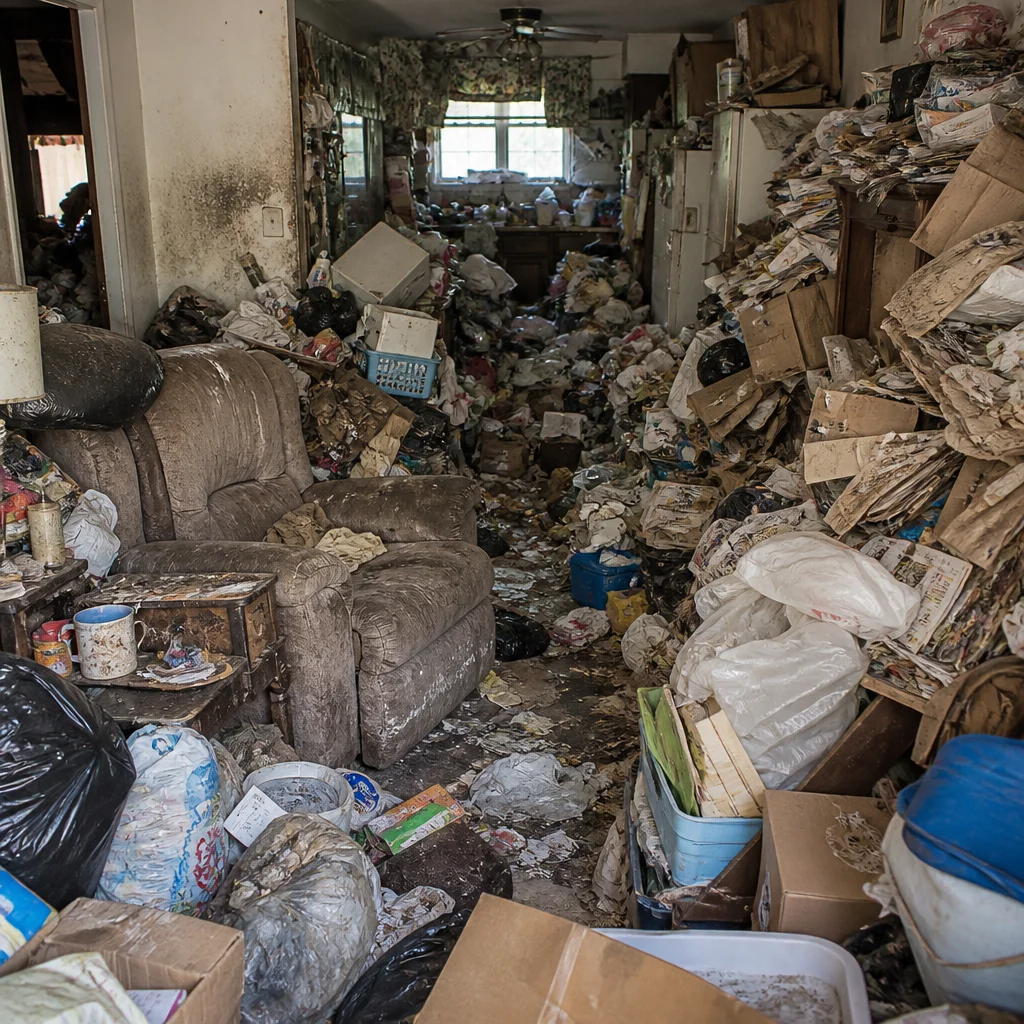

A hoarding cleanup checklist is the short list of things a family settles before the crew shows up: who has final say on what stays, which rooms get cleared first, where documents and sentimental items are set aside, and how the team gets in the door. Before the crew arrives, gather keys and access codes, secure pets away from the work area, mark utility shutoffs and fragile spots, box up medications and paperwork, and decide where household members will sleep if rooms turn unsafe. Emergency Cleanings scopes the property on site for free, then locks a flat price before any hoarding cleanup work starts.
Hoarding cleanup can feel overwhelming, both emotionally and physically, for families managing cluttered living spaces. Therefore, careful preparation ensures a safer, more efficient process while reducing stress for everyone involved. Understanding the scope of hoarding cleanup helps families plan for a smoother and more organized experience.
Understanding Hoarding Cleanup and Its Mental Health Implications
Understanding the process of hoarding cleanup helps families prepare both emotionally and practically. Many households underestimate how challenging cluttered environments can become, especially when safety issues or blocked pathways are involved. Learning what to expect allows families to approach the experience with clarity and confidence, and resources like Harvard Health on Hoarding can help families better understand the condition.

Because cleanup can feel overwhelming, understanding common emotional reactions helps guide healthier responses. Family members may experience stress, guilt, or worry as items are sorted and removed, so acknowledging these feelings supports smoother decision making. When everyone feels prepared, the process becomes more manageable for the entire household.
Awareness of potential hazards also plays a key role in preparation. Cluttered spaces may hide mold, pests, or unstable piles that require careful handling. Families who understand these risks can follow the checklist more effectively and support safe, steady progress throughout the cleanup.
Communicate and Plan for a Successful Hoarding Cleanup
Next, effective communication with the cleanup team establishes a strong foundation for a successful hoarding cleanup. Families should clearly outline urgent areas, note which belongings require special care, and share household routines. Stigma surrounding hoarding disorder can sometimes lead to misunderstandings, even among health care professionals, which may create frustration during the planning process.
Listening to each household member ensures sentimental or essential items are treated with care throughout the process. Sharing anticipated obstacles and personal preferences allows the team to prepare protective measures effectively. This proactive communication reduces misunderstandings, fosters trust, and supports a smoother workflow for everyone involved.
Setting realistic goals for each room helps maintain progress without overwhelming family members. Prioritizing spaces based on safety, accessibility, or daily use keeps the cleanup organized. Open dialogue between family members and the team clarifies expectations and ensures the process runs efficiently from start to finish.
Identify Items to Keep and Let Go
Properly sorting items before hoarding cleanup creates structure and reduces emotional stress for families during the process. Categorizing belongings into clear groups helps everyone make decisions with greater ease. This organization also supports a safer and more efficient workflow for the cleanup team.
Below are key steps to identify items to keep and let go:
- Separate belongings into keep, donate, and discard categories to create clarity from the start.
- Set aside sentimental items early to protect meaningful possessions throughout the sorting process.
- Identify hazardous clutter so dangerous items can be removed before addressing general household belongings.
- Assess which items support daily routines and prioritize keeping those essential pieces.
- Use guidance from trained professionals to distinguish between valuable possessions and items that pose safety concerns.
These steps make the sorting process smoother and more manageable for families. With a clear approach, decisions become easier and the home becomes safer.
Plan for Temporary Relocation if Needed
During intensive hoarding cleanup, some areas may become unsafe or inaccessible for residents. Therefore, arranging temporary relocation ensures safety and comfort. Short-term accommodations or family stays provide stability during the cleanup process.
Knowing where household members will stay allows the cleanup team to focus efficiently without interruptions. Relocation also protects vulnerable individuals from dust, pests, or airborne particles. Proper planning ensures everyone remains safe throughout the cleanup process.
Coordinating daily routines, including meals and medications, supports normalcy while cleanup is underway. Returning quickly to familiar routines reduces stress for household members. Thoughtful relocation strategies maintain stability and prevent disruptions during the process.

Prepare Documents, Keys, and Access Details
Preparing important documents, keys, and access details ahead of time prevents delays during hoarding cleanup. Clear instructions help teams understand what areas need attention first. This preparation also ensures a safe and organized start to the process.
Below are key steps to prepare documents, keys, and access details:
- Gather property keys, access codes, and entry instructions to ensure workers can move through the home safely.
- Provide written authorizations or necessary permissions so the team can perform required tasks without interruption.
- Mark utility shutoff points and fragile areas to prevent accidental damage during the cleanup.
- Share insurance details and emergency contacts to support quick responses to unexpected situations.
- Secure pets or service animals in a separate space to protect their safety throughout the cleanup process.
Proper preparation helps families avoid unnecessary stress. With these details organized, cleanup teams can work efficiently and safely.
Moving Forward with Confidence
Ultimately, successful preparation combines organization, communication, and emotional support for all family members. Families who plan carefully experience less stress and achieve safer, more manageable outcomes. Preparing in advance allows households to transition smoothly to healthier, more functional living spaces.
Frequently Asked Questions
What should a family do before the hoarding cleanup crew arrives?
Pull keys, access codes and entry instructions together, and secure pets away from the work area. Mark utility shutoffs and any fragile spots, then set aside legal papers, medications and sentimental items in one labeled box so nothing important lands in a discard pile. Pick one person to make the call when a decision is unclear.
How fast can someone come out?
Emergency Cleanings responds the same day in most cases. You get a two hour arrival window, plus a text with an ETA once the technician is on the way. Coverage is nationwide through local technicians who are vetted, licensed and insured.
How does pricing work for a hoarding cleanup?
The assessment costs nothing. A technician walks the property, scopes the job, and the price is locked flat before work begins, so the number does not drift later. Financing is available, and a big job can be phased room by room.
What does the crew handle, and what falls outside the job?
The team clears clutter, hauls out junk, cleans and sanitizes surfaces, and handles biohazard conditions like feces or urine under the piles. Mold remediation, water damage and fire restoration are separate trades, and Emergency Cleanings does not take those on. Disposal records are available if you request them.
Cleanup is one step toward getting the home safe again. At Emergency Cleanings, we guide families through every phase of the work with patience and privacy. Call 888-560-8488 for a same day response. The assessment is free, a technician scopes the home on site, and the flat price is locked before anyone starts hauling.