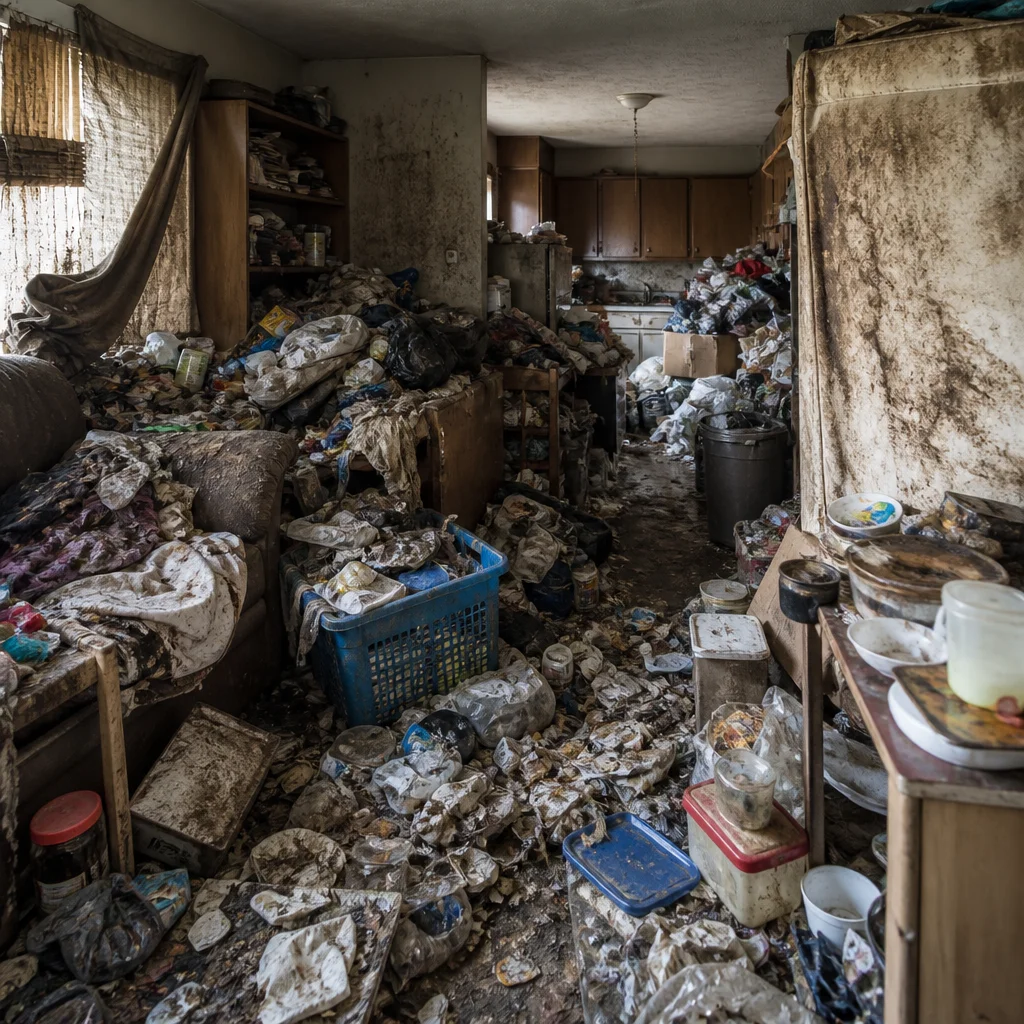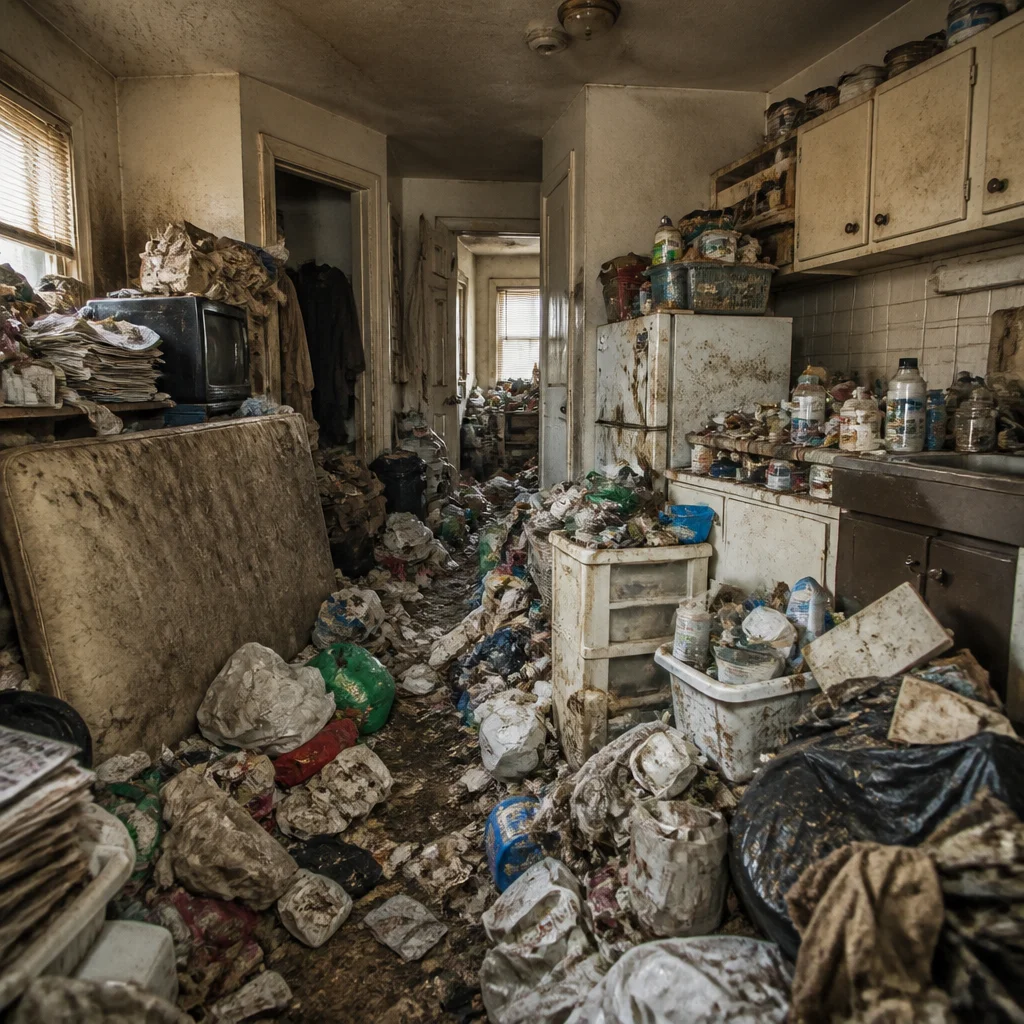

A hoarding fire hazard is any condition inside a cluttered home that makes a fire easier to start or harder to survive, such as stacked paper near a heater, overloaded outlets, or pathways too narrow to reach a door. It matters most to family caregivers watching a parent or relative live in a house where exits are buried and smoke alarms are unreachable. Emergency Cleanings handles hoarding cleanup nationwide with a free assessment, an on-site scope, and a flat price locked before any work starts.
Every home holds memories, but when belongings pile up beyond control, those memories can become fuel for danger. Hoarding doesn’t just create clutter, it also creates conditions where a single spark can turn devastating. Fire hazards are one of the most serious and overlooked consequences of hoarding, posing life-threatening risks to residents, neighbors, and emergency personnel. Recognizing these dangers is essential for prevention, safety, and recovery.
How Hoarding Increases Fire Risk
Hoarded environments contain a high volume of flammable materials such as paper, fabric, plastics, and cardboard, often stacked near heat sources. Even small household activities like cooking or lighting candles can ignite a blaze that spreads rapidly. According to the U.S. Fire Administration, hoarding dramatically slows emergency response times and increases the likelihood of injury or death in residential fires.
The danger isn’t just the flames. Clutter blocks access to exits, makes it harder for firefighters to move safely, and can conceal smoldering hotspots that reignite after the fire seems extinguished. In many cases, residents are unable to escape due to narrow pathways or blocked doors.
A clean home may contain several safety buffers, but in a hoarded environment, every inch of space becomes potential fuel.
Common Fire Hazards Found in Hoarded Homes
Fire risks grow with each layer of clutter. Items that appear harmless can become lethal when combined with heat, electricity, or poor ventilation. Before listing the most common hazards, it’s important to note that fire danger increases not only with what is kept but also with how it is stored.

Frequent fire hazards include:
- Stacks of paper and cardboard near heaters, stoves, or outlets.
- Overloaded electrical circuits powering multiple devices or appliances.
- Blocked vents and radiators that trap heat and spark ignition.
- Improperly stored flammable liquids, such as cleaning agents or gasoline.
- Open flames from candles, cigarettes, or portable heaters placed near clutter.
- Nonfunctional smoke alarms or inaccessible fire extinguishers.
Each of these hazards becomes more severe in tight, cluttered spaces where oxygen flow feeds flames. Prevention begins with identifying these risks before they escalate into emergencies.
When awareness is combined with proactive cleanup and safety checks, homes become far safer for occupants and rescue teams alike.
How Hoarding Impacts Firefighter Response
Firefighters train for many types of emergencies, but hoarded environments present unique and dangerous challenges. Excessive clutter limits visibility, hides hazards under debris, and increases the risk of floors or stairways collapsing under weight.
Blocked entryways make it difficult for first responders to access victims, while toxic smoke from burning plastics and fabrics fills confined spaces quickly. According to the National Fire Protection Association (NFPA), hoarding can double the time it takes for fire crews to perform search-and-rescue operations, often reducing the chance of survival for trapped occupants.
Additionally, heavy clutter can mask structural instability caused by prolonged moisture, pests, or rot. Firefighters navigating these areas face significantly higher injury risks due to unseen holes, weakened floors, and tangled materials.
The more congested a space, the less likely firefighters can rescue residents or contain flames efficiently. Preventing such dangers begins with managing clutter long before emergencies occur.
The Emotional Barrier to Fire Prevention
For people affected by hoarding disorder, clutter is rarely about neglect and more about emotional safety. Possessions provide comfort, memories, and a sense of control. Asking someone to discard items can feel like a personal loss or betrayal, even when fire risk is present.
Addressing hoarding-related fire hazards requires compassion and trust. Forcing rapid cleanup can cause distress and resistance, while gradual, structured support encourages cooperation. Working with professionals trained in hoarding cleanup ensures that safety improvements are made without disregarding emotional needs.
When empathy guides the process, cleanup transitions from punishment to empowerment. Residents begin to understand that safety measures protect not only their possessions but their lives.
Steps to Reduce Fire Risk in Hoarded Homes
Fire safety starts with awareness, but action makes the difference. Before listing practical steps, it’s helpful to remember that small improvements, such as clearing pathways or testing smoke detectors, can save lives even before full cleanup begins.
Effective fire prevention strategies include:
- Clearing pathways to exits, windows, and essential appliances.
- Keeping flammable materials away from stoves, heaters, and outlets.
- Inspecting electrical wiring and removing damaged cords or overloaded power strips.
- Installing and maintaining smoke alarms in every major room.
- Storing flammable liquids safely, away from living areas and heat.
- Creating a fire escape plan that includes multiple accessible routes.
These measures provide immediate risk reduction and create a foundation for long-term safety improvements. Combining professional cleaning with routine safety checks helps ensure these changes last.
Taking one step at a time not only improves safety but also restores a sense of control, which is vital for emotional recovery.

Why Professional Cleanup is Essential for Fire Safety
Once clutter reaches a level that restricts mobility or creates persistent hazards, professional cleanup becomes critical. Trained technicians can identify dangerous conditions, remove flammable materials, and restore safe access throughout the home.
Before explaining the advantages of professional intervention, it’s important to highlight that proper cleanup protects everyone involved, not just the resident. Families, property owners, and neighbors all benefit from reduced fire risks.
Professional hoarding cleanup provides:
- Comprehensive hazard assessment to locate hidden risks.
- Safe removal of combustible materials and debris.
- Deep cleaning and disinfection to eliminate soot, mold, or residue buildup.
- Restoration of exits, windows, and ventilation systems for better air quality and emergency access.
- Coordination with local fire safety standards to ensure long-term compliance.
Restoring a home’s safety helps rebuild confidence and mental well-being. It transforms a hazardous environment into a livable space where residents can breathe—and live—safely again.
Restoring Safety and Preventing Future Risks
Fire prevention and hoarding cleanup share the same goal: protecting lives and restoring peace of mind. Preventing disaster begins with awareness and continues through compassionate action. Every cleared pathway, working smoke alarm, and safe outlet represents progress toward a healthier home.
At Emergency Cleanings, we specialize in professional hoarding cleanup that prioritizes both safety and respect. Our certified technicians follow a structured process of assessment, containment, cleanup, and inspection to restore homes to safe, livable standards. We partner with licensed subcontractors for specialized services such as hazardous waste removal and hauling, ensuring compliance with all local, state, and federal regulations.
Frequently Asked Questions
How fast can someone come out to a hoarded home with fire hazards?
Emergency Cleanings responds the same day in most cases. You get a two-hour arrival window and a text with an ETA once the technician is on the way. If a relative is living behind blocked exits, say so when you call so the crew clears egress first.
What does hoarding cleanup cover, and what does it not?
Crews clear combustible clutter, haul out debris, and reopen doorways, windows, and walking paths. Junk removal and heavy hauling are part of that work. Fire restoration, water damage repair, mold remediation, and plumbing repair are not services offered.
How does pricing work for a hoarded home?
A technician scopes the property on site at no cost, then quotes one flat price that is locked before the crew starts. Nothing gets added later for volume that was visible during the scope. Financing is available, and a large job can be phased room by room.
Will the neighbors know what is going on?
Discretion is part of the job. Crews work at a pace the resident can handle and keep details of the household confidential. Disposal records you can request are available if a landlord, insurer, or code officer wants documentation.
Fire risks grow quietly in a cluttered home, and they can be stopped. Call Emergency Cleanings at 888-560-8488 for a same-day response. The assessment is free, a technician scopes the home on site, and your flat price is locked before work begins.