The SPCC rule expects your plan to describe how discharges get discovered, responded to and cleaned up, including what you’d need from a contractor, and to list phone numbers for any cleanup contractor you have a response agreement with. That makes the spcc plan cleanup contractor a named part of your countermeasures. Emergency Cleanings handles the cleanup itself, while writing and certifying the plan stays with you and your Professional Engineer.
In many plants, the SPCC binder only comes off the shelf before an audit or when something is on the floor. That second time is when the contractor page matters, and it’s often the page nobody has looked at since the last PE review.
Does the SPCC Rule Apply to Your Facility?
The Spill Prevention, Control, and Countermeasure rule lives at 40 CFR Part 112. Under 40 CFR 112.1, it reaches facilities that, because of their location, could reasonably be expected to discharge oil in harmful quantities to navigable waters or adjoining shorelines.
The same section sets the exemption thresholds. Under 112.1(d)(2), a facility is exempt from this threshold test when both of these hold:
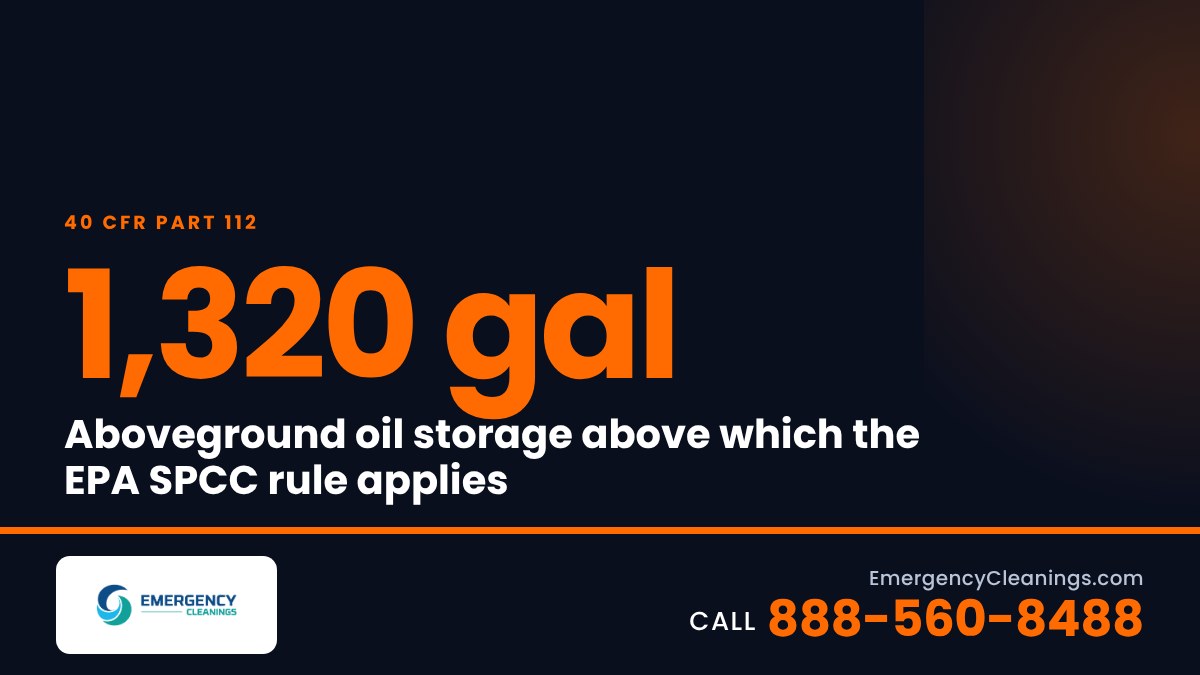
- Aboveground: aggregate aboveground oil storage capacity of 1,320 U.S. gallons or less.
- Completely buried: completely buried storage capacity of 42,000 U.S. gallons or less.
Only containers of 55 gallons or more count toward the aboveground total. So a plant with a 1,000 gallon hydraulic reservoir and seven drums of lube oil is already over 1,320 gallons on capacity, whether or not the drums are full. The rule counts shell capacity, so a half-empty tank still adds its full size.
If your EHS team hasn’t run the count since the last equipment change, do it before your next outage brings in a temporary tank or a rack of drums.
What the Plan Must Say About Cleanup
The general requirements in 40 CFR 112.7 spell out what the plan covers. Two items speak directly to cleanup.
Countermeasures, yours and the contractor’s
Section 112.7(a)(3)(iv) requires the plan to address “countermeasures for discharge discovery, response, and cleanup (both the facility’s capability and those that might be required of a contractor).” In practice, the plan should say what your own people handle with on-site equipment and where an outside crew takes over.
That line is a judgment call your plan author makes. A drip under a gearbox and a ruptured day tank are different jobs. The plan is stronger when the handoff point is written down plainly, so a shift supervisor at 2 a.m. doesn’t have to guess.
The contact list
Section 112.7(a)(3)(vi) requires a contact list with phone numbers for the facility response coordinator, the National Response Center, cleanup contractors with whom you have an agreement for response, and the federal, state and local agencies you’d have to call after a discharge.
Note the wording. The list covers contractors you have an agreement with. A name pulled from a search result during the spill doesn’t meet the intent. Section 112.7(a)(5) also asks that discharge procedures be organized so they’re readily usable in an emergency, which is one more reason to keep that page current.
Reporting Is Separate From Cleanup
Cleanup and reporting run in parallel, and the crew on site doesn’t make your notifications for you.
- National Response Center. EPA’s discharge of oil regulation, 40 CFR Part 110, says a discharge that causes a sheen or film on the water, leaves sludge or emulsion beneath the surface, or violates water quality standards must be reported to the NRC immediately. The NRC is staffed around the clock, and its number belongs on your contact list.
- EPA Regional Administrator. Under 40 CFR 112.4, a facility that discharges more than 1,000 gallons in a single discharge, or more than 42 gallons in each of two discharges within any twelve month period, must submit information to the Regional Administrator within 60 days, with a copy to the state oil pollution control agency.
Your state and local agencies may have their own triggers. Those belong on the contact list too.
Where the SPCC Plan Cleanup Contractor Fits
The rule splits roles cleanly. Under 40 CFR 112.3(d), a licensed Professional Engineer reviews and certifies the plan, unless the facility qualifies for self-certification. EPA’s qualified facility page limits that option to facilities with 10,000 gallons or less of aboveground capacity and a clean three year discharge history, and notes some states don’t allow it.
The cleanup contractor sits on a different line of the plan. Our role at Emergency Cleanings is the response and cleanup work: containing what’s left, recovering free product, removing saturated absorbents and contaminated material, cleaning hard surfaces and providing disposal records you can request for your file. We don’t draft SPCC plans or certify them.
For a plant manager, the practical questions are about fit with your process:
- Can the crew get through your site orientation and safety requirements before they’re needed?
- Do they scope in writing so your PO matches the work?
- Can the job fit around a production schedule or an outage window?
If your plant runs contractors through a prequalification network, our guide to prequalifying a hazmat contractor covers what plants usually check. For the first hours of a common plant floor release, see hydraulic oil leak on the plant floor.
With Emergency Cleanings, a technician does a free on-site assessment and photographs the area. A project coordinator then calls with one flat price and a written scope, and the price doesn’t move once the scope is set. Details are on our chemical and oil spill cleanup service page.
Frequently Asked Questions
Does an SPCC plan have to name a cleanup contractor?
Section 112.7(a)(3)(vi) requires phone numbers for cleanup contractors with whom you have an agreement for response. The plan must also describe countermeasures that might be required of a contractor, so most plans that rely on outside help name one.
What is the SPCC threshold for aboveground oil storage?
A facility is exempt only if its aggregate aboveground oil storage capacity is 1,320 U.S. gallons or less and its completely buried capacity is 42,000 U.S. gallons or less. Only containers of 55 gallons or more count toward the aboveground total.
Does the cleanup contractor report the spill to the National Response Center?
EPA says the person in charge of the facility must notify the NRC immediately after learning of a discharge that causes a sheen on water, leaves sludge or emulsion beneath the surface, or violates water quality standards.
Can a cleanup contractor certify our SPCC plan?
No. A licensed Professional Engineer certifies the plan, unless the facility qualifies to self-certify. The cleanup contractor handles the response and cleanup work the plan describes.
Get the Spill Cleaned Up
Call 888-560-8488 when a release goes beyond what your team handles in house. We offer same-day response and a free on-site assessment, and you get a written scope with one flat price locked before work starts.