Table of Contents
- The Hidden Value in Cluttered Homes: Why Electronics Matter
- Understanding Data Loss Risks During Remediation
- What Makes Professional Data Retrieval Different
- Our Comprehensive Device Assessment Process
- Protecting Your Family's Digital Legacy
- Navigating Water Damage and Contamination Issues
- Legal and Medical Documentation Requirements
- Timeline and Realistic Expectations for Recovery
- Our Flat-Rate Approach to Data Preservation
- Taking the First Step: Same-Day Assessment
- Frequently Asked Questions (FAQ)
The Hidden Value in Cluttered Homes: Why Electronics Matter
When you’re facing the task of clearing a severely cluttered home, the emotional weight of sorting through decades of belongings can be overwhelming. Amid the chaos and urgency, it’s easy to overlook something critical: the digital records, family photos, and irreplaceable files stored on devices buried within the clutter. We understand that alongside the physical remediation work, preserving your family’s digital legacy matters just as much.
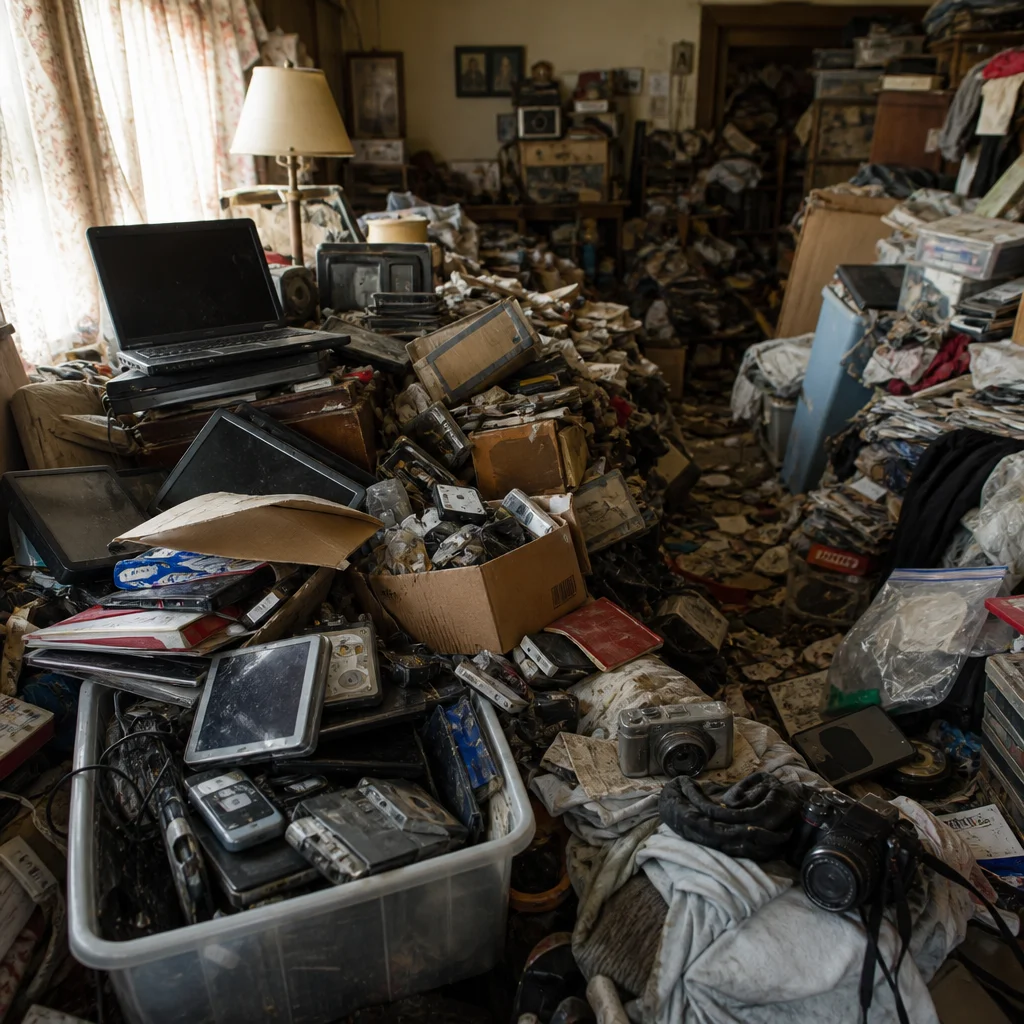
Hoarding situations often involve far more than visible items stacked in rooms. Computers, tablets, external hard drives, and phones frequently disappear under layers of paper, fabric, and miscellaneous objects, sometimes for years. What makes this particularly challenging is that these devices often hold the only copies of family photographs, medical records, financial documents, and memories that cannot be replaced.
During our work with families navigating hoarding cleanup service, we’ve encountered countless situations where a parent’s computer contained decades of family photos, tax returns, or correspondence essential for estate settlement. Without careful handling during remediation, these digital assets can be permanently lost. The difference between a device that’s recoverable and one that’s destroyed often comes down to how it’s managed during the cleanup process itself.
Your action step: Before cleanup begins, make a mental or written list of any devices you know about in the home. Note whether you have access credentials or know where passwords might be stored.
Understanding Data Loss Risks During Remediation
Several specific hazards threaten electronics during hoarding remediation work. Moisture is perhaps the most common culprit. Homes with severe clutter often have poor ventilation, water intrusion, or sewage backup issues. When devices sit in damp environments or get exposed to liquid during cleanup operations, the damage can be both immediate and progressive.
Dust and particulate contamination pose another serious risk. In hoarding situations, devices accumulate years of dust, mold spores, and other airborne particles that can corrode internal components. Standard cleanup methods like pressure washing or aggressive vacuuming can force contaminants deeper into circuitry rather than removing them safely.
Physical damage during extraction is equally important to consider. A laptop or hard drive wedged under heavy boxes requires careful removal. Rushing the process or using improper techniques can cause impact damage that renders storage media unreadable. Additionally, devices left in contaminated environments may have picked up biological hazards that require specialized handling before any data work can begin.
The key insight: data loss during remediation rarely happens because someone intentionally damages a device. It happens because the conditions and handling methods don’t account for the device’s fragility.
What Makes Professional Data Retrieval Different
When we coordinate digital asset preservation as part of our remediation work, we approach it differently than a standard IT service would. Our team recognizes that devices in hoarding situations aren’t just sitting in a clean office environment waiting for repair. They’re embedded in contaminated, hazardous settings that require biohazard protocols and specialized handling.
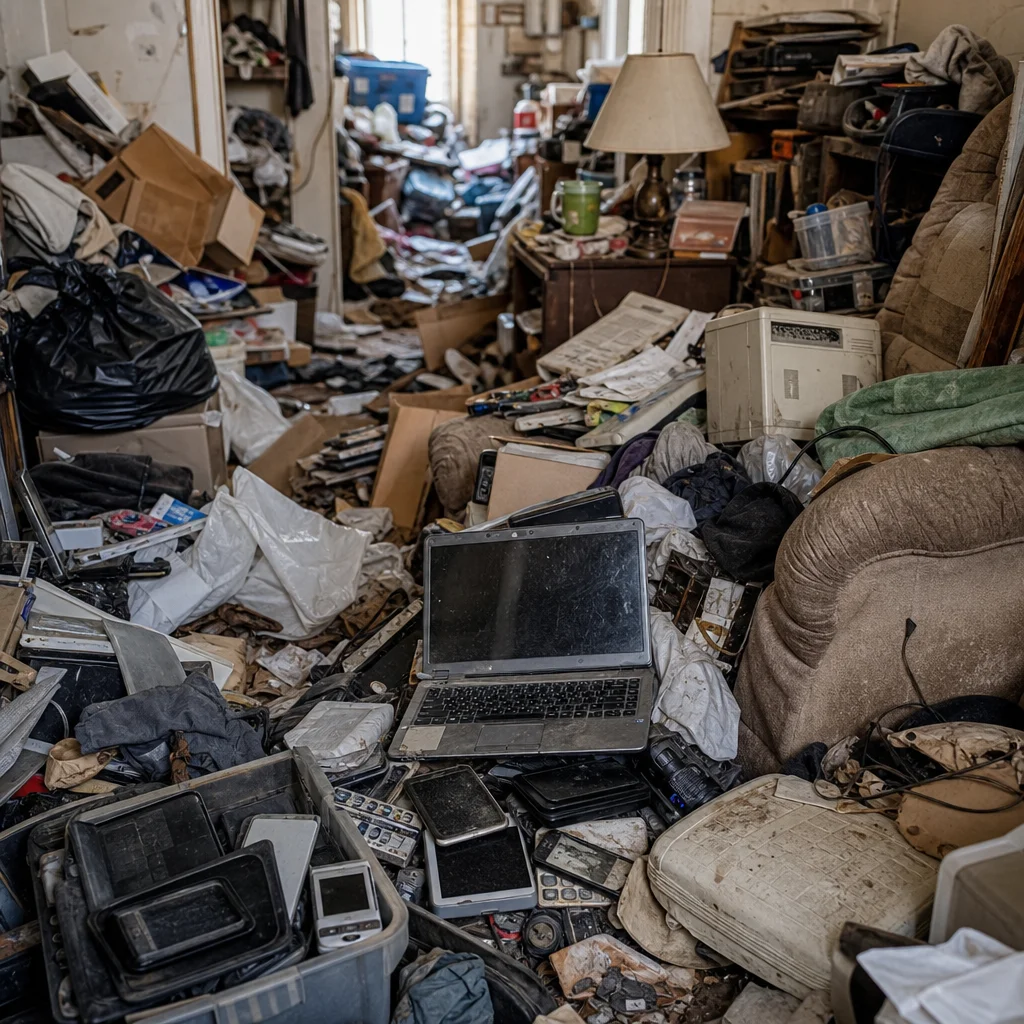
Professional data recovery differs from standard computer repair in several ways. Our process prioritizes extraction and preservation before any diagnostic work begins. We document the device’s condition upon discovery, photograph it, and handle it according to both data recovery best practices and our contamination control procedures. This dual approach ensures that while we’re working to preserve your digital files, we’re also protecting both our team and your family from exposure.
We also understand legal chain-of-custody requirements. If documents on a recovered device are needed for estate proceedings, insurance claims, or medical-legal situations, the documentation of how that device was handled and what was extracted matters significantly. Standard consumer-level data recovery won’t provide that level of accountability.
Our Comprehensive Device Assessment Process
When we arrive for a same-day assessment, part of our evaluation includes identifying and documenting any electronic devices visible or known to be in the property. We assess their physical condition, the contamination level around them, and the environment they’re in. This informs both our cleanup strategy and whether specialized data recovery resources are needed.
Our assessment covers:
- Location and accessibility of each device
- Visible signs of water exposure, physical damage, or biological contamination
- Power status and any visible corrosion or mold growth
- Environmental conditions in the storage area (moisture levels, temperature extremes, pest activity)
- Whether the device needs decontamination before any data work can safely proceed
For devices that require professional data recovery, we work with specialized partners who have clean-room facilities and forensic-grade extraction capabilities. We don’t attempt data recovery in the field. Instead, we ensure safe extraction, proper documentation, and secure transportation to facilities equipped to handle sensitive recovery work.
Your next step: During our assessment call, let us know which devices matter most to you and what information they might contain. This helps us prioritize.
Protecting Your Family’s Digital Legacy
Beyond the technical process, preserving digital memories is fundamentally about honoring your family’s history. We’ve worked with families who recovered decades of photos they thought were lost forever, or found documents that proved essential for settling an estate fairly among siblings.
The emotional component matters as much as the technical one. We approach device recovery with the same discretion and respect we bring to every aspect of our work. Your family’s private files remain private. Any data successfully recovered goes directly to you, not through intermediaries or backup systems we control.
Consider also that some devices might contain sensitive medical information, financial records, or personal correspondence that affects how the remediation process itself unfolds. Being transparent with us about what you know is on a device helps us handle it appropriately and ensures nothing important gets overlooked during the cleanup phase.
Navigating Water Damage and Contamination Issues
Water-damaged electronics are among the most challenging recovery scenarios we encounter. In hoarding situations, water damage can come from multiple sources: roof leaks, plumbing failures, flooding, or sewage backup. The longer a device has been exposed, the more corrosion spreads internally, even if it looks okay externally.
The timeline matters enormously. A device that was exposed to water last week has a much higher recovery probability than one exposed five years ago. Corrosion continues at the microscopic level, gradually destroying solder joints and circuit pathways. This is why we prioritize acting quickly once devices are identified.
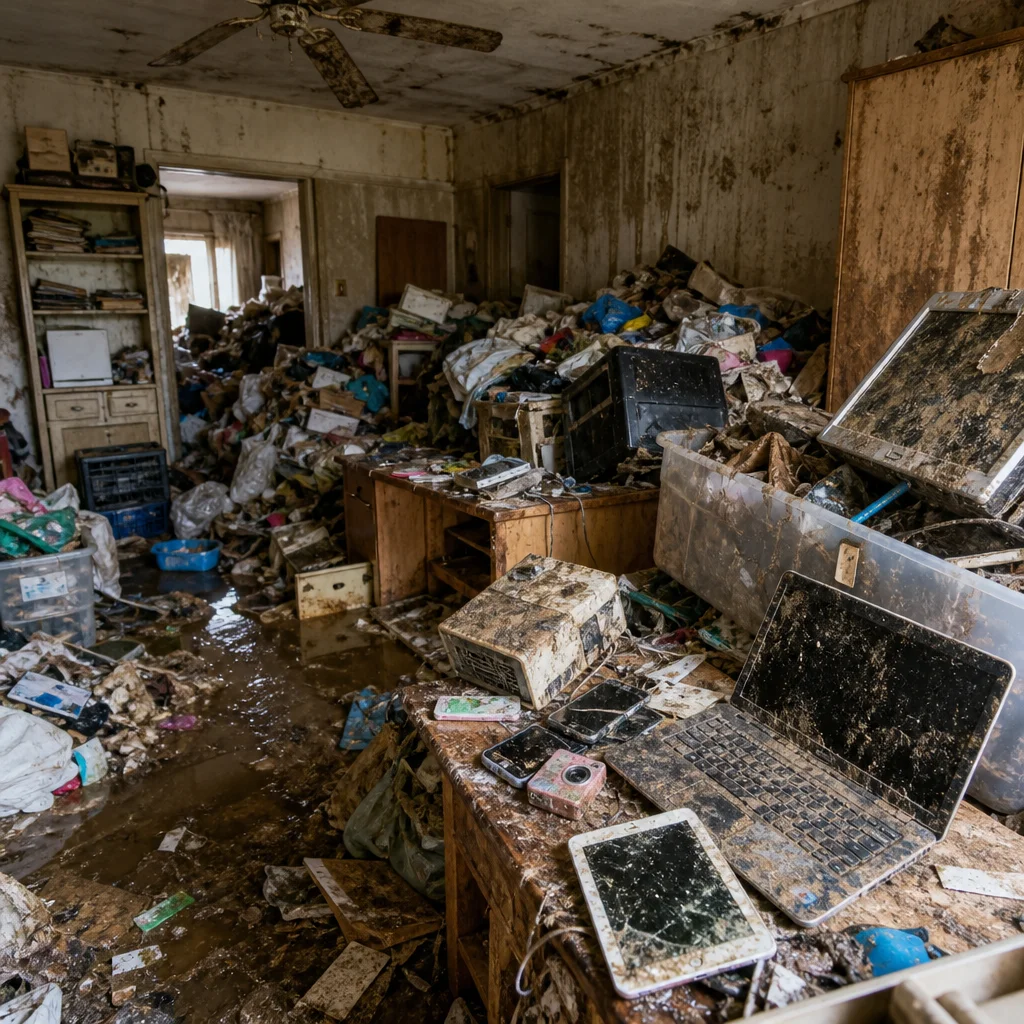
We never attempt standard recovery methods on contaminated devices. A water-damaged laptop pulled from a hoarding situation isn’t the same as a laptop that accidentally got spilled on. It may have been exposed to biohazards, mold colonies, and chemical contamination. Our approach includes assessment for these factors and appropriate decontamination before any recovery work begins.
If a device has been exposed to sewage or severe biological hazard, it may not be safe to process without specialized facilities and protective protocols. We’re transparent about these limitations rather than attempting work that risks contamination spread.
Legal and Medical Documentation Requirements
In many hoarding situations we handle, the cleanup is happening because a parent is moving to assisted living or memory care, because of a health department order, or because a court is involved. When legal or medical documentation is required, the chain of custody for recovered materials becomes important.
If documents on a recovered device are needed for:
- Estate proceedings or probate
- Medical records for ongoing care
- Insurance claims or fraud investigation
- Custody or guardianship decisions
- Property transactions
Then the documentation of how that device was handled, where it was found, when it was removed, and what condition it was in all matters. We maintain detailed records of device handling as part of our standard process. When required, these records can support legal proceedings.
We’re also mindful that some files may need to be handled by specific professionals (medical records to healthcare providers, financial records to accountants or attorneys). We can help organize recovered data appropriately for transfer to the professionals who need it.
Timeline and Realistic Expectations for Recovery
Data recovery isn’t an instant process, and managing expectations upfront prevents frustration. Here’s a realistic timeline:
- Initial assessment and device identification: 1-3 days
- Device extraction and documentation: Same day as cleanup or within 2-3 days
- Professional data recovery (if needed): 2-4 weeks depending on complexity
- Data delivery and verification: 1 week after recovery completion
Some devices recover quickly and completely. Others yield partial data, usable files alongside corrupted ones. A few devices can’t be recovered at all due to severe physical or electronic damage. We communicate these possibilities clearly once our assessment is complete.
The most important factor: starting the process quickly. Waiting weeks or months after identifying a water-damaged device only decreases the likelihood of successful recovery. If you know a device exists in the home, let us know early so we can prioritize its handling.
Our Flat-Rate Approach to Data Preservation
We believe in transparent, predictable pricing. Our flat-rate model means you know upfront what cleanup costs, without surprise charges based on how much stuff is removed or how long the job takes. For device recovery, we coordinate with specialized partners and communicate their costs clearly before proceeding.
Device extraction and documentation as part of our cleanup work is included in your flat-rate remediation service. If a device requires professional data recovery in a specialized facility, we’ll provide a separate quote based on the recovery partner’s assessment. You’ll know the cost before we move forward.
This transparency matters especially in family situations where cost decisions might involve multiple siblings or financial arrangements. Everyone involved knows what’s being spent and why.
Taking the First Step: Same-Day Assessment
If you’re facing a hoarding cleanup situation and you’re concerned about digital assets, our same-day assessment is the logical first step. During that call, we can discuss what devices matter to you, what condition you believe they’re in, and whether any legal or medical documentation needs to be preserved.
We’ll provide an honest assessment of whether recovery is likely, what the process looks like, what timeline to expect, and what the investment will be. You’ll have complete information before committing to anything.
Our role isn’t just to haul items out. It’s to preserve what matters while handling the physical remediation professionally and compassionately. That includes the digital memories and documents your family needs.
Contact us today for a same-day assessment. We’re here to help you navigate this, one step at a time.
Frequently Asked Questions (FAQ)
How do we preserve electronics during hoarding remediation?
We carefully assess and segregate electronic devices before our cleanup crew begins work on the property. Our team uses specialized techniques to protect devices from contamination and water exposure, and we document everything with photos and detailed notes. When devices are at risk, we can arrange for professional data recovery services to retrieve your family’s digital memories before the equipment is beyond recovery.
What should we expect if our devices have water damage or contamination?
We conduct a thorough evaluation of each device’s condition during our comprehensive assessment process. Depending on the extent of damage, we may recommend sending electronics to our certified data recovery partners who can extract files even from severely compromised equipment. Our flat-rate pricing structure means you’ll know upfront what recovery efforts will cost, with no surprise fees as we work through the process.
Why is documenting digital files important during property cleanup?
We understand that photos, videos, and documents stored on old devices often hold irreplaceable family memories and sometimes contain critical medical or legal records. By identifying and preserving these files early, we help protect your family’s history and ensure you have documentation needed for estate settlements or legal matters. We provide detailed reports and recovered files to you, so you retain complete control of your digital legacy.