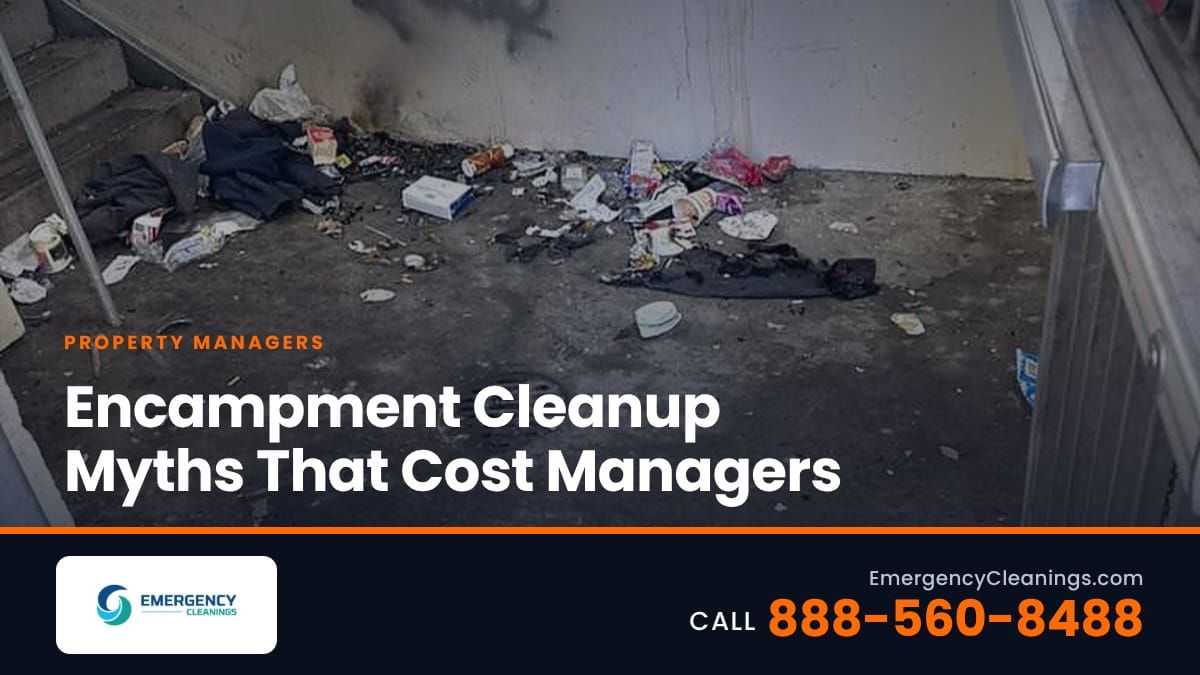
The costliest encampment cleanup myth a property manager can believe is that everything on the ground is trash you can toss. Belongings left at a camp may carry legal protections, and the debris often hides needles and human waste your maintenance team should never handle. Emergency Cleanings coordinates trained local crews who document every step and work alongside outreach providers.
A resident emails photos of tents behind the parking structure. The owner wants it gone by Friday. You are the one who has to make that happen without a lawsuit or an injured employee. These beliefs trip managers up most.
Myth 1: “We Can Throw Everything Away”
Personal property at an encampment can be protected even when nobody is standing next to it. In Lavan v. City of Los Angeles (9th Cir. 2012), the court upheld an injunction barring the city from seizing property on Skid Row unless it reasonably believed the items were abandoned, posed an immediate threat to public health or safety, or were evidence of a crime. Seized items had to be held for 90 days before destruction, absent an immediate health or safety threat.
That case bound a city. Private owners operate under state and local rules that vary widely, so check with your city’s code enforcement office and your company’s attorney before anyone fills a dumpster.
Some practical habits help anywhere:
- Post written notice with a date and keep a photo of it.
- Call local homeless outreach or 211 before cleanup day so people get offered services first.
- Bag, label and set aside items with obvious personal value, like IDs, medications and photographs.
Myth 2: “Maintenance Staff Can Handle It”
Encampment sites call for puncture-resistant gear and a plan for sharps. The FDA says to place used needles in a sharps disposal container immediately and notes that disposal programs vary by community.
One needlestick on your staff turns a cleanup into a workers’ comp claim and months of follow-up testing. Hand it to a crew equipped for it.
Myth 3: “The Police Handle the Cleanup”
Police may respond to trespassing, and the rules for when they can act on private land differ by state and city. Officers leave once people move on. The tarps, mattresses and waste stay behind, and the owner or management company pays to remove them. Ask your police non-emergency line what authorization they need from you.
Myth 4: “It’s Just Trash”
Encampment debris regularly includes human waste and food that draws rodents. Each needs its own handling and disposal route. A trained crew sorts as it goes and sanitizes surfaces where waste was found. If waste reached a stairwell or entry, our feces cleanup service covers that part.
Documentation matters here. Before-and-after photos plus disposal records you can request give you something to hand the owner or the insurer when they ask what happened.
Myth 5: “Once It’s Cleared, It’s Done”
A cleared site with the same blind corners will often draw people back. The U.S. Interagency Council on Homelessness lists a plan for what happens to the site after closure among its principles for addressing encampments, along with coordinated outreach and storage for belongings.
For a property manager, that plan usually looks like this:
- Brighter lighting on the dark side of the building
- Fencing or locked gates on unused lots and alcoves
- Trimmed shrubs so sightlines stay open
- Scheduled walk-throughs with a dated log
Emergency Cleanings handles homeless encampment cleaning for management companies nationwide, with photo documentation on every job.
Frequently Asked Questions
Can a property manager throw away belongings left at an encampment?
It depends on state and local law. Courts have protected unattended belongings from immediate destruction by cities, so check with code enforcement and your attorney, post notice, and set aside items of personal value.
Should maintenance staff pick up needles at an encampment site?
It is safer to use a trained crew. The FDA advises placing used needles in a sharps disposal container right away, and disposal programs vary by community.
Who pays for encampment cleanup on private property?
Usually the owner or the management company. Police may address trespassing, but removing the debris left behind stays with the property.
How do I keep an encampment from coming back?
Plan for the site before the cleanup ends. Better lighting, fencing, open sightlines and regular logged walk-throughs make the spot less attractive to return to.
Get the Site Safe for Your Residents
When tenants are sending photos and the owner wants answers, call Emergency Cleanings at 888-560-8488. We offer same-day response and a free on-site assessment, and you get a written scope with one flat price locked before any work starts.