
Cleanup documentation for an insurance claim is the set of records a cleanup company produces so an adjuster can verify what was removed and what it cost: dated photos before, during and after the work, a written scope, an itemized agreement with one flat price, disposal records for regulated waste, and a signed completion statement. It is for a homeowner or small landlord filing a claim after a biohazard, vandalism, or debris event, and for the adjuster who has to approve the payment. Emergency Cleanings builds that job file on every insured emergency cleanup and answers the adjuster’s questions about scope, while the coverage decision stays with your carrier.
A tenant left your duplex at two in the morning and put a hammer through every kitchen wall. Or a relative died in the house you inherited and nobody found them for a week. A cleanup company does the work, and three weeks later the adjuster asks for a scope of loss and you hand over a one-line invoice. That is where claims stall.
What Belongs in the Job File
An adjuster is measured on whether the amount paid matches the covered damage. Every document in the file exists to close a gap between those two numbers. Here is what complete cleanup documentation for an insurance claim contains.
- Pre-work photos. Dated, wide and close, every affected room, before anything is touched. Evidence that the loss existed and how far it reached.
- During-work photos. Materials being cut out, the condition under flooring once opened. These explain why the scope grew, if it grew.
- Post-work photos. The same angles as the pre-work set, for frame-to-frame comparison.
- A written scope of work. Room by room: what is removed, what is cleaned and disinfected, what stays. Signed before work starts.
- An itemized final agreement with the flat price. One number, locked before the crew begins, with the line items that add up to it.
- Disposal records. Facility receipts, plus waste manifests where the material is regulated, such as trauma scene waste.
- A completion statement. Dated and signed, confirming the scope was performed as written, with any deviations noted.
Cleanup Documentation for an Insurance Claim: The Order Matters
Notify the carrier early. Call the claims line before the crew arrives, or while they are on the way. Most policies require prompt notice, and an adjuster who hears about a loss after the work is done has less to verify against.
Do not throw anything away before it has been photographed. This is the most common mistake a landlord makes from another city. A neighbor hauls ruined carpet to the curb, and the evidence goes with it. The crew photographs first, every time.
Keep the scope and the invoice the same number. When they disagree, the adjuster has to reconcile them, and reconciliation is where supplements get denied. Because the flat price is locked after the on-site scope and before work begins, the agreement and the invoice match. If a concealed condition changes the job, it gets photographed, priced, and signed as a change before the crew continues.
Which Cleanup Jobs Are Usually Claimable
Homeowners and landlord policies cover sudden and accidental damage, and the cleanup work that fits that frame is narrower than most people expect. Biohazard and trauma cleanup after a death or serious injury on the property. Vandalism or malicious damage, including a departing tenant who leaves feces or destroyed fixtures. Debris removal that is part of a covered peril. On the commercial side, industrial cleanup after a covered spill, process upset, or contamination event.
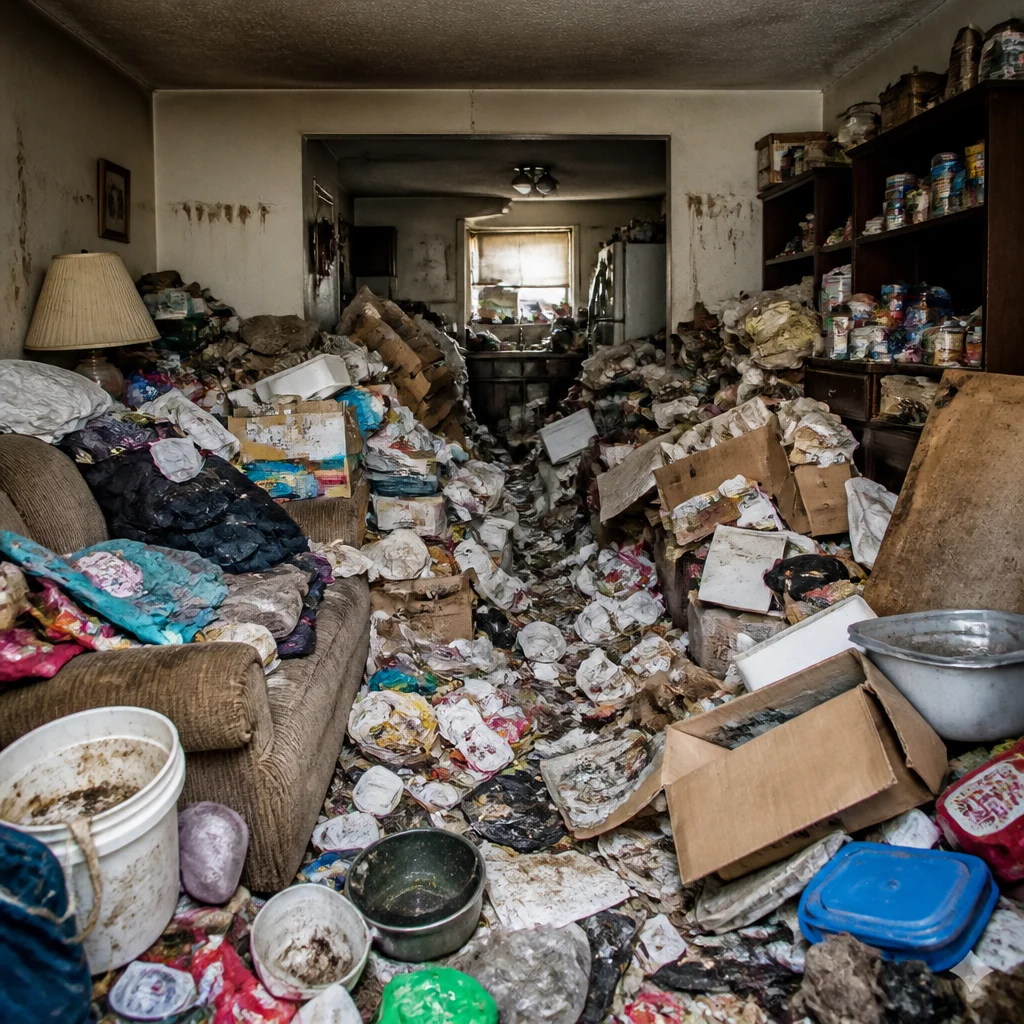
Two limits are worth stating plainly. Hoarding cleanup is usually not covered by a homeowners policy, because accumulation over years is not a sudden event. If you inherit a hoarded house, plan on paying for the hoarding cleanup yourself. And Emergency Cleanings does cleanup only. No mold remediation, no water or fire restoration, no rebuilding. On a fire or water loss, a restoration contractor holds the claim and our crew handles the debris portion before anyone rebuilds.
What Insurance Assistance Means Here
“Insurance assistance” appears on a lot of cleanup websites and usually means less than it sounds like. From Emergency Cleanings it means the complete job file in a form you can forward, the itemized agreement with the flat price, and a person who will get on the phone with your adjuster and answer scope questions: why a section of subfloor came out, what a disposal record refers to.
It does not mean direct billing to your carrier. You pay for the work, and the claim reimburses you according to your policy. It also does not mean insurance advice. Whether a loss is covered is your carrier’s call. The job file is built so your adjuster can decide quickly, which is the most useful thing a professional emergency cleanup company can do for you.
Frequently Asked Questions
Will homeowners insurance cover biohazard cleanup after a death?
Often, when the death is treated as a sudden event under the policy, but the carrier makes that call. Report the loss right away and keep the photos, scope, and disposal records from the after-death cleanup together for the adjuster.
How does payment work when a claim is involved?
The flat price is agreed with you before the crew starts, and the job file is built so your carrier can review it. Emergency Cleanings provides the cleanup documentation the insurance claim needs and answers the adjuster’s scope questions. How the reimbursement flows is between you and your insurer, so ask the carrier early.
Is hoarding cleanup covered by insurance?
Usually not. Policies cover sudden and accidental damage, and a hoarded house is the result of years of accumulation. If a hoarding situation also produced a covered loss, such as a sewage backup, that portion can sometimes be claimed separately, and the job file keeps the two scopes distinct.
What if the adjuster asks for more detail after the job is finished?
That is what the during-work photos and the itemized agreement are for. Most follow-up questions are about why a specific item was removed, and the photo taken at that moment answers it. If the adjuster wants to talk, we walk them through the scope.
Should I wait for the adjuster to inspect before cleanup starts?
Not for a biohazard. Blood, bodily fluids, and sewage get worse by the hour, and most policies expect you to prevent further damage. Notify the carrier, let the crew photograph everything first, and the adjuster can review the pre-work set instead of standing in the room.
If you have a property you cannot get to and a claim you have not filed, call 888-560-8488 for a same-day response. The assessment is free, the scope is written on site, and the flat price is locked before any work begins. The job file starts with the first photo and is in your inbox when the crew leaves.