Eviction prevention cleanup works best when the cleaning scope matches the landlord’s written cure requirement and the work finishes before the cure deadline. Hand the landlord before-and-after photos tied to each item on the notice. If your client has a disability, a reasonable accommodation request under the Fair Housing Act can sometimes buy time to get it done. Emergency Cleanings scopes feces, urine and squalor cleanups for case managers at one flat price, with photo documentation built in.
The notice is taped to the door. It says “unsanitary conditions” and gives a date. Your client has pet waste in two rooms and a kitchen nobody has used in months. Your supervisor wants an approval packet, and the clock started the day the notice went up.
Nothing here is legal advice. Landlord and tenant law varies by state and often by city, so get your client to a legal aid attorney early. The Legal Services Corporation runs a legal aid locator where you enter an address to find a funded program nearby.
Why This Lands on Your Desk
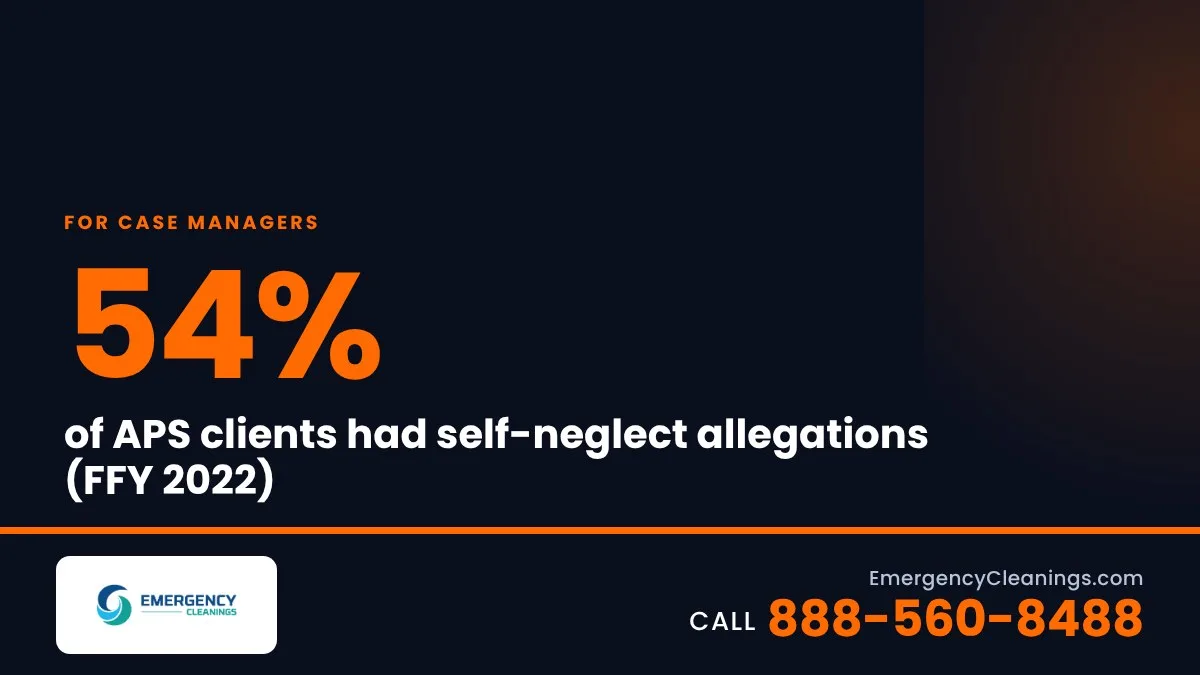
Self-neglect is the bulk of APS work. A January 2024 brief from the APS Technical Assistance Resource Center, built on federal NAMRS data, found that APS investigates more self-neglect allegations by far than any other type of maltreatment, and that people with self-neglect allegations made up 54% of all clients in federal fiscal year 2022.
Lever One: Read the Cure Period Closely
Many states give a tenant written notice and a chance to fix certain lease violations before an eviction filing. How long that window runs depends on the state, the lease, and sometimes the housing program. Subsidized housing can carry its own notice rules.
Get the notice and the lease, and write these at the top of your file:
- The exact cure deadline, including the time of day if one is listed
- The specific conditions the landlord named
- How the landlord says they will confirm the fix, such as a reinspection
Lever Two: A Reasonable Accommodation Request
The Fair Housing Act makes it discrimination to refuse “reasonable accommodations in rules, policies, practices, or services” when they may be necessary for a person with a disability to have equal opportunity to use and enjoy a dwelling. The Act defines disability, which it calls handicap, to include a mental impairment that substantially limits one or more major life activities. The American Psychiatric Association recognizes hoarding disorder as a mental disorder. Whether your client qualifies is a question for their clinician and their lawyer.
The HUD and DOJ Joint Statement on Reasonable Accommodations from 2004 lays out how this works. It says the Act does not require a request to be made in a particular manner or at a particular time, and that a housing provider has to respond promptly. In practice, the request in a squalor case is often for more time to cure, paired with a concrete plan.
There are limits. A provider can deny a request that would be an undue financial and administrative burden, and the Act does not protect a tenancy that would be a direct threat to others’ health or safety. A booked cleanup with a date and a follow-up plan speaks to that worry.
Lever Three: Scope the Cleanup to the Notice
Hand the technician the notice during the walkthrough. Each condition the landlord named becomes a line in the scope, so the scope reads like a reply to the letter.
- Pet and human waste removed, surfaces cleaned and disinfected
- Urine-saturated carpet or furniture removed when cleaning will not make it sanitary
- Rotting food out, refrigerator emptied and cleaned
- Paths cleared to exits, bathroom and bed
Our feces and urine cleanup service covers the waste side. When the clutter itself is the problem, the hoarding cleanup service covers that part. Structural repairs, plumbing and flooring replacement belong to other trades, and the landlord may handle those.
OSHA has said that urine, feces and similar human waste are not included in the Bloodborne Pathogens Standard’s definition of “other potentially infectious materials” unless visibly contaminated with blood. Technicians still wear protective gear and disinfect as they go.
Lever Four: Build the File
The landlord wants proof, and a judge may want it later. Ask for these:
- Before photos of every room and every condition on the notice
- The written scope with each line tied to a notice item
- One flat price in writing, sized so you can route it through your approval limit
- After photos taken from the same angles
- Disposal records you can request if the case needs them
- The completion date, so you can show it fell before the cure deadline
If the full job sits above what you can approve, the work can be phased with a fixed price per phase. Put the items the landlord named first.
Consent and Dignity
Unless a guardianship or court order says otherwise, your client decides what leaves. Go over what they want kept before the crew shows up. Technicians from Emergency Cleanings arrive in unmarked vehicles on request, which matters in an apartment building where neighbors already talk.
The Follow-Up Plan
A one-time cleanup can cure the notice. Keeping the apartment takes ongoing in-home support and any treatment your client agrees to. Write that plan down and attach it to the accommodation request. The landlord wants to know the place will stay this way.
Frequently Asked Questions
What is eviction prevention cleanup?
It is a cleanup scoped to the conditions named in a landlord’s lease violation or eviction notice and finished before the cure deadline, with before-and-after photos the landlord can review.
Can a tenant ask for more time to clean as a reasonable accommodation?
A tenant with a disability can request a reasonable accommodation under the Fair Housing Act, and HUD and DOJ say the Act does not require a request at a particular time. Whether it must be granted depends on the facts, so talk to a legal aid attorney.
Does OSHA’s Bloodborne Pathogens Standard cover feces and urine?
OSHA has said urine and feces are not covered as other potentially infectious materials unless they are visibly contaminated with blood. Technicians still use protective gear and disinfection on these jobs.
Can the cleanup be split to fit an approval limit?
Yes. Emergency Cleanings can phase the work with a fixed price per phase, starting with the conditions the landlord named.
Get Your Client’s Cleanup on the Calendar
If your client has a cure deadline coming, call 888-560-8488. Emergency Cleanings offers same-day response and a free on-site assessment, and you get a written scope with one flat price locked before any work starts.