Hoarding means a home filled with saved possessions that crowd out normal use of the rooms. Squalor means the home has become unsanitary, with things like spoiled food, pet waste or human waste that never got cleaned up. Emergency Cleanings plans squalor cleaning around sanitation and disinfection first, and plans hoarding cleanup around sorting belongings with you, so knowing which one you are dealing with (or whether it is both) changes the crew, the gear, the order of work and the pace.
If you are reading this about your own home, you are probably tired of explaining it. You stay in charge of the plan either way.
What hoarding looks like in a home
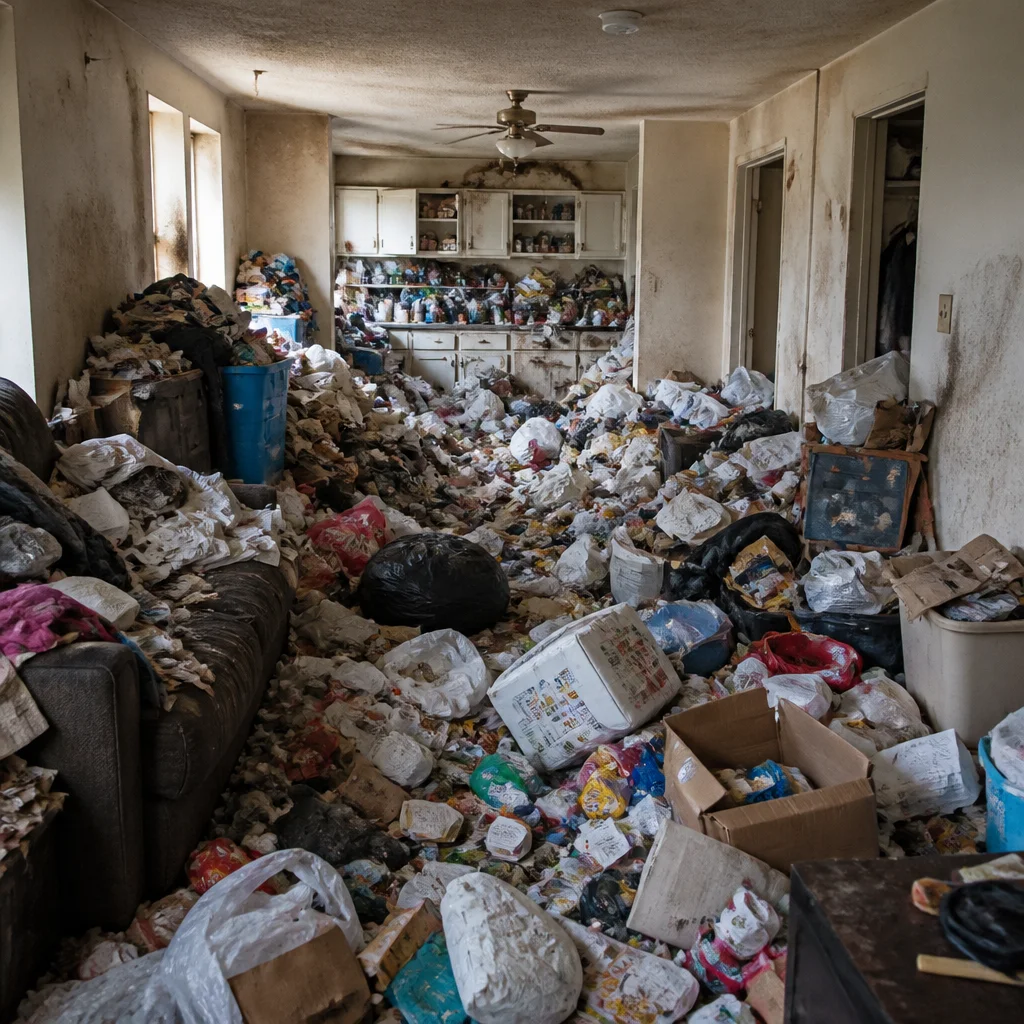
Hoarding is about stuff. Mail, clothes, boxes, tools, gifts still in bags. The things piled up were kept on purpose, and letting go of them is hard. The International OCD Foundation summarizes the DSM-5 description of hoarding disorder: a person keeps a large number of items, the items clutter living spaces so rooms can’t be used as intended, and the situation causes distress or problems in daily life.
A hoarded home can be crowded and still fairly clean underneath. The kitchen table might be buried under paper, and the paper is dry.
We do not diagnose anyone, and a cleanout does not treat hoarding disorder. For support with the feelings side of this, the International OCD Foundation’s hoarding site lists therapists and support groups.
What squalor looks like in a home
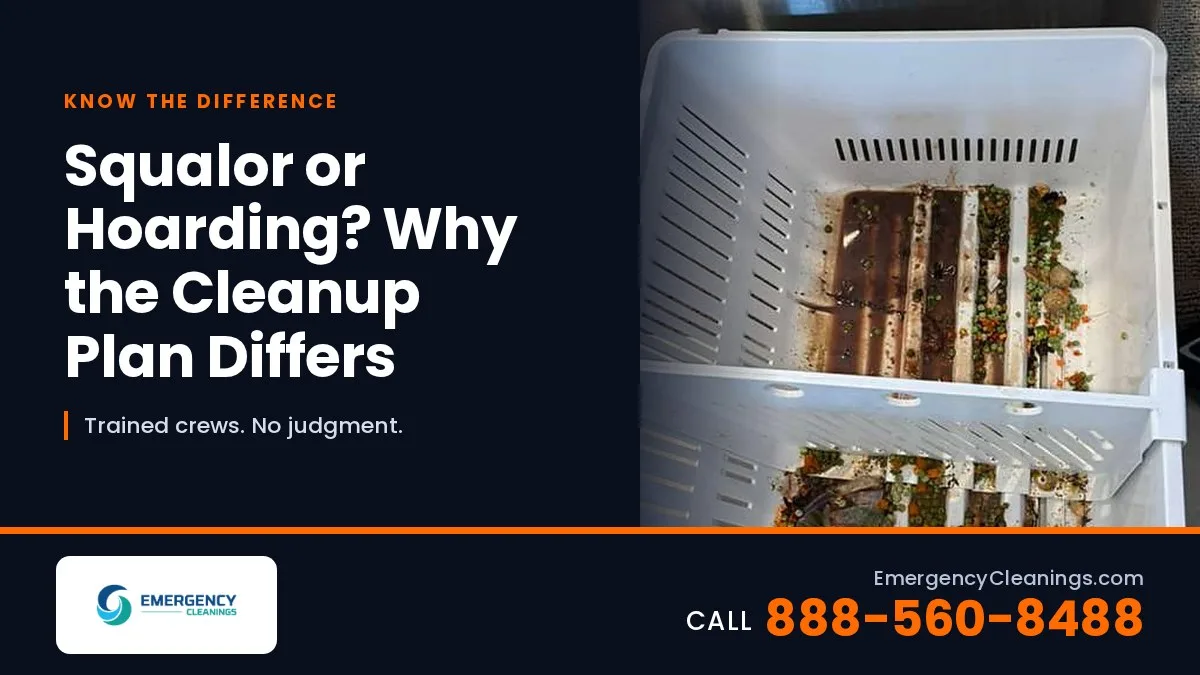
Squalor is about sanitation. The IOCDF describes squalor, or severe domestic squalor, as unsanitary conditions in the home. Think food left out until it spoils, or a litter box that overflowed months ago.
Squalor often has nothing to do with wanting to keep things. The same IOCDF page says it can come from neglect of normal cleaning or being unable to take things out, with no intentional saving involved. Sometimes a bad knee makes the trip to the dumpster impossible. Australian Prescriber, a medical journal, notes that about a quarter of people living with hoarding and squalor have a physical health problem, such as incontinence or poor eyesight, contributing to the condition of the home.
When a home has both
Plenty of homes have some of each. The IOCDF explains that in hoarding, squalor shows up when the saved items include spoiled food or when animals live in the home. A stack of newspapers soaked in cat urine needs both kinds of work.
Why the cleanup plan changes
A hoarding cleanup
- You decide what stays. Items get sorted into keep, donate and discard piles with you or someone you trust.
- Many people choose to go one room at a time. Our post on what a phased hoarding cleanup looks like walks through how that works.
- The goal is a home that is safe and works for you. Clear exits and a bed you can sleep in are a good start.
A squalor cleanup
- Contaminated material comes out first, because it can make you sick. Spoiled food, soiled bedding and waste-soaked items usually cannot be saved.
- Technicians wear protective gear and use disinfectants on floors, counters and anything else that had contact with waste.
- Some messes need special handling. The CDC says not to sweep or vacuum rodent urine or droppings, because that can put virus particles into the air. Those areas get soaked with a disinfectant first.
Human and animal waste is its own category of work. Our feces and urine cleanup service covers it, and it can run alongside a hoarding job in the same visit.
Surface mold gets cleaned as part of the work. Deep mold mitigation, water damage restoration, fire restoration, plumbing repair, and rebuilding are separate trades that Emergency Cleanings does not perform.
What happens when you call
You do not need the right word before you call. We give you a 2-hour arrival window and text you when the technician is on the way. The technician walks through with you and takes photos. Then a Project Coordinator calls you with the exact price and the step-by-step plan.
It is one flat price that includes labor, disposal, transportation, equipment and insurance. It is locked before anything leaves your house. If one big payment is not possible, financing is available, and the work can be split into phases with a fixed price for each room. Unmarked vehicles are available if you would rather the neighbors not know. Details are on our hoarding cleanup service page.
Frequently Asked Questions
What is squalor cleaning?
Squalor cleaning is the removal of unsanitary material from a home, such as spoiled food, trash and animal or human waste, followed by disinfection of the surfaces underneath.
Can a home have both hoarding and squalor?
Yes. The International OCD Foundation notes that squalor can develop in a hoarded home when saved items include spoiled food or when animals are present. A cleanup plan for that home mixes sorting and sanitation, often room by room.
Is urine or feces cleanup considered biohazard work?
Under OSHA’s bloodborne pathogens standard, urine and feces are not counted as other potentially infectious materials unless they are visibly contaminated with blood. They still carry germs, so crews use protective gear and disinfect the area.
Do I need to clean up before the crew arrives?
No. Leave everything as it is. Cleaning waste yourself can expose you to germs.
Whether your home looks more like hoarding, more like squalor or a bit of both, Emergency Cleanings can help you sort out the next step. Call 888-560-8488 for a same-day response and a free assessment on site. You get a written scope and one flat price locked before work starts.