Emergency cleaning for a rental property is the unplanned cleanout that lands between one tenancy and the next: abandoned belongings, tenant damage, an eviction set-out, feces or urine contamination, a sewage backup, a death in the unit, or a hoarded apartment. Standard cleaners and in-house maintenance can handle dirt, trash and cosmetic damage; anything biological, any sharps, any sewage, or contamination that soaked into drywall, subfloor or carpet pad needs a specialty crew. Emergency Cleanings takes those units nationwide, with a same-day response and one flat price locked after an on-site scope so the number on the owner statement is the number that was quoted.
The site manager calls at 9:40 on a Tuesday. The unit in building C is finally yours, the constable left twenty minutes ago, and the resident left everything. Couch, mattresses, a fridge full of something, and a bathroom nobody wants to describe over the phone. The owner wants it listed by the first. You have a maintenance tech, a regular cleaning company, and a budget line written for a normal turn. Which of those has this unit already outgrown?
When emergency cleaning for a rental property needs a specialty crew
The dividing line fits on a sticky note. If the problem is dirt, trash, ordinary odor, or damage to surfaces and fixtures, your maintenance staff or your regular cleaner can handle it. If the problem is biological, involves sharps, involves sewage, or has soaked into porous materials, it needs an emergency cleanup crew that works under bloodborne pathogen rules and can document disposal. OSHA’s bloodborne pathogens standard at 29 CFR 1910.1030 is the reason your handyman should not be scrubbing a bathroom that had blood in it. Here is how that line falls across the eight situations property managers call about most.
Turnover disasters
A unit that was lived in hard. Grease on every kitchen surface, cigarette film on the walls, a carpet that smells. Your regular cleaning vendor can do this. Escalate when the odor survives a deep clean, when pet urine has reached the pad, or when a closet holds something from the categories below.
Abandoned junk
The resident is gone and the furniture is not. Maintenance can handle a truckload or less if the staff has the time. Beyond that, a junk removal crew is cheaper than pulling your tech off work orders for two days. Before anyone touches the belongings, confirm with counsel what your state requires for notice and storage of abandoned property. The crew can photograph and stage whatever has to be held.
Tenant damage
Holes in drywall, broken doors, a countertop that met a hammer. This is a repair scope, and your maintenance team or a contractor owns it. Cleaning crews clear the debris first so trades are not working around bags of trash.
Eviction cleanouts
A set-out runs on a clock the court and the sheriff set, and the belongings usually have to be handled a specific way. Your crew needs to be on site the day you have access, which is where a vendor with a stated arrival window earns its spot on your list. For the decision between a fast trash-out and a full cleanout, the September 11 post on what a rental needs before it re-lists covers it in detail.
Feces, urine and pest contamination
Pet waste found on tile within days is a cleaning problem. Human waste, waste that sat for weeks, rodent droppings across the unit, or anything that soaked into carpet, pad, subfloor or the bottom of the drywall crosses the line. Droppings aerosolize when swept dry, and porous material that absorbed urine keeps releasing odor. A feces cleanup crew removes the contaminated material, disinfects what remains, and tells you in writing what was pulled.
Sewage backup
A drain that flooded a bathroom floor and was mopped within the hour is on the edge. A backup that reached carpet, ran under a wall, sat overnight, or came from a main line is a specialty job, because sewage is a biohazard no matter how clean the water looks. A sewage backup cleanup crew extracts, removes the affected porous material, and disinfects so the area can be rebuilt. Your plumber fixes the cause.
A biohazard discovery
Sometimes the unit is the scene of a death, an injury, or drug use that left residue and needles behind. None of this is maintenance work. The waste has to leave the property through a regulated medical waste stream. If a resident died in the unit, an after-death cleaning crew handles the affected area and the odor. Keep staff out until the crew is done.
A hoarded unit
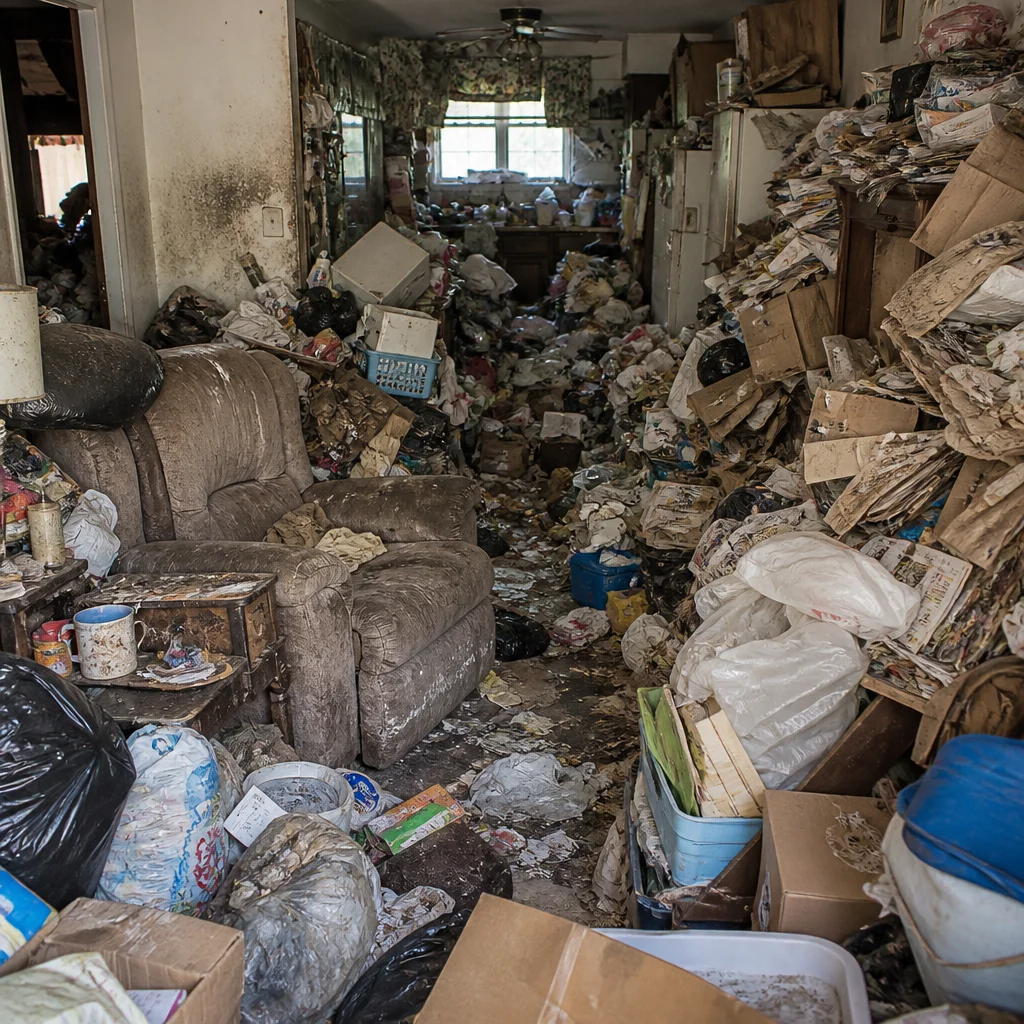
A hoarded apartment is the case where the categories stack, with pest activity and sometimes waste under the volume. If the tenancy is still active, hoarding disorder is a recognized disability under fair housing law and the resident may request an accommodation such as a phased decluttering plan, so talk to counsel before you do anything. Once the unit is legally yours to clear, a hoarding cleanup crew works it in layers, documents the condition room by room, and separates recoverable belongings from disposal.
One flat number, scoped on site, so the deposit accounting holds
You answer to an owner and to a budget. The owner sees one line on the monthly statement and asks why. The former resident, or their attorney, may see the same number on a deposit itemization. Both want a figure that can be explained in one sentence and did not move after the work started.
A crew that bills as it goes hands you a running total you cannot forecast. Change orders do the same damage. Emergency cleaning of a rental property should be priced the way Emergency Cleanings prices it: a technician walks the unit, the scope is written, and a flat fee is set before any work begins. The scope visit is free, a 20% deposit holds the slot, and if the final price ever comes in above the verbal quote, the deposit is refunded should you decline. Jobs can be phased across two statements, and financing exists for owners who need it.
Security deposit rules vary by state, and this is not legal advice on how to itemize. What a flat, scoped price gives you is a defensible number: one invoice, one scope document, dated photographs of the condition before work started. That is what you attach when the deduction is questioned.
Documentation for the owner file and any claim
The photo report is the thing the owner and the insurer both ask for after the fact, so ask for it before you book. The file should contain the following when the unit is done.
- Time-stamped photographs of every room before work started, with close-ups of anything that will be cited on a deposit itemization.
- The written scope from the on-site visit, listing what will be removed, cleaned and disinfected.
- After photographs from the same positions as the before shots.
- A list of materials removed from the structure, such as carpet, pad or drywall sections, with the reason.
- Disposal documentation for anything that left as regulated waste, and the disposal site for bulk junk.
- The invoice showing the single flat price, matching the scope.
- The crew’s certificate of insurance naming the ownership entity as additional insured.
If the loss might touch the owner’s policy, call the carrier before the crew starts and ask what they want photographed. For a remote owner who will never see the unit, this file is the unit. Send it the day the job closes.
What Emergency Cleanings does not do
A cleanup crew gets the unit to clean, dry and safe. It does not put the unit back together, so line up these trades alongside.
- Mold. If a sewage backup or a long-neglected leak has produced visible growth, a mold remediation contractor takes that scope after the cleanup.
- Water damage restoration. Structural drying, moisture mapping, and the drying certificate a carrier may ask for come from a water restoration company.
- Fire restoration. Soot, smoke odor sealing and structural repair after a fire belong to a fire restoration contractor.
- Plumbing repair. Your plumber finds and fixes the cause, ideally before the crew disinfects, or you pay for the same floor twice.
- Rebuild. Drywall, flooring, cabinets and paint go to your maintenance team or a general contractor once the affected material is out.
The order for a bad unit is cause-of-loss first, cleanup crew second, restoration trade if needed, then rebuild, then the standard turn clean. Emergency Cleanings covers the middle of that sequence and hands off with documentation the next trade can work from.
Frequently Asked Questions
What emergency cleaning service should I use for my rental?
Use your regular cleaner or maintenance staff for dirt, trash and cosmetic damage. Use a specialty emergency cleanup crew for anything biological, any sharps or drug residue, sewage, or contamination that soaked into porous material. Choose a vendor that gives you a stated arrival window, a flat price set after an on-site scope, and a photo report for the owner file.
Can my maintenance tech clean up after a sewage backup?
Only if it was a small, fresh spill on a hard surface that was contained within the hour. Sewage that reached carpet, pad or drywall, sat overnight, or came from a main line is a biohazard and the porous material has to be removed, not cleaned. Send that to a specialty crew and keep staff out of it.
How fast can an emergency cleaning crew reach my property?
Emergency Cleanings offers a same-day response with a two-hour arrival window, and the technician sends an ETA text when en route. The visit begins with a free assessment and written scope, and the flat price is locked before any work begins. For eviction set-outs, call the day you know you will have access so the slot is held.
How should emergency cleaning costs be handled against a security deposit?
Security deposit rules vary by state, so follow your state’s itemization requirements and your counsel’s guidance. What helps in every state is a defensible number: one flat invoice, a written scope, and dated before-and-after photographs. Running totals and change orders make the deduction harder to explain.
Does an emergency cleanup crew handle mold or water damage?
No. The crew removes contaminated material, disinfects and gets the area ready to hand off. Mold remediation, structural drying, fire restoration, plumbing repair and rebuild are separate trades you line up alongside the cleanup.
When a unit has crossed the line your own people should not cross, call 888-560-8488. You get a same-day response, a free assessment on site, a written scope, and one flat price locked before the crew starts, with a photo report waiting for the owner file when they finish.