Finding documents in a hoarded house means running a deliberate, room-by-room search for wills, deeds, titles, policies and tax records before anything gets hauled away. It is the first job for an adult child or executor who has to settle an estate or sell a property packed with decades of accumulation. Emergency Cleanings builds that search into every hoarding cleanup service project, with a free on-site scope and a flat price locked before the crew starts.
Table of Contents
- When a Parent's Hoarding Becomes Your Responsibility
- Why Important Documents Get Lost in Hoarded Homes
- The Real Risks of Not Finding Critical Paperwork
- How We Systematically Search for Hidden Wills and Deeds
- Our Documentation Process Protects Your Legal Interests
- Creating an Organized Recovery System for Estate Documents
- What to Do When You Find Conflicting or Multiple Wills
- How Professional Assessment Saves Time and Prevents Costly Mistakes
- Your Next Steps: Getting Expert Help With Document Recovery
- Frequently Asked Questions (FAQ)
When a Parent’s Hoarding Becomes Your Responsibility
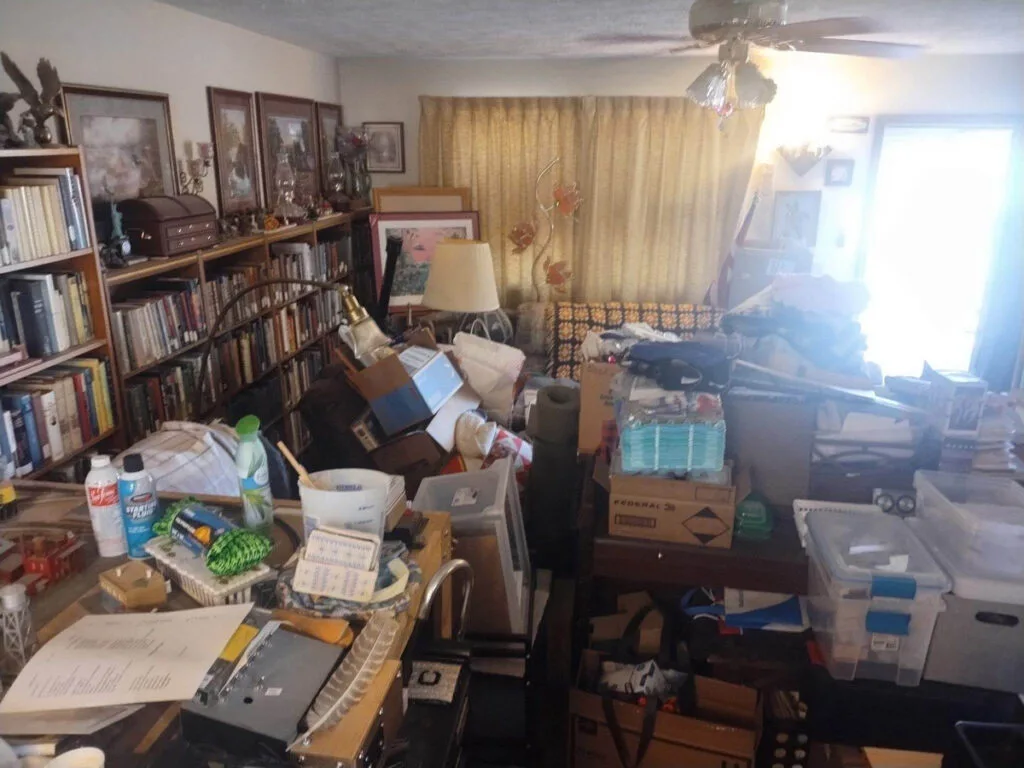
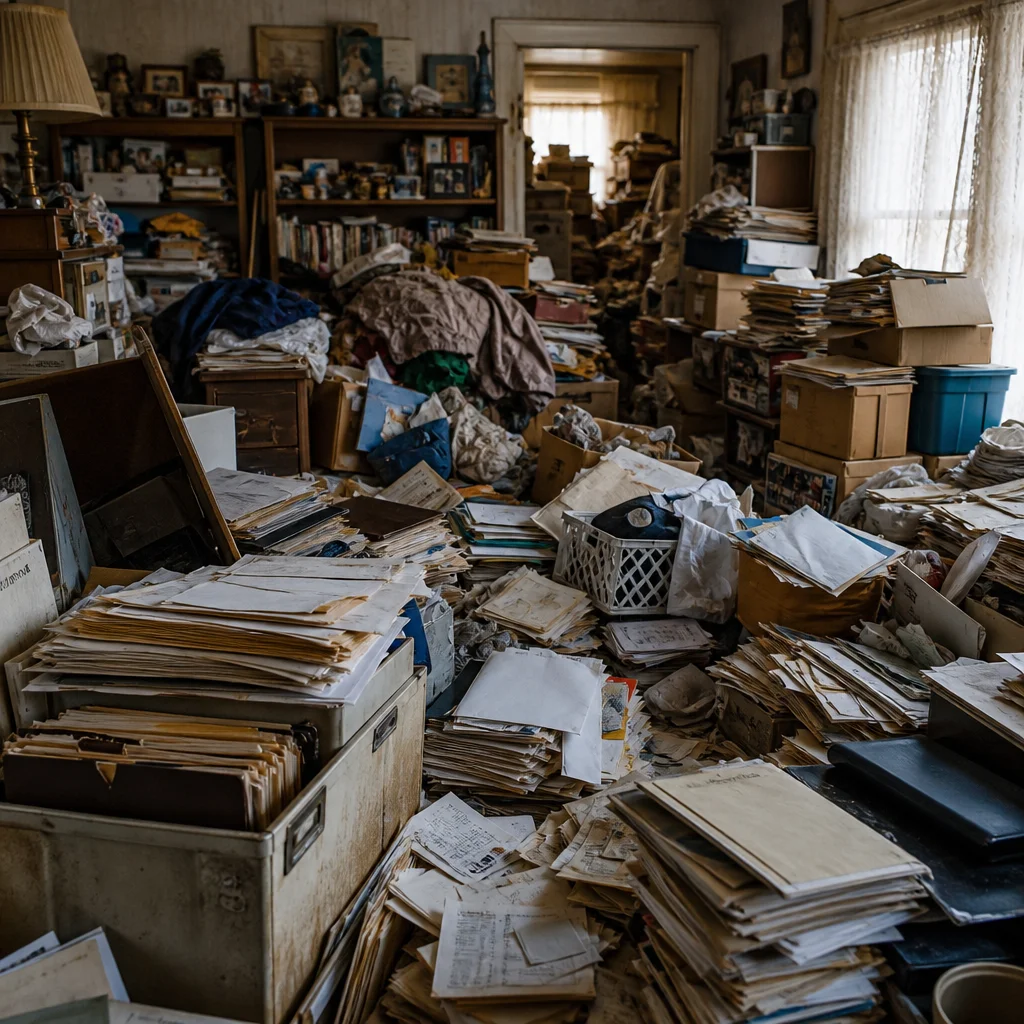
A phone call changes everything. Your parent has fallen, or a hospital admission forces a conversation you’ve been avoiding. You walk into the house and realize for the first time how deep the hoarding has become. Piles reach the ceiling. Documents are scattered everywhere, mixed in with decades of accumulated items. Suddenly, you’re not just dealing with the emotional weight of your parent’s condition—you’re responsible for a property that holds critical legal and financial documents somewhere inside the chaos.
This moment arrives differently for every family. Sometimes it’s a health inspector who flags the property. Other times, a sibling finally forces the issue after years of everyone pretending the problem doesn’t exist. Occasionally, it’s CPS involvement or a move to assisted living that makes the cleanup unavoidable. Regardless of how you got here, one reality stands out: finding those documents matters more than you might initially realize.
We work with adult children in exactly this position every week. The house must be cleared, sold, or remediated. But before anyone can move forward, critical paperwork needs to be located, sorted, and secured. That’s where a systematic approach becomes essential.
Why Important Documents Get Lost in Hoarded Homes
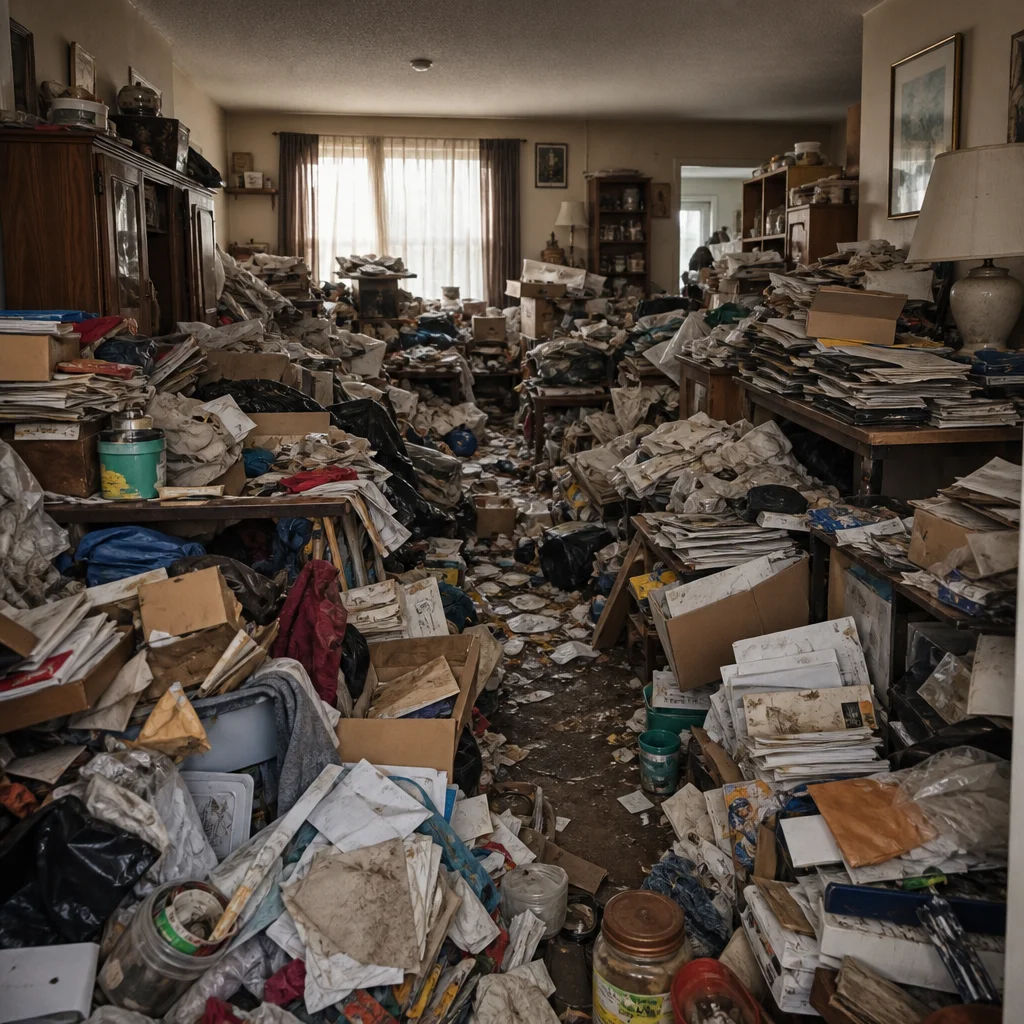
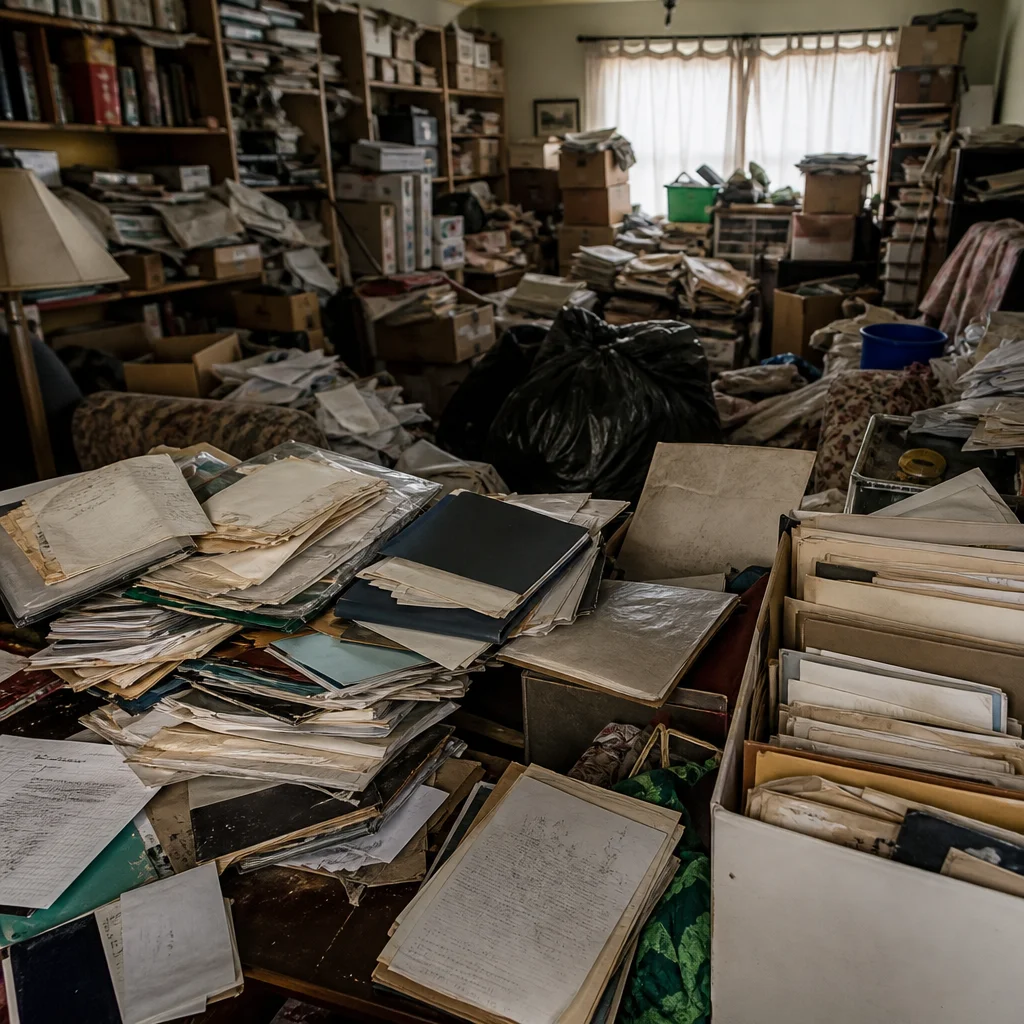
Hoarding isn’t simply about accumulating items. It’s a complex condition that often involves keeping papers, mail, and documents “just in case” they might be useful. Your parent may have saved every utility bill, insurance statement, and piece of correspondence for years. When these materials accumulate without organization, finding anything specific becomes nearly impossible.
Documents hide in predictable yet frustrating places:
- Stacked in closets, under clothing, or behind other stored items
- Tucked inside books, magazines, or old newspapers
- Placed in original envelopes but then surrounded by thousands of other papers
- Stored in boxes labeled generically (“papers,” “bills,” “old stuff”) with no internal system
- Hidden intentionally for security reasons, then the location forgotten
- Mixed with junk mail, catalogs, and promotional materials
The core problem is that hoarded homes lack any filing or retrieval system. Your parent may remember placing something “somewhere in the front bedroom,” but locating it among ten thousand other items takes hours or days of careful searching. Worse, critical documents might have been damaged by moisture, pests, or mold during years of storage in compromised conditions.
The Real Risks of Not Finding Critical Paperwork
Rushing through a property cleanout without a deliberate document recovery plan creates serious legal and financial consequences. We’ve seen families lose hundreds of thousands of dollars because paperwork was accidentally discarded or never found in time to address probate deadlines.
Consider these real-world scenarios:
Probate complications: If your parent passes without a located will, the estate goes through intestate succession. This means the court decides how assets are distributed, costs skyrocket through legal fees, and the process drags on for months or years. A will hiding in a nightstand drawer could have saved time and money.
Property transfer delays: Deeds, title documents, and proof of ownership must surface before a house can be sold or transferred. Missing paperwork halts the entire process, blocking any financial resolution during an already stressful time.
Insurance and financial claims: Medical bills, insurance policies, and beneficiary documentation often hide in hoarded homes. Missing these documents means unclaimed benefits or unresolved claims that your parent or their estate deserved.
Tax and debt complications: Old tax returns, mortgage documents, and loan paperwork are essential for settling financial obligations. Overlooking these can result in penalties, missed deductions, or disputed claims.
Creditor disputes: Without documentation of debts paid, settled, or disputed, creditors may attempt to collect from the estate based on their records alone.
This is why we treat document recovery as a distinct phase of our remediation work, not an afterthought. The legal and financial stakes are too high to approach it casually.
How We Systematically Search for Hidden Wills and Deeds
Our team follows a structured protocol designed to locate critical documents while maintaining the integrity and safety of the property. We don’t rush through rooms or empty spaces without deliberate attention.
Phase one: Assessment and planning
We conduct a detailed walkthrough and speak with family members about where documents might logically be stored. We ask about your parent’s habits, favorite places for “keeping things safe,” and any previous mentions of will locations or safety deposit boxes. This conversation prevents us from searching blindly.
Phase two: Room-by-room systematic search
We work methodically through each space, examining:
- Bedroom nightstands, dresser drawers, and under mattresses
- Desk areas, filing cabinets, and drawer organizers
- Closet shelves, boxes, and wall safes
- Kitchen junk drawers and cabinet interiors
- Living room furniture cushions and under seat areas
- Bathroom medicine cabinets and under-sink storage
- Basement or attic storage, old trunks, and labeled boxes
- Safe deposit box information and keys
During this process, we flag anything resembling official documents for your review rather than discarding it.
Phase three: Specialized extraction
When documents are buried deep or mixed with contaminated materials, we use careful extraction techniques. Papers damaged by moisture or pests are photographed and preserved if possible. We never force or tear documents, even if they’re fragile.
Phase four: Preliminary sorting
We create a preliminary organization system, grouping documents by category (legal, financial, medical, property-related). This gives families an immediate overview of what exists before detailed review.
We do not provide legal interpretation of documents we find. That’s your family’s responsibility and a matter for your attorney. Our role is thorough, careful discovery and preservation.
Our Documentation Process Protects Your Legal Interests
Everything we locate and recover is documented photographically and logged systematically. We understand that you may need to prove documents were found in the home, when they were found, and in what condition.
Our documentation includes:
- Detailed descriptions of where each document was located
- Photographs of items in situ before removal
- Condition notes (water damage, mold exposure, etc.)
- Date and time records
- Chain of custody tracking
This creates a clear legal record. If you need to prove that a will or deed was located in your parent’s home for probate purposes, insurance claims, or legal disputes, our documentation supports your position. Attorneys often request this information during estate settlement.
We provide families with secure copies and maintain records for a defined period. All materials are handled with appropriate care, especially anything showing signs of contamination or damage.
Creating an Organized Recovery System for Estate Documents
Once documents are recovered and sorted preliminarily, families benefit from a more formal organizational system. This becomes especially important if your parent is still living or if multiple heirs are involved.
We recommend establishing categories:
- Legal documents: Wills, trusts, power of attorney, guardianship papers
- Property records: Deeds, property taxes, mortgage documents, HOA agreements
- Financial: Bank statements, investment accounts, retirement accounts, insurance policies
- Medical: Healthcare directives, insurance information, provider contacts
- Debts: Loan documents, credit card statements, mortgage agreements
- Tax records: Returns, W2s, 1099s (typically kept seven years minimum)
Create a master list with document type, location, and any action required. Share this list with relevant family members and your parent’s attorney or financial advisor. Store original important documents in a secure location, such as a safe deposit box or fireproof safe, and keep copies in an accessible location.
This system prevents the problem from repeating. Your parent knows where documents are. Future decisions happen faster because nothing is hidden or lost.
What to Do When You Find Conflicting or Multiple Wills
Multiple wills complicate probate significantly. If you discover two versions of a will, or conflicting documents, do not assume one is automatically valid. This requires legal interpretation.
Common situations include:
- An earlier will that was never formally revoked, plus a newer version
- Handwritten notes that resemble a will but lack proper signatures or witnessing
- Incomplete drafts alongside a finalized version
- Documents with different dates but unclear which was intended as final
Our recommendation is straightforward: photograph everything, preserve all versions, and bring all documents to an estate attorney before destroying or dismissing anything. Your lawyer will determine which document is legally valid based on dates, signatures, witness statements, and state law requirements.
Never assume a newer document automatically supersedes an older one. Formal procedures exist for will revocation and updating. Let a professional sort this out.
How Professional Assessment Saves Time and Prevents Costly Mistakes
Attempting a DIY document recovery in a hoarded home typically results in missed items, damaged papers, or accidentally discarded critical documents. The emotional weight of the situation—combined with the sheer physical and mental burden of sorting through years of accumulation—makes it nearly impossible to maintain the systematic focus required.
Professional remediation teams like ours bring several advantages:
- Trained eyes: We recognize document types and significance that untrained family members might overlook
- Systematic process: We don’t work randomly or emotionally; we follow protocols designed to ensure completeness
- Appropriate handling: We preserve fragile or contaminated papers correctly, preventing additional damage
- Time efficiency: What might take a family weeks of frustrating searching can be completed in days
- Legal protection: Our documentation creates a defensible record for estate purposes
Beyond document recovery, we handle the broader property remediation. Hoarded homes often involve biohazards, odor, pest issues, or sanitation concerns that require professional-grade remediation. Attempting cleanout while also searching for documents forces families to choose between speed and thoroughness. We handle both simultaneously.
Your Next Steps: Getting Expert Help With Document Recovery
If you’re facing a hoarded property and need to locate critical documents, start by gathering what information you can about your parent’s habits and any clues about where important paperwork might be kept. Write down bank names, insurance companies, employer information, or anything that might point you toward relevant documents.
Contact our team for a same-day assessment. We’ll evaluate the property, discuss the specific documents you’re searching for, and explain how our remediation process incorporates systematic document recovery. We provide transparent flat-rate pricing with no surprises, and we handle everything discreetly, with professional protocols on site.
Our goal is to help you move forward with clarity and peace of mind. Finding those hidden wills and deeds is often the first step toward resolving your parent’s affairs and making decisions about the property. We handle the difficult work so you can focus on family matters and next steps.
For further reading: Hoarding help for families.
Frequently Asked Questions (FAQ)
How do we handle finding important documents like wills and deeds during a hoarding cleanup?
Paperwork comes out before anything gets hauled. The crew works room by room and sets aside anything that looks legal or financial for you to review, rather than making that call for you. Tell the technician at the on-site scope what you are looking for and where your parent might have kept it.
What makes professional assessment better than attempting this cleanup ourselves?
A crew that has done this before knows where paper ends up in a hoarded house, and it can work in conditions a family should not be in without protective equipment. You also get the search and the cleanout on one schedule and one flat price, which matters when a probate date is already moving.
Can we trust that documents won’t be accidentally discarded during the cleanup?
Anything that looks like a document is set aside instead of bagged, and you review the questionable items before they leave the property. Say up front if there is a specific deed or policy you are hunting for. If you want eyes on the sort, be there for it; families often do.
How fast can someone get out to a hoarded property?
Emergency Cleanings responds the same day in most cases, and you get a two-hour arrival window with a text when the technician is en route. The assessment itself is free. Once the technician has walked the property and scoped the work, the price is flat and locked before anyone starts, so a long document search does not change what you owe.
What happens to everything that is not a document?
Once paperwork and personal keepsakes are set aside for your review, the rest is cleared out under our junk removal services and taken to permitted disposal sites, with disposal records you can request. Larger properties can be phased, so one room gets searched and cleared at a time. Financing is available if the estate cannot release funds yet.
Call Emergency Cleanings at 888-560-8488 for a same-day response. The assessment is free. A technician scopes the property on site, then locks in a flat price before any work begins. Crews work discreetly, with unmarked vehicles available on request.