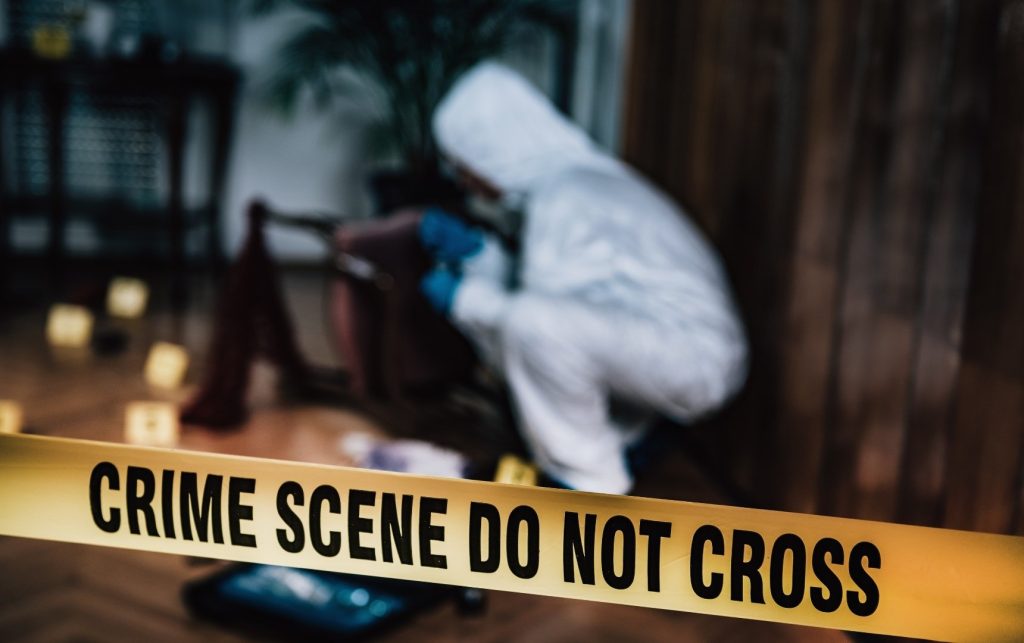
Forensic cleaning services are the professional decontamination of a property after police have processed the scene and released it. Law enforcement collects evidence and documents conditions, then leaves. Cleanup is not part of that job, so the owner or the family arranges it once the scene is released. Emergency Cleanings does this work nationwide with licensed local after-death and crime scene cleaning crews, a free on-site assessment, and a flat price locked before the work starts.
When law enforcement concludes an investigation at a crime scene, their departure does not signal that the space is safe to enter or reoccupy. The responsibility for what remains, biological material, chemical residue, fingerprint powders, and structural damage from forced entry or evidence collection, falls entirely on the property owner or the family of the person involved.
Professional forensic cleaning services exist to handle exactly this transition, from a space that has been processed by investigators to one that is safe, compliant, and livable again.
What Forensic Cleaning Services Actually Cover
The term forensic cleaning is sometimes used interchangeably with crime scene cleanup, but the scope extends beyond violent incidents. Forensic cleaning services address any situation where a space requires decontamination following an investigation, unattended death, trauma, or the presence of biological or chemical hazards. This includes homicides, suicides, accidental deaths, drug-related contamination from methamphetamine labs, and decomposition scenes where a person was not discovered for an extended period.
Each of these scenarios carries a specific set of hazards. Bloodborne pathogens, including hepatitis B, hepatitis C, and HIV, can survive on surfaces for days or weeks depending on environmental conditions. Decomposition produces biogases and liquids that penetrate porous materials and create long-term contamination if not properly extracted. Methamphetamine residue embeds itself into drywall, flooring, and HVAC systems, posing neurological and respiratory risks to anyone who enters the space without proper remediation.
Why Law Enforcement Does Not Clean the Scene
A common misconception is that police or investigative agencies bear some responsibility for restoring a property after they have processed it. They do not. Law enforcement collects evidence and documents conditions for investigative and legal purposes. Cleanup is explicitly outside their mandate, and they are not equipped or trained for biohazard remediation.

This gap can be deeply disorienting for families who assume the scene will be addressed once investigators leave. In many cases, family members or property managers arrive at the space expecting resolution and find instead that the full weight of cleanup responsibility rests with them. Forensic cleaning services bridge that gap, providing a clear next step when the investigative process has ended and the restoration process needs to begin.
The Health Risks That Make Professional Response Necessary
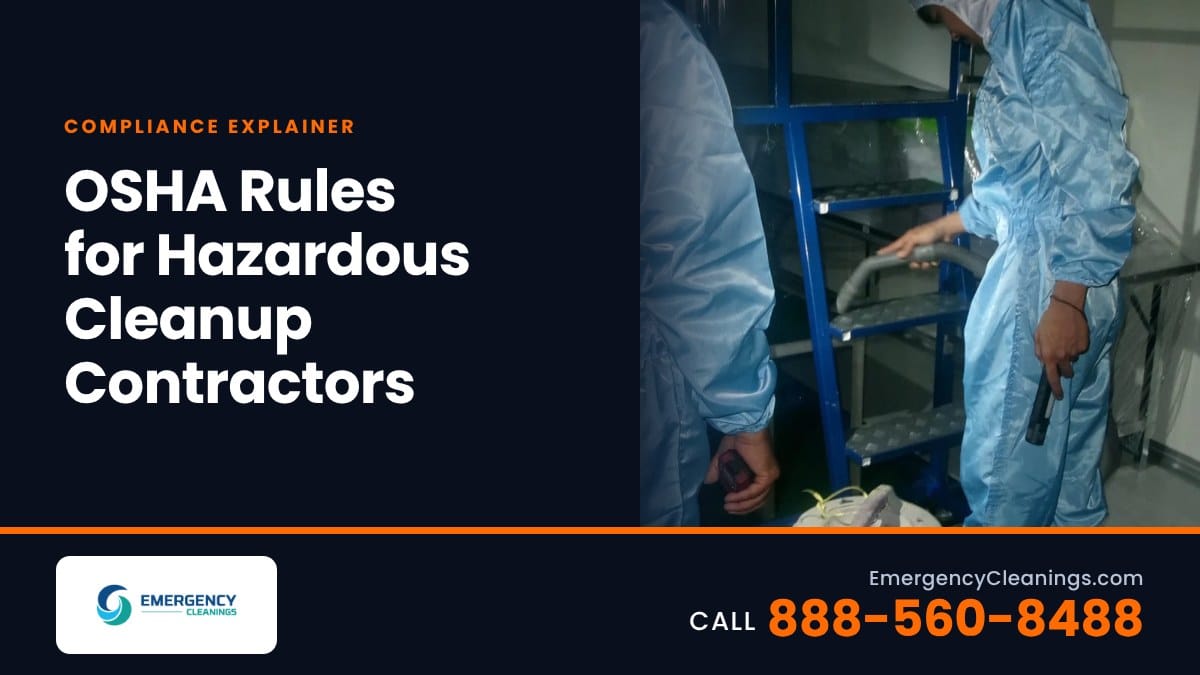
Attempting to clean a forensic scene without professional training and equipment creates serious health risks. Blood and bodily fluids require EPA-registered disinfectants and OSHA-compliant handling procedures. Personal protective equipment at the appropriate level, including respirators, full-body suits, and eye protection, is non-negotiable for these environments. Household cleaning products do not neutralize bloodborne pathogens, and bleach alone does not meet the standard required for certified biohazard remediation.
Decomposition scenes present additional complexity. The compounds produced during decomposition, including putrescine, cadaverine, and hydrogen sulfide, require neutralization beyond surface cleaning. Materials that have absorbed decomposition fluids, including flooring, subfloor, drywall, and insulation, often require removal and disposal as regulated biohazardous waste. A professional forensic cleaning team identifies the full extent of contamination, including what is not visible to the untrained eye, and remediates it completely.
Drug contamination scenes carry their own regulatory requirements. Properties identified as former methamphetamine production sites may be subject to state-mandated testing and remediation protocols before they can legally be reoccupied. Forensic cleaning professionals familiar with these regulations ensure that the remediation meets the documentation standards required for compliance.
The Emotional Dimension of Forensic Cleaning
Families who have lost someone to violence, suicide, or an unattended death are managing profound grief at the same time they are confronting the practical demands of the cleanup. The space where the death or trauma occurred carries significant emotional weight, and the presence of physical evidence of that event extends the acuity of the loss. Every day that remediation is delayed is another day the family remains unable to begin processing what happened.
Professional forensic cleaning services approach this dimension of the work with deliberate care. Experienced teams communicate clearly, work efficiently, and handle both the physical environment and the people connected to it with discretion and respect. For families who are already exhausted and overwhelmed, knowing that a professional team is handling the cleanup thoroughly and compassionately removes one significant source of ongoing distress.

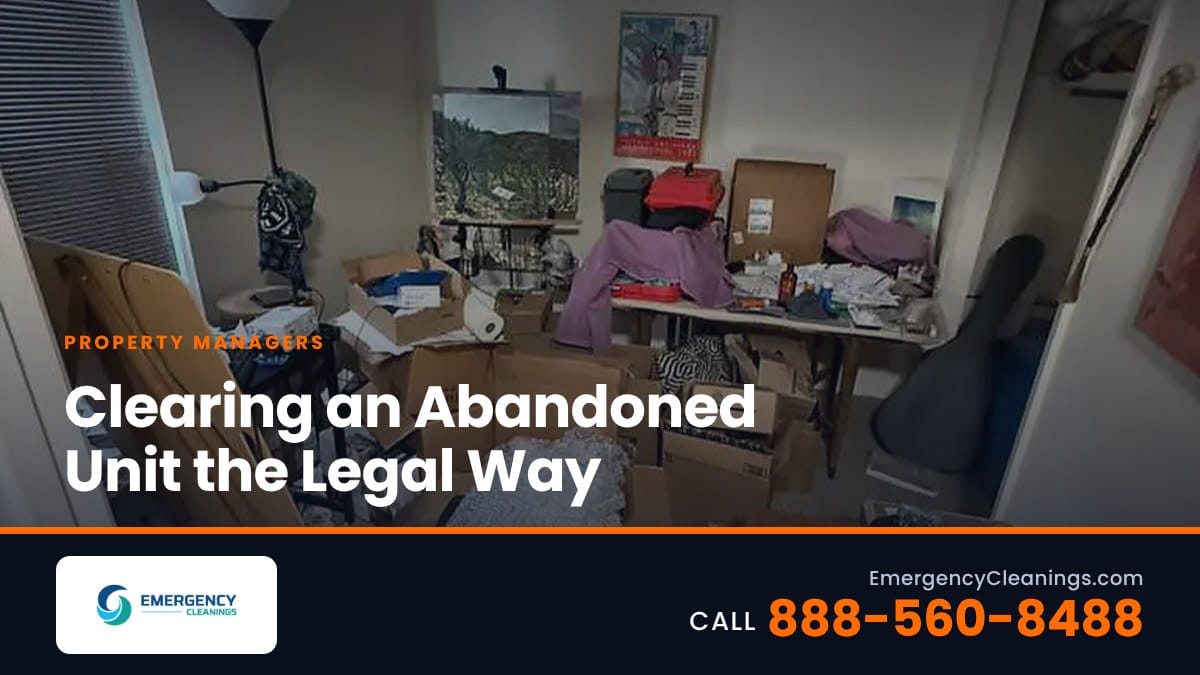
Property managers dealing with forensic scenes in tenant units face a different but equally demanding set of pressures. They must balance their legal obligations to other residents, their responsibilities to the affected unit, and the timeline pressures of returning the property to a habitable condition. Forensic cleaning professionals who understand property management contexts can work within those constraints and provide documentation that supports compliance and insurance requirements.
Timeline and What to Expect from Forensic Cleaning Services
Most forensic cleaning projects are completed within one to three days, depending on the size of the space and the extent of contamination. The process begins with a thorough assessment of affected areas, followed by containment to prevent cross-contamination to adjacent spaces. Decontamination, material removal, and surface treatment follow a documented protocol. Final testing or clearance documentation may be required in regulated scenarios, particularly those involving chemical contamination.
Reputable forensic cleaning providers carry appropriate licensing, insurance, and certifications for biohazard remediation. They also handle the disposal of biohazardous materials in compliance with federal and state regulations, including proper manifesting and transport through licensed subcontractors.
Professional Forensic Cleaning Backed by Compliance and Care
At Emergency Cleanings, we provide professional crime and after-death cleaning services for residential and commercial properties following investigations, unattended deaths, and trauma events. Our teams are trained for biohazard remediation and approach every project with the discretion and thoroughness these situations demand.
We also handle feces and urine cleaning for decomposition-related contamination and same-day emergency cleaning when an immediate response is required. Hazardous waste removal, biohazard transport, and regulated disposal are handled by licensed and insured subcontractors who meet all applicable requirements.
Frequently Asked Questions
Do police clean up the scene after an investigation?
No. Law enforcement processes the scene, collects what it needs for the case, then releases the property back to the owner. Cleaning sits outside their mandate. Once the release happens, the owner or the family is the one who brings in a licensed biohazard crew.
How fast can someone get to the property?
Emergency Cleanings responds the same day in most situations. When a technician is dispatched you get a two-hour arrival window and an ETA text while they are en route. If investigators have not released the scene yet, the visit is scheduled for as soon as they clear it.
How does pricing work for forensic cleaning?
A technician walks the property first at no charge and scopes the full extent of contamination, including material that fluids have soaked into below the surface. That scope becomes one flat price, locked before work begins. Financing is available, and a large job can be phased.
Does the family need to be at the property during the cleanup?
No, and many families choose not to be. Access can be handed to the crew, who work discreetly and keep the details confidential. Disposal records for regulated waste are kept, and you can request them for an insurance claim or a property file.
Families and property managers should not carry the burden of a forensic scene alone. Call Emergency Cleanings at 888-560-8488 for a same-day response. The assessment is free, a technician scopes the property on site, and the flat price is locked before work begins.