
Suicide scene cleanup is the professional cleaning and decontamination of a home or property after a death by suicide, carried out once law enforcement has released the scene. Families are never required to do this work themselves. Emergency Cleanings provides after death cleaning nationwide, with a free on-site assessment and a flat price agreed before anything begins.
Losing someone to suicide is one of the most devastating experiences a family can face. In the immediate aftermath, practical decisions must be made at a moment when grief is most acute. Suicide scene cleanup is one of those decisions, and understanding what it involves helps families and property representatives act quickly, safely, and with the care the situation demands. No one should have to navigate this process without knowing what to expect.
Why Suicide Scene Cleanup Requires Professional Intervention
Suicide is a significant public health concern in the United States. According to the CDC's National Center for Health Statistics, suicide is among the leading causes of death across multiple age groups, with over 47,000 lives lost annually in recent years. Behind each of those statistics is a family left to manage not only profound grief but also the immediate reality of a scene that requires professional attention.
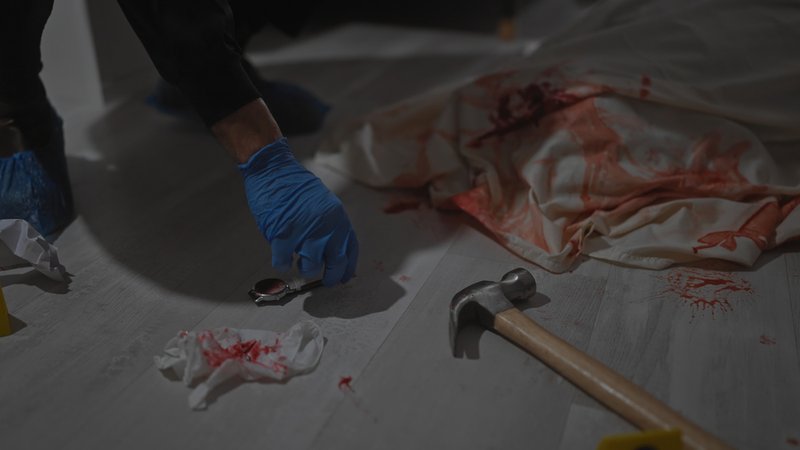
The biological materials present at a suicide scene pose serious health risks that most people are not equipped to manage safely. Blood, bodily fluids, and tissue are classified as biohazardous waste under OSHA's Bloodborne Pathogens Standard, 29 CFR 1910.1030. This standard mandates specific protective equipment, handling procedures, and disposal methods that only trained professionals are authorized to execute.
Pathogens, including Hepatitis B, Hepatitis C, and HIV, can survive on surfaces well beyond the time of death. Hepatitis B in particular can remain viable on dry surfaces for up to seven days. Attempting cleanup without proper protection creates genuine infection risk for family members, building occupants, and anyone else who enters the space.
Law enforcement and emergency personnel secure the scene and conduct their investigation, but they do not perform cleanup. Once the scene is released, that responsibility falls to the property owner or the deceased's next of kin. Professional suicide scene cleanup services exist precisely to carry that burden so that grieving families do not have to.
The Emotional Weight Families Carry After a Suicide
Grief following a suicide is distinct in important ways. Survivors often experience shock, guilt, confusion, and trauma that compound the ordinary processes of mourning. Exposure to the physical scene intensifies that trauma significantly. Mental health professionals consistently recommend that family members avoid direct exposure to the aftermath wherever possible.
The American Foundation for Suicide Prevention notes that suicide loss survivors face a heightened risk of complicated grief, depression, and post-traumatic stress. Protecting loved ones from the physical scene is one of the most immediate and concrete steps that can be taken to support their recovery. Delegating cleanup to trained professionals removes one source of re-traumatization at a time when the family has little capacity to absorb more.
Property managers and facility staff face a different but equally significant emotional burden. Being responsible for a resident or tenant who has died by suicide carries its own weight. Having a professional, discreet cleanup team to call removes the pressure of making real-time decisions about a situation that falls far outside normal operational experience.
What the Suicide Scene Cleanup Process Involves
Professional suicide scene cleanup follows a structured process designed to ensure thorough decontamination and regulatory compliance. The first step is a scene assessment, which establishes the extent of contamination, identifies the materials and methods required, and determines whether any structural elements such as flooring, drywall, or subflooring have been affected.
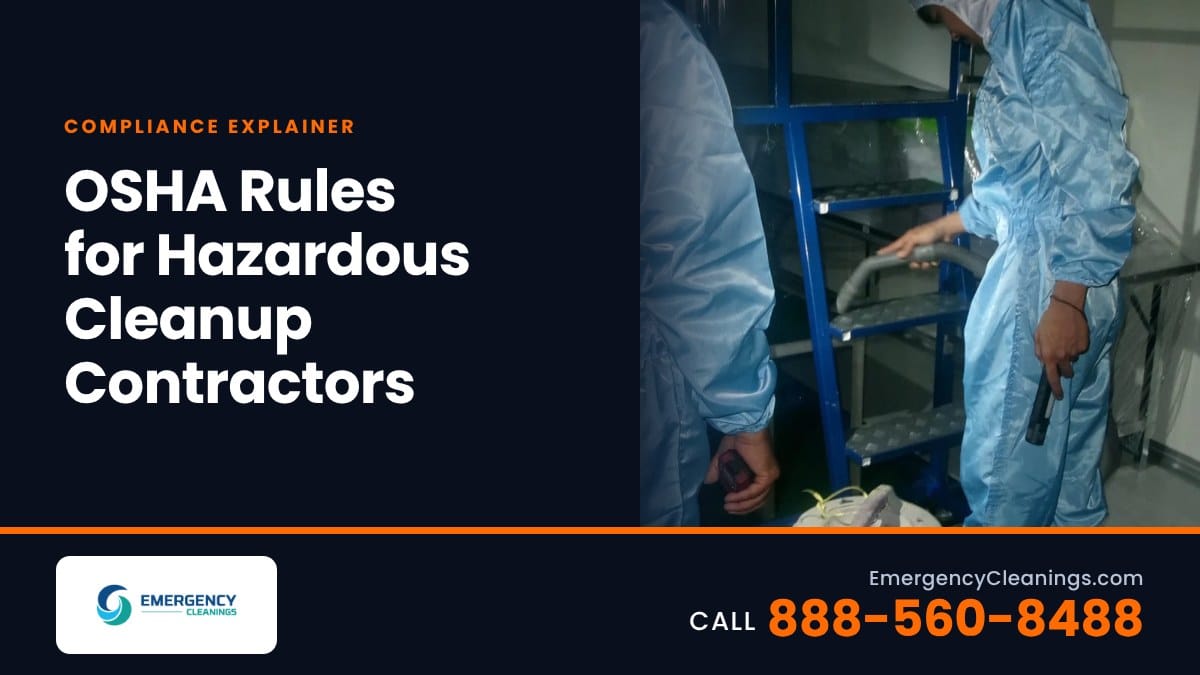
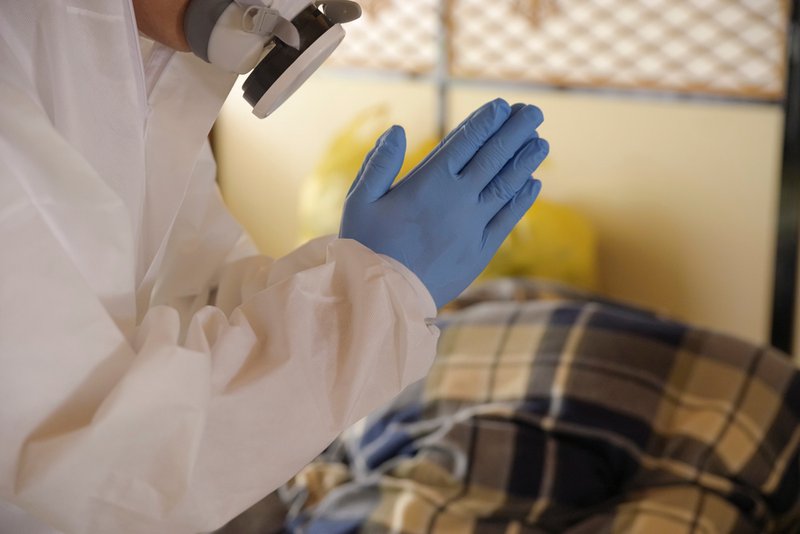
Containment follows assessment. Professional crews establish barriers to prevent cross-contamination of unaffected areas of the property. Personal protective equipment, including respiratory protection, chemical-resistant gloves, and full-body suits, is required throughout the process. These are not precautions taken out of an abundance of caution. They are legally required under federal occupational safety standards.
Decontamination involves treating all affected surfaces with hospital-grade antimicrobial and enzymatic agents. Blood and biological material that has absorbed into porous surfaces requires more than surface treatment. Subfloor materials, wall cavities, and insulation may need to be removed and disposed of as regulated biohazardous waste, depending on the degree of penetration. Professional teams make these assessments based on direct inspection rather than assumption.
Odor Removal and Structural Considerations in Suicide Scene Cleanup
Odor is one of the most persistent challenges in suicide scene cleanup, particularly when discovery of the scene was delayed. Decomposition compounds penetrate deeply into porous materials and cannot be addressed with standard cleaning products or air fresheners. Industrial-grade odor neutralization equipment, including thermal foggers and hydroxyl generators, is required to treat the space at a molecular level.
Structural assessment is also a standard component of professional cleanup. Biological fluids can migrate into flooring channels, wall cavities, and HVAC systems in ways that are not immediately visible. A cleanup that addresses only the visible surface leaves contamination in place that will continue to pose health risks and generate odor over time. Thorough professional work includes inspection and treatment of all potentially affected areas.
Documentation is produced throughout the process. Reputable suicide scene cleanup providers supply detailed records of what was found, what was removed, what treatments were applied, and how all regulated materials were disposed of. This documentation is important for insurance claims, property records, and in some cases legal purposes.
Navigating Insurance and Financial Assistance
Many homeowner and renter insurance policies cover the cost of professional biohazard cleanup, including suicide scene cleanup. Coverage varies by policy and provider, but it is worth reviewing the terms before assuming the cost must be paid out of pocket. Some states also have victim assistance programs that provide financial support for cleanup costs following a violent or traumatic death.
Professional cleanup companies with experience in this area can often assist with the insurance documentation process. They provide the itemized records and regulatory compliance documentation that insurers typically require to process a claim. Families dealing with grief should not also have to manage complex paperwork alone, and a knowledgeable cleanup provider can ease that burden.
Frequently Asked Questions
Does the family have to clean the scene?
No. This is not something you are expected to handle, and no one will ask you to. Once the scene is released, a trained crew can take it from there while you tend to everything else.
How soon can someone come out?
Emergency Cleanings responds the same day in most cases. You will get a two hour arrival window and a text with an ETA when the technician is on the way. If you need the work to start later, it can wait until you are ready.
How does the pricing work?
The assessment is free. A technician looks at the property in person, scopes what the job actually requires, and the price is locked flat before any work starts. Financing is available, and a job can be phased if that helps.
Will insurance or any assistance program help with the cost?
Many homeowner and renter policies cover biohazard cleanup, so it is worth reading your policy or calling your agent. State crime victim compensation programs sometimes help with cleanup costs as well. Eligibility rules, payment caps and filing windows vary by state, so check with the program where the death occurred.
Will the neighbors know what happened?
Discretion is part of the job. Crews work quietly and do not discuss the details of a job with anyone outside your family. Disposal records are kept, and you can request them if you need them for a claim.
Compassionate Suicide Scene Cleanup From a Team That Understands
At Emergency Cleanings, we approach every crime scene and after death cleanup with the professionalism, discretion, and genuine compassion the situation requires. Our same day emergency cleaning service means families and property representatives do not have to wait to begin the process of restoration.
Specialized tasks including biohazard disposal, hazardous material transport, and hauling are handled by licensed and insured subcontractors who meet all applicable local, state, and federal standards. When you are ready, Emergency Cleanings can be reached at 888-560-8488 for a same day response. The assessment is free, the scope is done on site, and the flat price is locked before work begins. There is no rush on your end.
If you or someone you know is struggling, the 988 Suicide and Crisis Lifeline is available 24 hours a day by calling or texting 988.