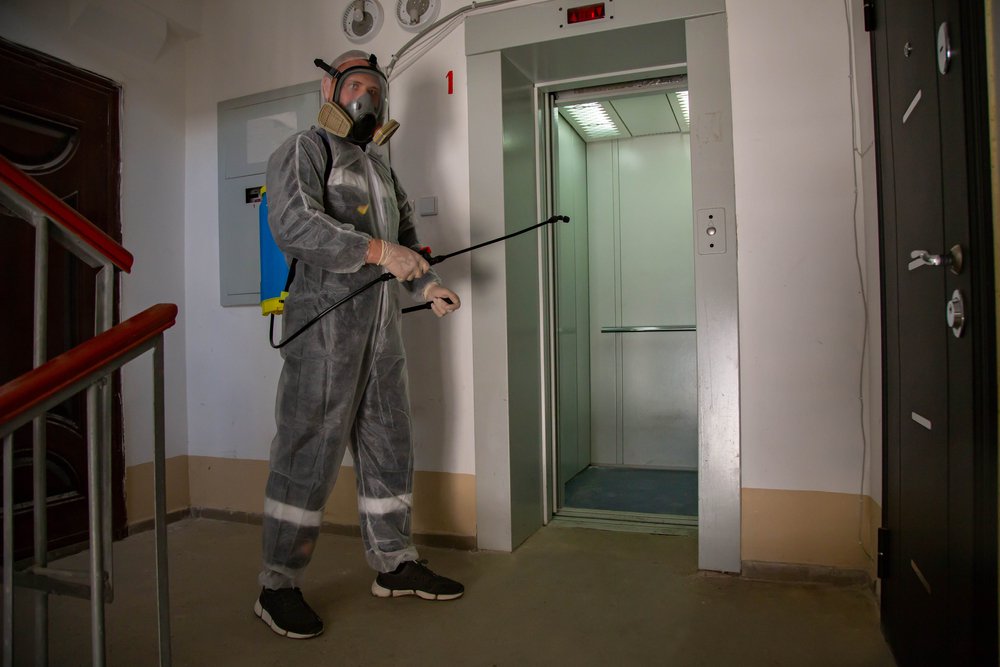
Industrial hazard cleaning services are contracted cleanup and decontamination work inside manufacturing and chemical plants: spill containment, decontamination of equipment and surfaces, removal of hazardous residue, and coordination of regulated waste disposal. Plant managers and EHS staff bring in an outside crew when the job sits past what in-house teams can handle. Emergency Cleanings handles industrial cleanups nationwide with a free assessment and a flat price locked after the on-site scope.
Industrial facilities operate under conditions that most workplaces never encounter. Chemical exposure, mechanical failure, and hazardous waste accumulation are daily realities in manufacturing environments. When something goes wrong, hazard cleaning services become a critical line of defense, protecting workers, maintaining regulatory compliance, and keeping operations from coming to a prolonged halt. The stakes in these settings are high, and the margin for error is narrow.
What Hazard Cleaning Services Cover in Industrial Settings
The scope of hazard cleaning in manufacturing and chemical facilities goes well beyond routine janitorial work. It includes chemical spill containment and neutralization, decontamination of equipment and surfaces, removal of hazardous residue, and disposal of regulated materials. Each of these tasks requires specific training, equipment, and documentation to meet legal standards.
Chemical facilities deal with substances that react unpredictably when improperly handled. Solvents, acids, oxidizers, and flammable liquids each require a tailored response. A crew trained in general cleaning but not in chemical hazard protocols can turn a contained spill into a facility-wide incident. Proper hazard cleaning teams understand the chemistry, the containment methods, and the regulatory framework that governs each material.
Manufacturing facilities face additional complexity from the machinery and infrastructure involved. Cleaning around conveyor systems, processing equipment, and electrical components requires awareness of both the chemical and physical hazards present. Professional hazard cleaning services account for all of these variables before work begins.
Regulatory Requirements That Drive the Need for Hazard Cleaning Services
OSHA, the EPA, and in some cases the Department of Transportation all have jurisdiction over how hazardous materials are handled and disposed of in industrial settings. OSHA's Hazard Communication Standard requires that workers who may be exposed to hazardous chemicals receive training and that proper safety data sheets are maintained and accessible. Cleanup crews must operate within this framework.
The EPA's Resource Conservation and Recovery Act governs the generation, storage, transport, and disposal of hazardous waste. Facilities that mismanage hazardous waste face fines that can reach tens of thousands of dollars per violation per day. Using licensed, compliant hazard cleaning services is not just a practical decision. It is a legal requirement in most scenarios involving regulated substances.
State-level environmental agencies add another layer of compliance requirements that vary significantly by location. A professional hazard cleaning provider with national experience understands how to navigate these variations. Facilities that rely on local or unlicensed crews often discover the gaps in their compliance posture only after a regulatory inspection or incident report.
Chemical Spills: Response Time and Containment
In chemical facilities, the first 15 minutes after a spill are the most critical. Rapid containment prevents the spread of hazardous material to unaffected areas, limits worker exposure, and reduces the overall scope of remediation. Facilities with a professional hazard cleaning team on call can initiate that response immediately, without the delays that come from sourcing a crew after the fact.
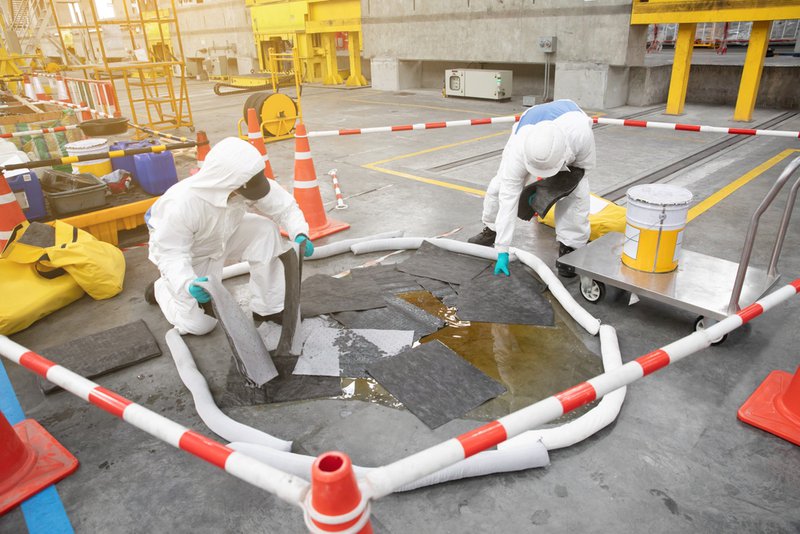
Spill response involves several sequential steps: securing the area, identifying the chemical and its properties, deploying appropriate containment materials, neutralizing or absorbing the substance, and disposing of all contaminated materials through approved channels. Each step must be documented for regulatory purposes. A professional team handles this documentation as a standard part of the job.
Secondary containment failures are a common source of escalation in chemical facilities. When the primary containment structure, such as a tank or drum, fails, the released material can spread to drains, flooring channels, and adjacent areas. Hazard cleaning services that specialize in these environments know where secondary spread typically occurs and address it proactively.
Worker Safety and the Role of Hazard Cleaning Services
The connection between regular professional hazard cleaning and long-term worker health is well established. Chronic low-level exposure to chemical residue on surfaces, in ventilation systems, and on equipment contributes to occupational illness over time. Facilities that maintain rigorous cleaning schedules reduce both acute incident risk and cumulative exposure.
OSHA's Permissible Exposure Limits set legally enforceable ceilings on worker exposure to hundreds of hazardous substances. Maintaining compliance with those limits requires more than ventilation and personal protective equipment. It requires that surfaces, equipment, and work areas are regularly decontaminated by qualified professionals who know what they are looking for.
Worker morale and retention are also affected by the cleanliness and safety of the work environment. Employees who see that their employer invests in professional hazard cleaning services understand that their health is taken seriously. That perception has a measurable impact on workplace culture and operational consistency.
Planned Maintenance Versus Emergency Response
The most effective approach to hazard cleaning in industrial and chemical facilities combines scheduled maintenance with a reliable emergency response capability. Planned cleaning addresses the slow accumulation of hazardous residue that builds up during normal operations. Emergency response handles the acute incidents that no amount of planning can fully prevent.
Facilities that treat hazard cleaning as a reactive measure only tend to face larger, more costly incidents over time. Residue buildup compromises equipment, creates slip and fall risks, and can trigger regulatory violations during routine inspections. A consistent maintenance schedule reduces all of these risks and establishes a documented compliance record that protects the facility in the event of an audit.
Pre-established agreements with a professional hazard cleaning provider give facilities the confidence that a qualified team can be deployed immediately when an incident occurs. Response time in an emergency is a function of preparation, not luck.
Hazard Cleaning Services Backed by Expertise and Compliance
At Emergency Cleanings, we provide professional industrial cleanups and spill cleanup services designed to meet the demands of high-hazard environments. We also handle sewage backup cleanup and offer same day emergency cleaning for incidents that require an immediate response.
Specialized tasks, including hazardous waste transport, regulated material disposal, and hauling, are carried out by licensed and insured subcontractors who comply with all applicable local, state, and federal requirements. We work exclusively with trusted professionals to ensure every job meets industry standards without exception.
Frequently Asked Questions
How fast can a hazard cleaning crew reach our facility?
Same-day response is the standard for an active incident. Once a crew is dispatched you get a two-hour arrival window and an ETA text when the technician is en route. Call 888-560-8488 and a coordinator walks through the material and the area affected.
How does a plant engage a cleanup contractor?
It starts with a phone call describing the substance and where it spread. A technician comes out for a free assessment and scopes the work on site with your EHS lead. The price is flat and locked before work begins, and larger jobs can be phased so production restarts in stages.
What documentation do we get for the incident file?
The crew logs what was cleaned, the methods used, and how contaminated material left the site. Disposal records you can request are handled through the licensed carriers who transport regulated waste. File those with your own incident report so the record holds up if an inspector asks.
What falls outside the scope of hazard cleaning?
Emergency Cleanings cleans surface mold as part of a cleanup. Deep mold mitigation, water damage restoration, fire restoration, and plumbing repair are separate trades we do not perform. Structural repairs and equipment rebuilds stay with your maintenance contractors. What is covered is cleanup and decontamination, such as chemical and oil spill cleanup and sewage backup response.
Call Emergency Cleanings at 888-560-8488 for a same-day response. A technician comes out for a free assessment and scopes the work on site with your team. The flat price is locked before anyone starts.