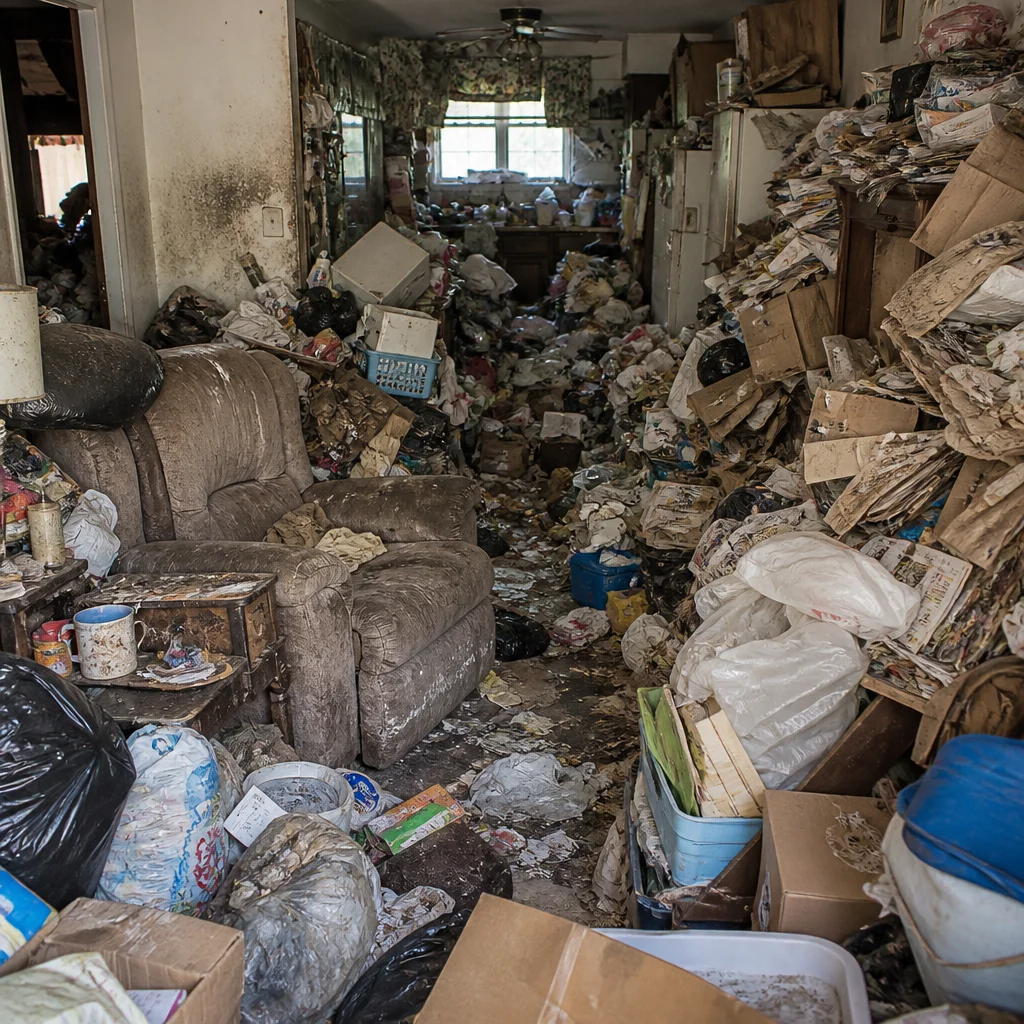

Hoarding cleanup stories are firsthand accounts of what crews and families find inside homes where belongings have taken over, and what those homes say about grief, illness, and years of quiet struggle. They cover the practical work of clearing clutter and sanitizing a space, along with the care that work takes when someone still lives there. Emergency Cleanings does hoarding cleanup nationwide with a free on-site assessment, and the flat price is locked in before anyone starts working.
Hoarding cleanup reveals much about the human struggles hidden behind overwhelming clutter and emotional pain. It reflects deeper issues such as trauma, loss, and untreated mental health challenges that quietly shape lives. By understanding the human side of hoarding cleanup, we create space for empathy, healing, and genuine connection.
Understanding Hoarding Beyond the Clutter
Hoarding cleanup begins with recognizing that hoarding is a mental health condition rather than a personal flaw. Research indicates that hoarding disorder affects roughly 2.5 % of adults, highlighting the need for compassionate intervention in many households. Furthermore, these cluttered environments not only create physical hazards but also reflect emotional burdens carried for years.

Cleanup professionals often encounter homes filled with items of little monetary value yet immense emotional significance. Many individuals believe these possessions bring comfort, security, or identity, even when they pose clear risks. Additionally, such attachments frequently originate from early life experiences, trauma, or long-standing emotional connections to objects.
The process of letting go can be extremely personal and exhausting for residents. Therefore, individuals may feel anxiety and distress while discarding items, reflecting the complex interplay of fear, loss, and identity. A PMC study highlights that hoarding can significantly affect daily functioning, relationships, and safety, making professional cleanup both practical and emotionally supportive.
Hoarding Cleanup: Observing Emotional and Environmental Challenges
Hoarding cleanup often exposes both emotional vulnerabilities and environmental hazards in the same space. For instance, teams frequently encounter blocked pathways, unsanitary conditions, and fire hazards that endanger residents and neighbors. Consequently, understanding these risks highlights the importance of a careful, structured cleanup approach.
Cleanup crews witness firsthand how anxiety and shame accompany emotional attachments to possessions. Often, residents require reassurance before any items are removed, which emphasizes patience and empathetic communication. By responding with sensitivity, crews foster trust while simultaneously addressing safety and sanitation concerns.
A Massachusetts Government report on hoarding risks confirms that hoarded homes present serious hazards, including blocked exits, fire danger, and unsanitary conditions, underscoring why professional cleanup is critical. Interventions must balance efficiency with empathy, creating safer living environments while respecting residents’ dignity. Teams combine logistical planning with human understanding to achieve meaningful outcomes.
Supporting Families Through the Process
Families navigating a loved one’s hoarding cleanup situation face emotional, physical, and logistical challenges simultaneously. Relatives often experience frustration or helplessness when trying to manage accumulated clutter, which can delay progress. Effective family support becomes essential for maintaining safety, cooperation, and consistency throughout the cleanup process.
When approaching cleanup, families can focus on key strategies to provide support:
- Encourage residents to participate in decisions about their belongings, preserving dignity and fostering trust.
- Break down tasks into manageable steps, allowing incremental progress without overwhelming anyone involved.
- Maintain open and patient communication to reduce tension and create a cooperative environment.
- Celebrate small achievements during the cleanup, reinforcing motivation and reinforcing positive behaviors.
- Establish shared safety goals, ensuring everyone understands procedures and feels responsible for household well-being.
Supporting families with guidance and structured involvement helps improve both emotional resilience and physical safety. Ultimately, these efforts strengthen relationships while promoting a smoother, more respectful hoarding cleanup experience.
Creating Safe and Functional Living Spaces
Hoarding cleanup focuses on transforming unsafe or inaccessible areas into safe, functional spaces for residents. Professional teams employ techniques to remove debris, sanitize surfaces, and restore habitability efficiently. Cleanup is not only about tidiness but also about improving overall quality of life and wellbeing.
Families and residents can benefit from focusing on key strategies to create safe and functional living spaces:
- Remove clutter and debris methodically to restore accessible pathways and reduce physical hazards.
- Sanitize all surfaces and address potential biohazards to ensure a safe environment for residents.
- Organize remaining possessions thoughtfully, creating practical and navigable storage solutions.
- Reestablish daily routines and functional zones to help residents regain control of their home.
- Incorporate long-term maintenance strategies to prevent future accumulation and maintain a healthy living space.
Implementing these strategies ensures that homes become safer, more organized, and emotionally supportive for residents. Ultimately, a structured approach to hoarding cleanup fosters lasting comfort, functionality, and peace of mind.

The Human Side of Hoarding Cleanup
Every hoarding cleanup highlights the importance of compassion, patience, and understanding in supporting individuals through change. Residents often feel isolated or misunderstood, and cleanup becomes a source of reassurance and human connection. Therefore, the work of cleanup teams goes beyond physical tasks to create emotional support structures.
Small acts of care and respectful communication can reduce shame and encourage engagement in the cleanup process. Moreover, seeing tangible progress instills confidence and hope, motivating residents to continue positive behaviors. By approaching each home with empathy, teams help individuals feel valued and understood throughout the process.
Community perception shifts when hoarding cleanup is framed through care and shared humanity. Consequently, individuals and families gain insight into hoarding disorder as a mental health condition rather than a personal failure. Furthermore, these lessons encourage continued support, including ongoing counseling, peer assistance, and family guidance.
A Compassionate Path Forward
Hoarding cleanup teaches that empathy, patience, and understanding are essential for addressing both physical and emotional challenges. When conducted respectfully, cleanup supports individuals through transitions while strengthening connections to themselves and their loved ones. Every cleanup shows how compassionate intervention restores safety, dignity, and confidence in daily living.
Frequently Asked Questions
What do hoarding cleanup stories tend to have in common?
Almost all of them start with a person, not a pile. The clutter is usually the visible part of something older, like a loss, a health crisis, or a long stretch of isolation.
Can a family handle a hoarding cleanup on their own?
Sometimes, if the home is safe to walk through and nobody is dealing with rot, pests, or human waste. Once biohazards are in the picture, the job needs trained technicians and proper disposal. Emergency Cleanings sends vetted, licensed, insured local technicians, and disposal records are available if you ask for them.
How does pricing work for hoarding cleanup?
A technician walks the home first and scopes the actual conditions, at no charge. After that you get one flat price that is locked before any work begins, so the number does not move as the job goes on. Financing is available, and larger homes can be phased room by room if that fits the household better.
Will the neighbors find out?
Discretion is part of the job. Crews keep conversations off the sidewalk, work at a normal pace, and do not discuss the household with anyone outside it.
How quickly can someone get out to the house?
Same-day response is available in most of the country. You get a two-hour arrival window and a text with an ETA once the technician is on the way. If the situation is not urgent, the visit can be scheduled for whenever the family is ready.
At Emergency Cleanings, we understand the emotional and logistical complexities of hoarding cleanup and specialty cleaning services. Call 888-560-8488 for a same-day response and a free assessment. A technician scopes the home on site, and the flat price is locked before any work begins.