Before letters are issued, an executor can protect the property and pay for the funeral, and that is about it. After letters, a personal representative can legally dispose of estate property that costs more to keep than it is worth, but in California that power comes with a written notice to affected heirs, and specific gifts and anything worth selling have to wait. Emergency Cleanings clears estate homes on that schedule and keeps a photo record of what left the property and when.
You have a listing date, a photographer on the calendar, and a house full of forty years of someone else’s life. What can the crew haul away this week without somebody later saying you had no right to do it?
The answer turns on two things: whether you hold letters yet, and what kind of property you are looking at. The examples below use California’s Probate Code, with a note on states that follow the Uniform Probate Code. Rules vary by state and this is not legal advice, so run your plan past the estate’s attorney.
Before letters: protect the property and leave the rest in place
California is blunt about this. Under Probate Code section 8400, a person has no power to administer the estate until appointed and until letters actually issue. Being named executor in the will does not change that. The one carve-out lets a named executor pay funeral expenses and take necessary measures for the maintenance and preservation of the estate.
In practice, preservation means locking up and getting rotting food out before it draws pests. It does not mean emptying closets.
Uniform Probate Code states take a softer line. Arizona’s version, A.R.S. 14-3701, says a representative’s powers “relate back” to cover acts before appointment that benefited the estate. That protection arrives after the fact, if a court agrees the act helped.
After letters: the tangible personal property statute
Once letters issue, section 9650 gives you possession and control of the estate property, along with a duty to protect and preserve it. The statute that lets you throw things out is section 9780. You may dispose of or abandon tangible personal property where collecting, maintaining and safeguarding it would cost more than its fair market value. Think broken recliners and expired pantry goods.
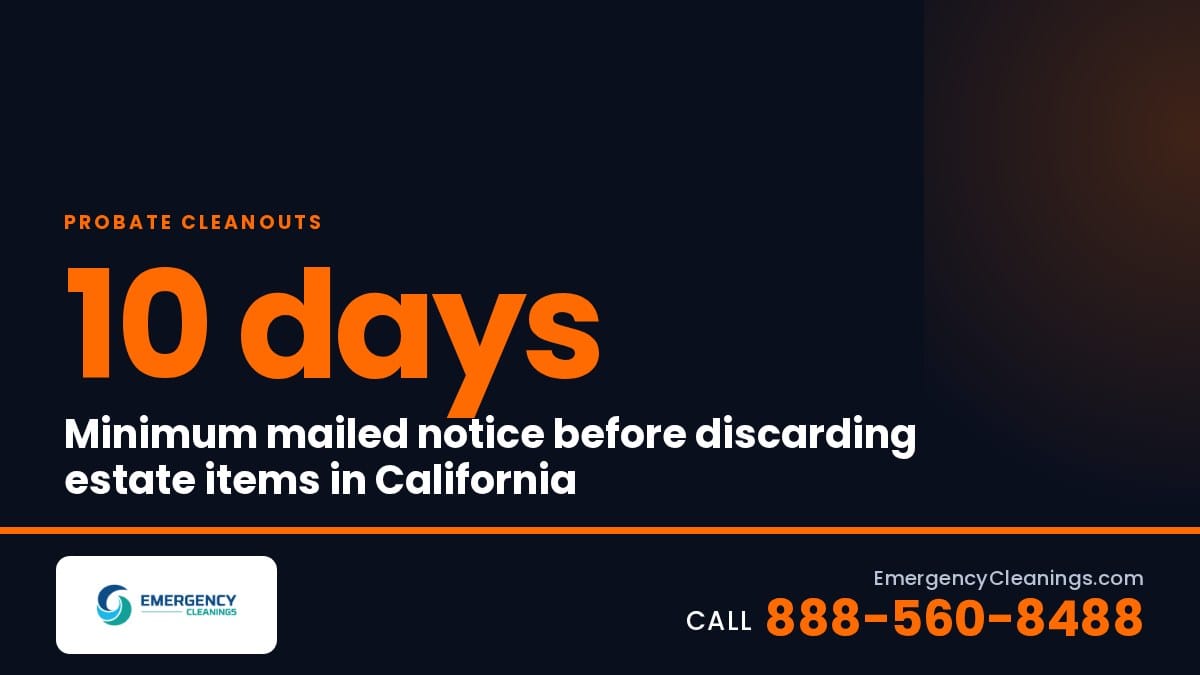
You do not need a court order for that (section 9781). You do need to give notice. Section 9782 requires it for each known heir or devisee whose interest would be affected and for anyone who filed a request for special notice. The notice describes the property and names a date. Hand delivery has to happen at least five days before that date. Mailed notice goes out at least ten days before.
There is a faster lane. Under section 9785, no notice is required for anyone who consents in writing or waives notice in writing. When every heir signs at the first family meeting, the haul can start once they do.
If an heir objects in writing, section 9783 stops you until a court authorizes the disposal. Section 9788 gives you a way out of that stall. If the objector fails to take possession of the property at their own expense within ten days of your request, you may dispose of it without a court order.
What has to wait
Anything left to a named person
Section 9780 opens with an exception for property that is “specifically devised.” If the will leaves the piano to a granddaughter, the piano is off the truck. Check for a separate gift list too. Section 6132 lets a will refer to a dated, signed or handwritten writing that hands out tangible items, and that writing counts as part of the will.
Anything worth selling
If an item has resale value, the abandonment statute is the wrong tool. Under independent administration, section 10537 generally requires a Notice of Proposed Action before a sale, and section 10586 sets that notice at 15 days or more before the action date. Heirs can consent in writing instead (section 10582). Property that is perishable or losing value by the week can be sold with or without notice under section 10252.
Papers, and the will itself
Anyone holding an original will must deliver it to the superior court clerk within 30 days of learning of the death, under section 8200, and a custodian who fails is liable for the damage. Our guide to finding hidden wills and deeds during a cleanout covers where they hide.
Running the calendar against your listing date
Your inventory and appraisal is due within four months of letters under section 8800, so you want the valuables counted before anything leaves. A workable order looks like this:
- Walk the house with the will and any gift list in hand, and tag every specific gift.
- Pull papers, photos, keys and anything an appraiser or estate sale company should see.
- Get written consents from the heirs for the rest, or send the section 9782 notice and count the days.
- Photograph each room before the crew starts and again when it is empty.
Emergency Cleanings runs step four as part of the job, and our junk removal service can work room by room at a fixed price per phase, so the cleared rooms can go to the photographer while the rest wait on an objection period. You can request disposal records for what went to the landfill, to donation, or to recycling.
Frequently Asked Questions
Can an executor throw things away before letters are issued?
In California, only to the extent needed to maintain and preserve the estate, such as removing spoiled food or trash. Probate Code section 8400 withholds the power to administer the estate until letters issue.
Do I need a court order to discard low-value items in California?
No. Section 9781 lets a personal representative discard property that costs more to keep than it is worth without court approval, as long as the notice in section 9782 is given or the affected heirs consent or waive notice in writing.
What happens if an heir objects to the cleanout?
A written objection stops disposal of that property until a court authorizes it. If the objecting heir fails to take the property at their own expense within ten days after you ask, section 9788 lets you dispose of it without a court order.
Can I discard items the will leaves to a specific person?
No. Specifically devised property is excluded from the abandonment power in section 9780, and items listed in a valid gift writing under section 6132 are treated as part of the will.
Tell us your listing date. Call 888-560-8488 for a same-day response and a free assessment on site. Emergency Cleanings will put the scope in writing and give you one flat price, locked before any work starts.