Needles, human waste and other biohazards at an encampment site should be removed by a trained, equipped crew that puts sharps in puncture-resistant containers, bags and disinfects waste areas, and documents every step. Emergency Cleanings handles needle cleanup service and full encampment site cleanup for commercial property owners at one flat fee, set after a free on-site walkthrough and locked before work starts.
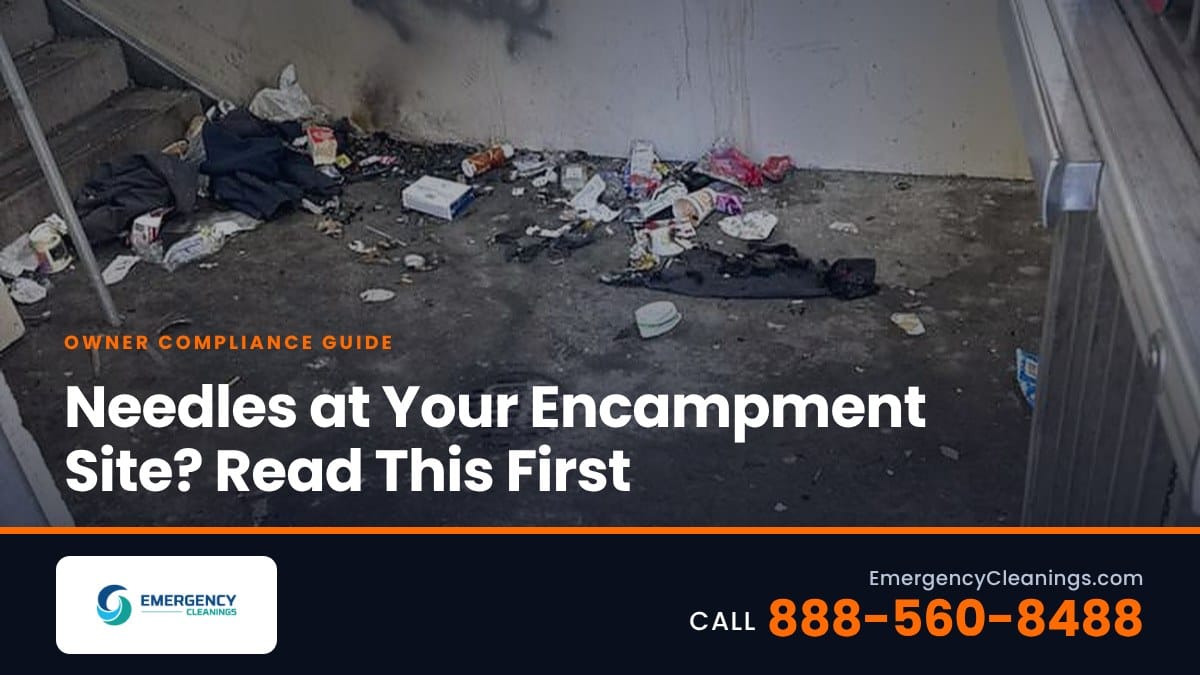
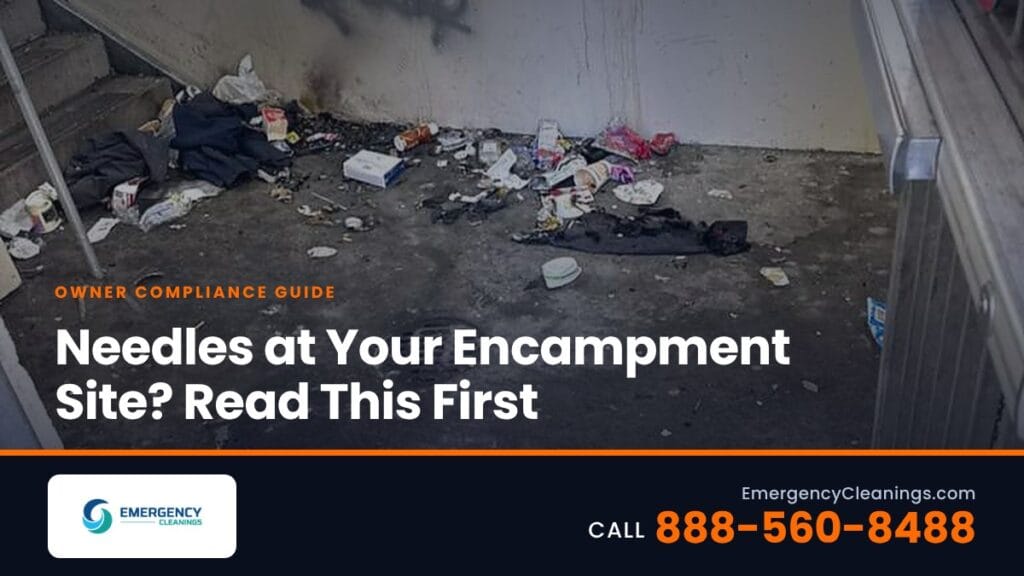
The camp behind your building is gone, or almost gone. What’s left is a pile of tarps, a few buckets, and syringes in the gravel along the fence. Your first instinct is to send the maintenance guy out with gloves and contractor bags. Hold off on that.
What You Are Dealing With at an Encampment Site
Most sites have uncapped needles tucked into bedding, soil and pavement cracks. Expect human waste in buckets, bottles or bags, soiled mattresses, and sometimes blood on fabric from injuries.
Each of those has its own handling rule.
How Sharps Get Handled
Needles are the hazard that drives the pace of the job. Federal rules for workers who face blood exposure are spelled out in OSHA’s Bloodborne Pathogens standard, 29 CFR 1910.1030. A few of its requirements shape how a trained crew works an encampment:
- Contaminated sharps go into containers that are closable, puncture resistant, leakproof on the sides and bottom, and labeled or color-coded.
- Contaminated needles are not bent, recapped or removed by hand, except by a mechanical device or one-handed technique.
- Broken glass that may be contaminated is never picked up directly with the hands. It gets cleared with mechanical means like tongs, forceps, or a brush and dustpan.
On a real site, technicians search each pile with tools before anyone grabs it, and the sharps containers leave the property sealed.
Where those containers end up is a state question. The EPA says medical waste is primarily regulated by state environmental and health departments. The crew needs to know the rules where your property sits.
Human Waste and the OSHA Trap
Plenty of owners assume the Bloodborne Pathogens standard covers everything gross on the site. It does not. OSHA has said that urine and feces are not included in the definition of “other potentially infectious materials” unless visibly contaminated with blood.
That does not make human waste safe to handle bare. It still carries bacteria and viruses. A proper crew wears gloves, eye protection and coveralls, bags waste for disposal, and cleans and disinfects the hard surfaces it touched. Bare dirt usually has to be scraped and bagged. Bloody clothing or bedding falls back under the bloodborne rules and gets handled that way.
Why Your Maintenance Staff Should Not Do This
When you assign an employee to pick up needles, you have created an employee with occupational exposure. The OSHA standard defines that as reasonably anticipated contact with blood or other potentially infectious materials from the performance of their duties. Once you are there, the standard puts duties on you as the employer.
- A written Exposure Control Plan that employees can get to.
- Hepatitis B vaccination offered within 10 working days of initial assignment.
- Training, protective equipment, and proper sharps containers.
- Post-exposure evaluation and follow-up if someone gets stuck.
Most building owners do not have any of that set up for a porter or a handyman. If your guy takes a needlestick with none of it in place, you are looking at a workers’ comp claim and possible OSHA exposure on top of the cleanup you still need done. A hired crew that does this work every week carries its own plan, gear and insurance.
Belongings Left Behind: State Rules Vary
The tents and personal property raise a separate question. Whether you can throw them out right away, or must post notice and hold items for some period first, depends on your state and city. Trespass, abandoned property and local encampment ordinances all differ. Talk to your attorney or call the police non-emergency line before you clear anything that could still belong to someone.
A safe order of work looks like this:
- Confirm nobody is still living on site, and let police handle anyone who is.
- Post any notice your state or city requires.
- Photograph the whole site before anything moves.
- Set aside IDs, paperwork, medication and anything that looks valuable.
- Then clear, bag, disinfect and haul.
How Emergency Cleanings Runs an Encampment Job
You get a 2-hour arrival window and a text with an ETA. A technician walks the site with you or on your behalf and photographs it. A Project Coordinator then calls you with the exact final price and the step-by-step plan. That price is one flat fee covering labor, disposal, transport, equipment and insurance, and it is locked before any work starts. Work often begins the same day. You are not signing a monthly contract for a one-time problem.
When the site is clear, you get photo documentation, and disposal records you can request. Ask for a certificate of insurance up front so you know the crew stepping onto your property is covered. See our homeless encampment cleaning service page for more on the scope, and the guide on encampment cleanup on private property for the notice and trespass side.
Frequently Asked Questions
Can my maintenance staff pick up needles at an encampment?
They can, but it makes them employees with occupational exposure under OSHA’s Bloodborne Pathogens standard. You would need a written exposure control plan, hepatitis B vaccination offered within 10 working days, training, protective equipment, proper sharps containers and post-exposure follow-up.
Does OSHA’s bloodborne pathogens standard cover human waste?
Not by default. OSHA says urine and feces are not considered other potentially infectious materials unless visibly contaminated with blood. Human waste still carries germs, so crews should wear protection and disinfect affected surfaces.
How are needles from an encampment disposed of?
They go into closable, puncture-resistant, leakproof, labeled sharps containers. Final disposal follows state medical waste rules, since the EPA says medical waste is primarily regulated by state environmental and health departments.
Can I throw away belongings left at an encampment on my property?
It depends on your state and city. Some places require posted notice or a holding period before personal property is removed. Photograph everything and set aside IDs, documents and medication before cleanup begins.
If you have needles, waste or a full camp left on your property, call 888-560-8488. Emergency Cleanings offers same-day response and a free on-site assessment, and you get a written scope with one flat price locked before any work starts.