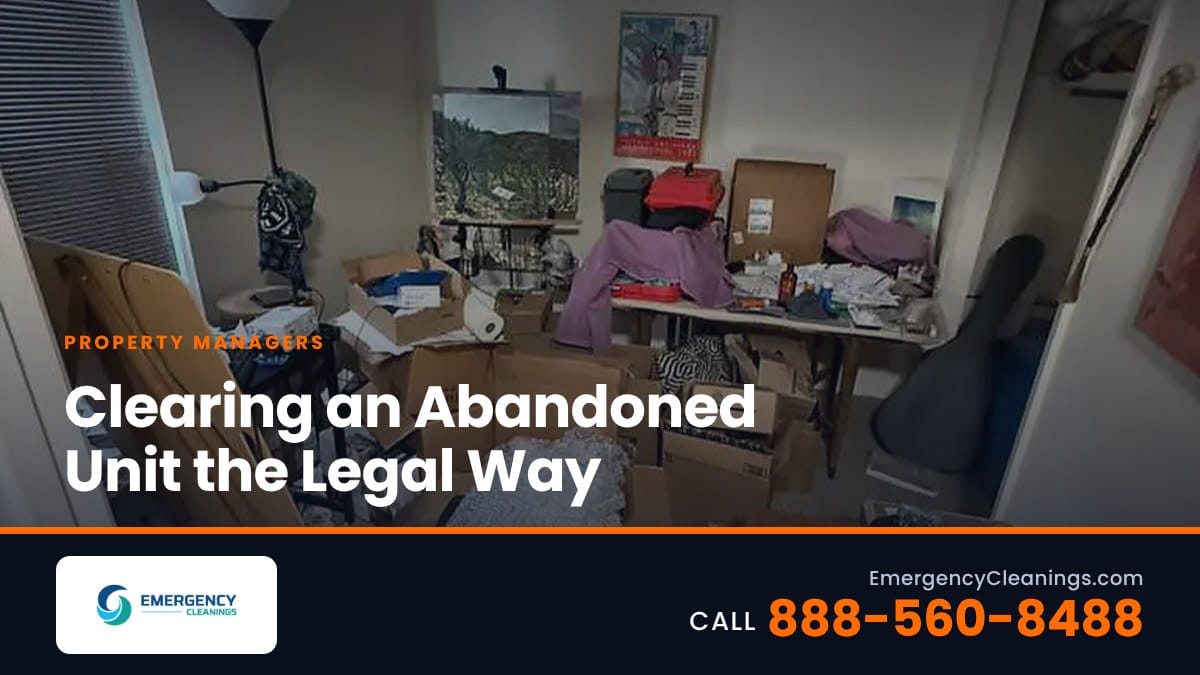

Preparing for a hoarding cleanup means the family settles who handles which part of the project before any crew shows up, and agrees on how the conversation with the person living in the home will go. It applies most to adult children and siblings coordinating care for a parent from different cities. Emergency Cleanings starts with a free on-site scope of the property, then locks one flat price before work begins, so the family plans against a real number. You can see how the work runs on our hoarding cleanup service page.
Few situations test a family's patience and cohesion quite like preparing for a hoarding cleanup. The clutter visible to everyone often masks the deeper emotional and logistical weight that has been quietly building for years. When families approach this challenge as a shared responsibility rather than one person's problem to solve, the process becomes more sustainable and far less likely to collapse under its own pressure.
When One Person Is Carrying Too Much
In many households, the burden of managing a hoarding situation falls on a single family member. That person becomes the planner, the communicator, the researcher, and sometimes the emotional support system for everyone else involved. Over time, that role leads to burnout, resentment, and decisions made in exhaustion rather than clarity. Recognizing when the weight has become unequally distributed is the first step toward rebalancing it.
Families who redistribute responsibilities, even partially, report less conflict and more consistent progress. The person living in the home benefits as well. When support comes from multiple directions rather than a single overwhelmed caregiver, it feels less like surveillance and more like genuine care.
Starting the Conversation Without Making It Worse
Bringing up a hoarding cleanup with a loved one is one of the hardest conversations a family can have. The person living in the home may feel attacked, embarrassed, or misunderstood, even when the conversation is well-intentioned. Timing, tone, and framing all influence how the message lands.

Conversations that focus on safety and health rather than appearance or judgment tend to go better. Phrases that acknowledge the difficulty of the situation, without minimizing it, create more space for honest dialogue. Families who approach this as a collaborative process rather than an intervention give their loved one a meaningful role in shaping the outcome. That sense of ownership increases the chances that the cleanup will hold once completed.
Dividing Responsibilities Across the Family
A hoarding cleanup involves more coordination than most families anticipate. Research, scheduling, logistics, communication with the person in the home, and financial planning are all distinct tasks that can be handled by different people. Assigning roles based on each person's strengths and availability reduces redundancy and prevents any one person from becoming the default decision-maker for everything.
One family member might take the lead on contacting professional cleanup services and requesting cost estimates. Another might focus on supporting the emotional needs of the person in the home. A third might handle documentation, photographing the space and tracking priorities across rooms. When the work is divided this way, the family functions as a team rather than a group of individuals reacting to a crisis.
Contributing Financially Toward Hoarding Cleanup Costs
Hoarding cleanup costs vary widely depending on the size of the home, the severity of the situation, and whether biohazardous materials are involved. For large-scale projects, the total investment can be significant. Spreading that financial responsibility across multiple family members makes the goal more achievable and reduces the pressure on whoever would otherwise bear the full cost alone.
Families who pool contributions, even modest ones, toward a shared cleanup fund build momentum over time. Setting a target based on a professional estimate gives everyone a concrete number to work toward. Some families find that a structured savings approach, with regular contributions from several people, allows them to reach their hoarding cleanup budget within a few months rather than indefinitely delaying the project. Knowing the likely cost upfront removes the uncertainty that often keeps families from committing to a timeline.
Taking Gradual Steps Without Shame or Pressure
Progress in these situations rarely looks like a dramatic before-and-after transformation. More often, it looks like a series of small decisions made over weeks and months that slowly shift the conditions in the home. Families who celebrate incremental progress, rather than measuring everything against an idealized outcome, tend to stay engaged longer and support their loved one more effectively.

The person living in the home needs to feel that the process respects their pace and their attachments. Pressure and urgency, even when they come from a place of genuine concern, frequently trigger resistance and withdrawal. A gradual approach that acknowledges the emotional complexity of parting with belongings creates a safer environment for real change. Professional cleanup teams experienced in hoarding situations understand this dynamic and work accordingly.
A Structured Option for Families Ready to Move Forward
At Emergency Cleanings, we work with families who are at every stage of this process, from the early planning conversations to the final walkthrough of a cleared home. For families who are ready to take a first step but need a structured path to get there, our Fresh Start program was built with exactly that situation in mind. It offers a realistic way to begin moving forward before a full cleanup is financially or logistically possible.
When the time comes for the full project, our hoarding cleanup services address every aspect of the work with professionalism and care. We also handle same day emergency cleaning, which is available when an immediate response is needed.
Frequently Asked Questions
How long should a family plan for before a hoarding cleanup starts?
Most families need a few weeks between the first conversation and the first day of work. That time goes toward agreeing on roles and getting the on-site scope done. Urgent situations move much faster, and same-day response is available when safety is the concern.
How does pricing work for a hoarding cleanup?
Emergency Cleanings prices by flat fee, not by the hour. A technician walks the property and scopes the job, then the price is locked before anyone starts working. Financing is available, and larger projects can be phased room by room.
Is the cleanup handled discreetly?
Yes. Crews work with discretion and keep the details of the job confidential. Families worried about neighbors noticing can talk through scheduling when the scope is done. Disposal records are available on request if anyone needs documentation later.
Should the family clear part of the house first?
Sorting keepsakes and paperwork with your loved one ahead of time helps, and it gives them ownership of the outcome. Leave biohazards, heavy debris, and blocked exits to a trained crew with the right equipment. Doing too much yourselves often stalls the project.
Families do not have to figure this out alone. Call Emergency Cleanings at 888-560-8488 for a same-day response. A technician comes out for a free assessment, scopes the property in person, and your flat price is locked before the first box moves.