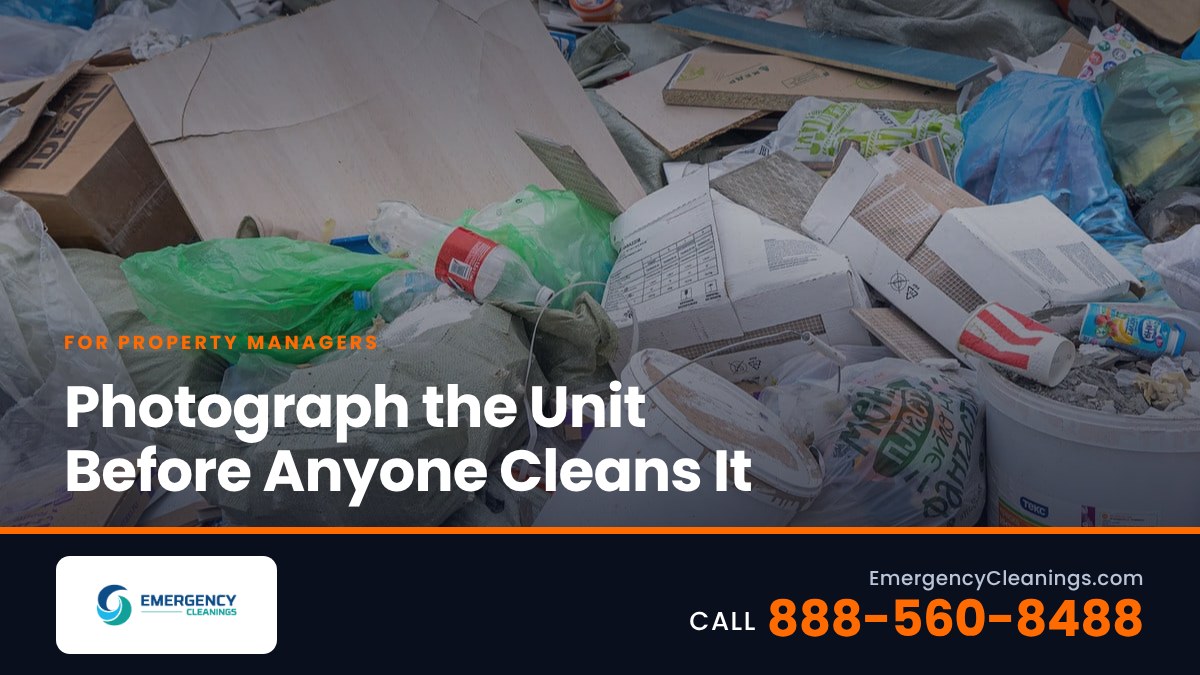
To document unit condition before cleanup, take date-stamped photos and video of every room, write down the meter readings, list anything the tenant left behind, compare what you see against the move-in checklist, and keep copies of every notice you sent. Do all of it before a crew touches the unit, and leave blood and needles alone. Emergency Cleanings adds technician walkthrough photos and disposal records you can request to that file.
Maybe the tenant left in a hurry, or the call was about a death in the unit. The owner wants it rent-ready, and you sign the deposit statement.
The photos you take today are what you’ll show when a former tenant or an estate asks, months from now, why a charge landed on that statement.
Why You Document Unit Condition Before Cleanup
Once a crew hauls out the trash and scrubs the floors, the evidence of what the unit looked like is gone. Any deduction you plan to take needs proof behind it.
Many states set a deadline for returning the deposit or sending an itemized list of deductions, and those deadlines vary. California is one example. Under Civil Code Section 1950.5, a landlord has 21 calendar days after the tenant vacates to send the itemized statement and return the rest of the deposit.
California now requires photos too. Starting April 1, 2025, landlords there must photograph the unit after it is returned but before any repairs or cleaning they plan to deduct for, then photograph it again once that work is done, as the San Francisco Rent Board explains. Your state may have nothing like this. Check your lease and local law, or ask the owner’s attorney, before you deduct anything.
Safety Comes Before the Camera
Some units are hazardous. After a death or a long hoarding situation, blood and needles can sit under the clutter where you can’t see them.
Take your photos from the doorway or the clear path. Moving a pile to get a better shot can put your hand on a needle you never saw, so leave everything where it is.
The bloodborne pathogens standard, 29 CFR 1910.1030, covers workers who can reasonably be expected to contact blood or other potentially infectious materials on the job. It requires their employer to train them at the time of initial assignment to those tasks and at least once a year after that. If your team hasn’t had that training, keep them out and call a cleanup crew.
What to Photograph and Write Down
Walk the unit in the same order every time so nothing gets skipped. Turn on the timestamp in your camera app, or hold up a phone showing the date in the first shot of each room.
- Video walkthrough. One slow pass with no cuts, naming each room out loud.
- Wide shots first. Stand in each corner and shoot the room, then move in for close-ups of stains, holes and broken fixtures.
- Inside everything. Open the fridge, the oven, cabinets and closets. Lift the toilet lid.
- Something for scale. Put a tape measure or a pen next to damage so its size is clear.
- Meter readings. Photograph the electric, gas and water meters with the numbers legible.
- Keys and locks. Note which keys came back and whether the locks were changed.
Then pull the move-in checklist and the move-in photos. Go line by line and write down what changed since the day the tenant got the keys.
Left-Behind Property and the Notices You Sent
Inventory anything the tenant left. Photograph it where it sits and write a short description of each item or group. Set personal papers and valuables aside in one place.
Abandoned property rules vary a lot by state, with different notice periods and storage requirements. Our post on clearing a unit when a tenant left everything behind walks through how to approach it.
Keep a dated copy of every notice you sent, along with how it was delivered. Lease violation notices and abandonment notices both count.
One more habit protects you on fair housing. Write what you see in the unit, like “food waste on kitchen counters” or “hole in bedroom door, about four inches wide.” Keep comments about the tenant’s health or family out of the file.
What an Emergency Cleanings Walkthrough Adds to Your File
When you call Emergency Cleanings, a technician comes out for a free on-site assessment and photographs the unit room by room. Those photos give you a second, independent record of the condition before any work starts.
A project coordinator then calls with the exact flat price and a step-by-step plan. The price does not change once the final scope is set, so the owner sees one number. You also get disposal records you can request for anything hauled away.
Our emergency cleanup service covers cleanup, decontamination and removal of unsalvageable material. Deep mold mitigation, water damage restoration, fire restoration and rebuilding are separate trades we don’t perform.
Frequently Asked Questions
Should I photograph a unit before the cleanup crew arrives?
Yes. Take date-stamped photos and video of every room before any cleaning starts, because once the crew finishes, the condition that justified your deductions is gone.
How long do I have to send a security deposit itemization?
It depends on your state and sometimes your lease. California, for example, gives landlords 21 calendar days after the tenant vacates. Check your lease and local law before you send anything.
Can I throw out what a tenant left behind?
Abandoned property rules vary by state and often require notice and a storage period first. Inventory and photograph everything, then confirm the rules where the unit is located before anything is discarded.
Is it safe to walk a unit after a death or with needles present?
Photograph from the doorway or a clear path and do not touch blood, bodily fluids or sharps. Workers who could contact blood on the job need training under OSHA’s bloodborne pathogens standard, so call a trained cleanup crew instead.
Get the Unit Documented and Turned
Call 888-560-8488 and we’ll get a technician out to walk the unit. We offer same-day response and a free on-site assessment, and you get a written scope with one flat price locked before any work starts.