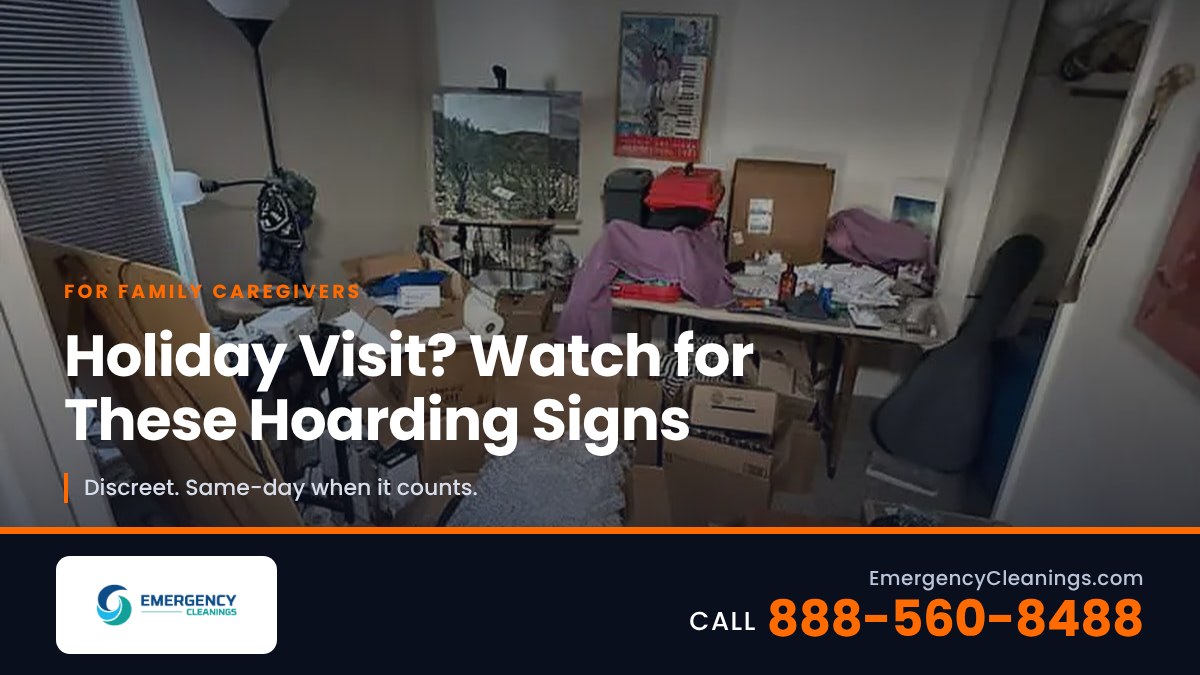
The signs of hoarding elderly parents can’t hide during a holiday visit include blocked walkways or exits, a kitchen or bathroom nobody can use, spoiled food, piles of unopened mail and clutter crowding a heater. Keep it off the dinner table. Make quiet notes and plan a calm private talk for later. With your parent’s agreement, Emergency Cleanings can assess the home and put a plan in writing.
You walk in with a pie and a bag of gifts, and something feels off. The hallway is narrower than you remember. Dad keeps steering everyone toward the living room and away from the kitchen.
What to Notice as You Move Through the House
- Paths and exits. Can someone get from the bedroom to the front door without turning sideways?
- Kitchen. Counters, stove or sink buried so nobody can cook. Expired food in the fridge, or food left out.
- Bathroom. A tub or shower used for storage. A sink or toilet that doesn’t work.
- Mail. Stacks of unopened envelopes, especially anything marked past due.
- Heat sources. Papers, clothes or boxes near a space heater, stove or radiator. The U.S. Fire Administration says to keep anything that can burn at least 3 feet from heat sources.
- Fall hazards. Items piled on stairs, loose papers on the floor, no clear route to the bathroom at night.
- Pests and odor. Droppings, flies, or a smell that greets you at the door.
How Common Hoarding Is in Older Adults
The International OCD Foundation estimates that around 2% to 6% of people have hoarding disorder. The group adds that symptoms appear almost three times more common in adults ages 55 to 94 than in adults ages 34 to 44.
Most of the signs of hoarding that elderly parents show build up slowly over years, and a visit is no place for a diagnosis.
Take Notes Without a Scene at the Table
A full table with the grandkids listening is the worst place to raise it. Your parent will feel cornered and dig in.
Jot notes on your phone that night. Write what you saw and which room it was in. Skip photos unless your parent says it’s okay.
The Next Step Is a Calm Conversation
This is your parent’s home, and they make the final call, even if you end up paying for help. Pick a quiet moment, one on one, and lead with a safety worry like the heater or the stairs. Our guide on how to talk to a hoarder without causing shame or resistance walks through what to say.
If your parent is open to help, Emergency Cleanings sends a technician for a free on-site assessment, and your parent decides what stays. You can see how the work runs on our hoarding cleanup service page.
Cleanup is never treatment for hoarding. For support, the IOCDF hoarding resource site lists therapists and support groups.
Frequently Asked Questions
What should I check first during a holiday visit?
Start with safety. Look for clear paths to the doors and a working kitchen and bathroom. Then check whether anything that can burn sits close to a heater or stove.
Should I bring it up over the holidays?
Skip the dinner table. Take private notes, then plan a calm one-on-one talk at a quiet time and start with a specific safety concern.
Can I arrange a cleanup if my parent says no?
Your parent lives there, so their agreement comes first. Once they’re open to it, Emergency Cleanings can do a free on-site assessment and give you both a written plan.
When Your Parent Is Ready
Call 888-560-8488 to talk it through. Emergency Cleanings coordinates vetted local technicians nationwide. You get same-day response, a free on-site assessment, and a written scope with one flat price locked before work starts. Unmarked vehicles are available on request.