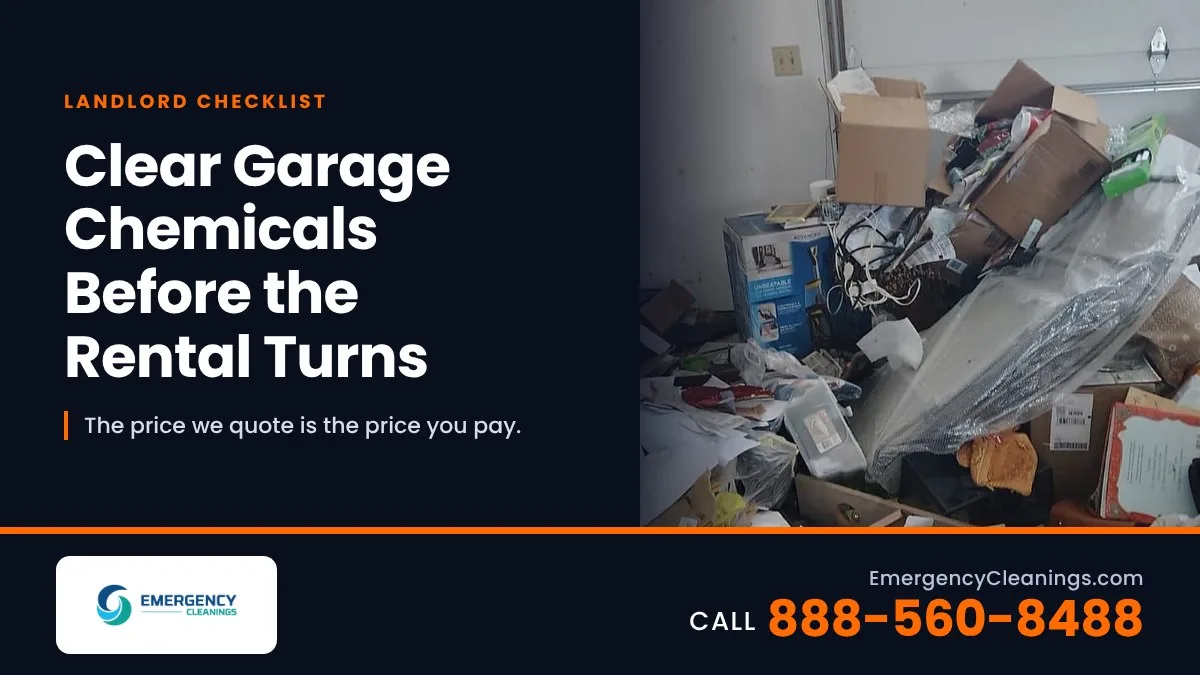
When a tenant leaves paint, solvents, motor oil, pool chemicals, pesticides or propane in the garage, keep all of it out of the trash, leave every container sealed and separate, and get used oil to a recycling drop-off. Emergency Cleanings can handle the whole garage chemical cleanup for a rental, including the stained slab, at one flat price agreed before work starts, so the turn stays on schedule even if you live three states away.
The move-out walkthrough photos just hit your inbox. The garage holds half-used paint, an unlabeled jug, two propane cylinders and a dark oil stain. Your next tenant moves in on the first. Here is the checklist.
What Stays Out of the Trash
The EPA treats leftover household products that can catch fire, react, explode, corrode or poison as household hazardous waste, and it names paints, cleaners, oils, batteries and pesticides as products that can contain hazardous ingredients. The agency warns against pouring these down the drain, on the ground or into storm sewers.
- Paint, stain and thinner.
- Solvents, degreasers and automotive fluids.
- Pesticides and weed killers. Leave them in the original bag or bottle with the label intact.
- Pool chemicals. Keep them apart from each other and from everything else until they leave.
- Propane cylinders. Leave them upright with the valves closed. Your local hazardous waste program or a propane retailer can tell you where they go.
Don’t Mix or Consolidate Containers
The EPA says to never mix household hazardous waste with other products and to keep products in their original containers with labels on, because incompatible products might react, ignite or explode.
- Leave unlabeled jugs alone. Set them aside and tell whoever does the cleanup.
- Leaking containers go into a tub or bucket, as they are.
Used Motor Oil Goes to Recycling
The EPA’s used oil page says oil from one oil change can contaminate one million gallons of fresh water. It asks people to collect used oil in a leak-proof container and check with auto maintenance shops, waste collectors or local government for drop-off locations.
Why Your Usual Hauler May Say No
Many junk haulers will not take paint, chemicals, oil or batteries. So the garage gets left for last. Book a crew that handles hazardous material and general junk in the same visit.
What a Cleanup Crew Does
On a chemical and oil spill cleanup, every container gets identified and photographed before anything moves.
- Containment. Leaks get stopped and isolated so nothing spreads across the slab or out the door.
- Absorbent on the stains. Fresh oil and chemical puddles on the garage floor or driveway get soaked up and the surface degreased.
- Sorting and packing. Products stay in their own containers, grouped so incompatible materials never ride together.
- Proper disposal. Material goes to permitted facilities, and you can request disposal records for your file.
- Everything else. The broken shelving, old tires and boxes leave on the same trip. Our junk removal service covers that part.
Keep the Turn on Schedule
- Call the day you see the photos. Emergency Cleanings offers same-day response.
- You don’t have to be there. Your property manager, a lockbox code or a neighbor with a key works fine. Scope can start from photos.
- Do the garage before the painters and cleaners.
- Get the price in writing first. One flat price and scope, agreed before work starts. It does not move.
Photo Documentation for the Deposit File
If you plan to deduct the cleanup from the security deposit, the file needs to show what was left behind and what it took to clear it.
- Wide shots of each wall and the floor before anything moves
- Close-ups of labels, stains and leaking containers
- After photos taken from the same spots
- The written scope, the invoice and any disposal records you requested
Deposit rules vary by state, including what you may deduct and the deadline to return the balance. Check your state’s landlord-tenant statute or ask a local attorney. Emergency Cleanings technicians take before and after photos on every job, which helps your paper trail.
Frequently Asked Questions
Can I throw a former tenant’s paint and chemicals in the trash?
Not safely. The EPA classifies paints, oils, pesticides and similar leftovers as household hazardous waste and warns against dumping them. Use your local hazardous waste drop-off or a cleanup crew that handles disposal.
Should I combine leftover chemicals into fewer containers?
No. The EPA says never to mix household hazardous waste and to keep products in their original labeled containers, because incompatible products can react, ignite or explode.
Do I have to be at the rental for the garage cleanup?
No. A technician can scope from photos or meet your property manager on site, and you approve one flat price in writing before work starts.
Can I charge the cleanup to the tenant’s security deposit?
That depends on your state’s deposit law and your lease. Keep before and after photos, the invoice and any disposal records, and check your state’s rules before deducting.
Get the Garage Cleared Before Move-In Day
If a tenant left the garage full of chemicals and your next lease starts soon, call Emergency Cleanings at 888-560-8488. You get same-day response, a free on-site assessment and one flat price locked before any work starts.