
Estate cleanout services usually start after the personal representative has legal authority to act, which can take weeks in probate, and the work itself often takes a day or a few days once it begins. Emergency Cleanings prices an estate cleanout as one flat fee set after a free on-site walkthrough, and that fee is driven by volume, access, the condition of the home, and how much sorting the family wants done first.
You were named executor, or the family asked you to handle the house. Maybe you are the listing agent, and the seller lives three states away. Either way, somebody has a date circled. A photographer is booked. A buyer wants the place empty at closing. The court wants an inventory. And the house is still full of forty years of somebody’s life.
When You Can Legally Start an Estate Cleanout
The first question is authority. Before probate opens, nobody has clear legal power to give away, sell or haul off the decedent’s belongings. Once a court appoints you and issues letters (letters testamentary or letters of administration, depending on whether there is a will), you can act for the estate.
What you can do without going back to court depends on your state and on the kind of authority you were granted. In states that follow the Uniform Probate Code, a personal representative’s powers usually include hiring help. Minnesota’s version, for example, lets a representative employ persons, including agents, to advise or assist and to abandon property that is valueless. That covers a lot of what fills a house.
Why one estate moves tomorrow and another waits two weeks
California shows how authority changes the clock. Under independent administration, a representative with full authority can act without a court hearing for many decisions. For certain actions, the representative gives heirs a Notice of Proposed Action, and it must be delivered not less than 15 days before the date in the notice. Heirs can sign a written waiver of that notice, which removes the wait.
So the same cleanout might start Monday, or it might start half a month later. The difference is usually paperwork plus whether every heir is on board. If one sibling objects, talk to the estate’s attorney before anything leaves the house. Probate rules vary a lot from state to state, and none of this is legal advice.
A Realistic Executor Timeline
Most estates we see follow a pattern something like this.
- Weeks 1 to 6. Secure the house. Change the locks, forward the mail, keep the utilities on, and call the homeowner’s insurer about a vacant property. File for probate if it is needed.
- Letters issue. Your authority starts. In California, the inventory and appraisal is due within four months after letters are first issued. Photograph everything before it moves, since the inventory may depend on it.
- Family walkthrough. Heirs pick out what they want. Set a firm date for this, and put it in writing.
- Estate sale or appraisal, if any. Anything with resale value goes through a sale company or appraiser first.
- Cleanout. Everything left gets removed, donated or disposed of. Often one to three days on site.
- Listing prep. Final clean, photos, sale.
Creditor deadlines run in the background. In Minnesota, creditors must present claims within four months after the published notice. Many states use a similar window, which is part of why the house often sits while the estate settles. A vacant, full house costs you taxes, utilities and insurance every month it waits.
What Drives the Cost of Estate Cleanout Services
Nobody can quote a house fairly from a phone call. These are the factors a technician looks at when they walk through.
Volume
How much is in the house is the biggest factor. A tidy two-bedroom with furniture and closets is one job. A home with a full basement, an attic, a detached garage and a shed packed to the rafters is a much bigger one. Truckloads to the transfer station drive disposal.
Access
Ground floor with a driveway at the door loads fast. A third-floor walk-up, a long carry from the street, or a condo with elevator reservations and loading dock hours takes more labor for the same amount of stuff.
Condition of the home
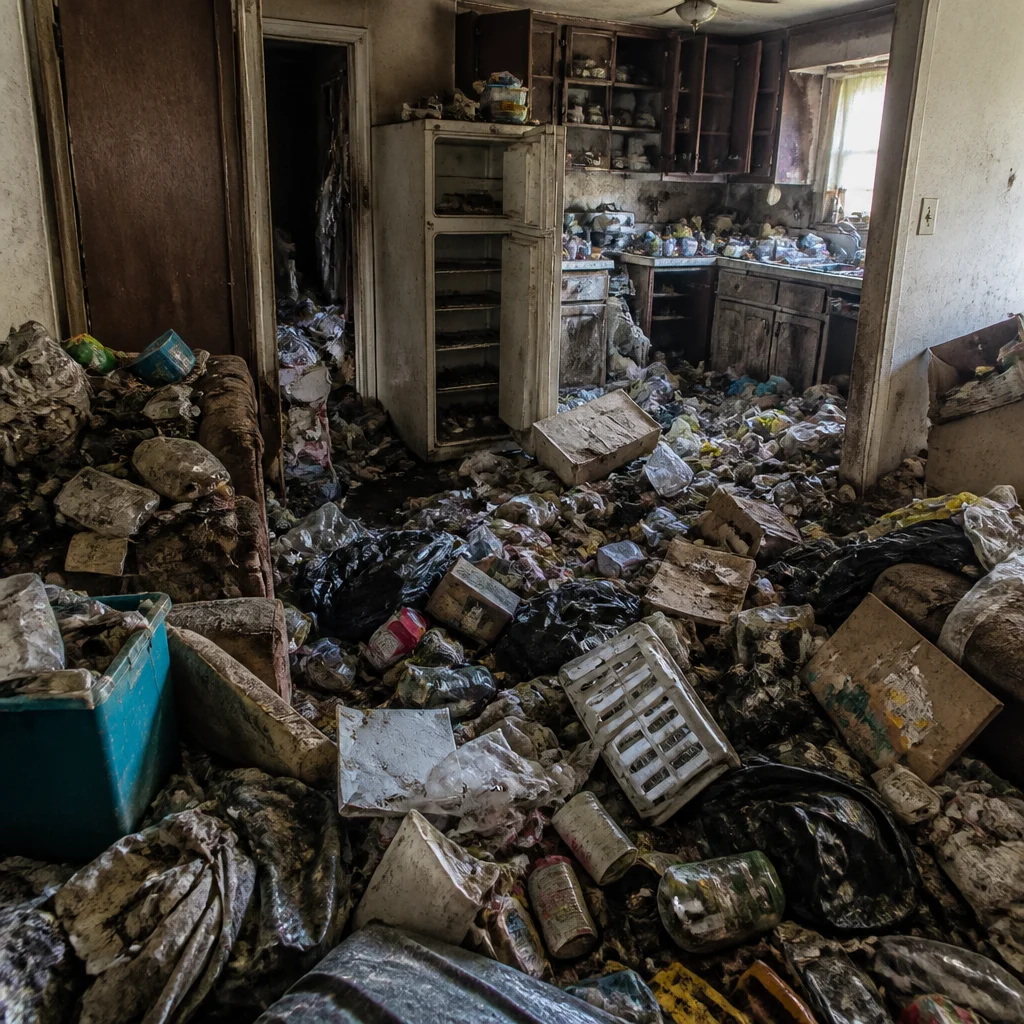
Some estates are tidy. Others had years of decline behind them, and you walk in to find heavy accumulation, pests, spoiled food or biological contamination. If the person passed in the home and was not found right away, that is a separate kind of work. Our after-death cleaning service handles that part. If the house reached hoarding levels, the job takes more care and more protective gear.
Sorting instructions
A straight clear-out moves fast. If the family wants photos, papers, jewelry and keepsakes pulled aside as the crew goes, that takes more hands and more time. Crews regularly find cash, deeds, bonds and family photos inside books and coat pockets.
Donation and special disposal
Separating usable furniture for donation takes more handling than sending it all to disposal. Paint, chemicals, old electronics, tires and appliances with refrigerant each have their own disposal rules, and those rules vary by state and county.
Your deadline
A crew that has to finish before Thursday’s photographer may need more people on site at once. Tell us the date up front, and we will tell you whether we can hit it before you commit to anything.
Paying for It When the Estate Has No Cash Yet
Most executors get stuck on timing. Cleanout is usually an administration expense of the estate, and in California, expenses of administration come first in the order debts get paid. The catch is that the estate is often short on cash right when the house needs emptying, because nothing has sold yet.
Talk to the estate’s attorney about how you will be reimbursed before you pay anything out of pocket, and keep every receipt. Emergency Cleanings offers financing, and a house can be phased room by room at a fixed price per phase if that fits the estate’s cash flow better.
How Emergency Cleanings Prices an Estate Cleanout
A technician arrives inside a 2-hour window, and you get a text with an ETA. They walk every room, the garage and the outbuildings, and photograph it all. You do not need to be there in person if you live out of state. A Project Coordinator then calls you with the exact final price and the plan. That price is one flat fee covering labor, disposal, transportation, equipment and insurance. Once the final scope is set, the price does not change. A 20% deposit holds your slot, and work often starts the same day.
When the house is empty, you get photo documentation and disposal records you can request. Hand that to the court, the heirs or the buyer’s agent. Unmarked vehicles are available if the neighbors do not need to know. For more on the removal side, see our junk removal services page.
Frequently Asked Questions
How long does an estate cleanout take?
The on-site work often takes one to three days, depending on volume and access. The bigger wait is usually legal, since the personal representative needs authority from the court before belongings can be removed.
Who pays for an estate cleanout?
The estate pays, usually as an administration expense. Because the estate may not have cash until the house sells, the executor sometimes pays first and seeks reimbursement. Ask the estate’s attorney how reimbursement works in your state.
Can I clean out a parent’s house before probate?
Securing the house is usually fine, but removing or giving away belongings before you have legal authority can cause problems with heirs and the court. Rules vary by state, so check with a probate attorney first.
What affects the price of estate cleanout services?
Volume, access, the condition of the home, how much sorting the family wants, special disposal items and your deadline. Emergency Cleanings sets one flat price after a free on-site walkthrough, locked before work starts.
If you have a house to empty and a date to hit, call 888-560-8488. We offer same-day response and a free on-site assessment, and you get a written scope with one flat price locked before any work starts.