Table of Contents
- 1. Visible Discoloration and Staining on Surfaces
- 2. Persistent Odors That Won't Disappear
- 3. Unexplained Health Symptoms Among Occupants
- 4. Structural Damage and Material Deterioration
- 5. Pest Infestations and Unusual Animal Activity
- 6. Chemical Spills and Residue Accumulation
- 7. Mold Growth and Air Quality Issues
- 8. Documentation Requirements for Legal and Insurance Purposes
- Frequently Asked Questions (FAQ)
1. Visible Discoloration and Staining on Surfaces
Contamination in industrial, commercial, or severely neglected residential spaces doesn’t always announce itself. Sometimes it hides behind walls or beneath layers of clutter. Other times, the warning signs are obvious but easily dismissed as minor problems. We understand that property owners often feel uncertain about what actually constitutes a health hazard and when professional intervention becomes necessary.
Recognizing contamination early protects everyone who uses or occupies the space. It also prevents liability exposure and preserves property value. Below, we walk through eight critical signs that warrant immediate professional assessment.
Unexplained stains on flooring, walls, or ceilings frequently indicate contamination that extends beyond cosmetic concerns. These marks appear in different colors and patterns depending on the source: dark brown or black spots suggest biological material or mold; reddish or orange stains may indicate rust or chemical reactions; and yellowish discoloration often points to urine or sewage exposure.
The challenge is distinguishing between surface dirt and actual contamination. A coffee spill looks different from biohazard residue, but without proper training, the difference isn’t always obvious to the untrained eye. What appears as isolated staining on a wall may actually indicate deeper penetration into structural materials like drywall or flooring.
Pay special attention to staining in:
- Bathrooms and utility areas
- Basement corners and floor seams
- Around doorways and entry points
- Underneath furniture or in hidden sections
We’ve encountered countless situations where property owners assumed stains were old and harmless, only to discover during assessment that they represented active contamination or structural compromise. If stains persist after cleaning or reappear frequently, that’s your signal to call for professional evaluation rather than attempting repeated spot treatments. We provide same-day assessments so you can get clarity without prolonged uncertainty.
2. Persistent Odors That Won’t Disappear
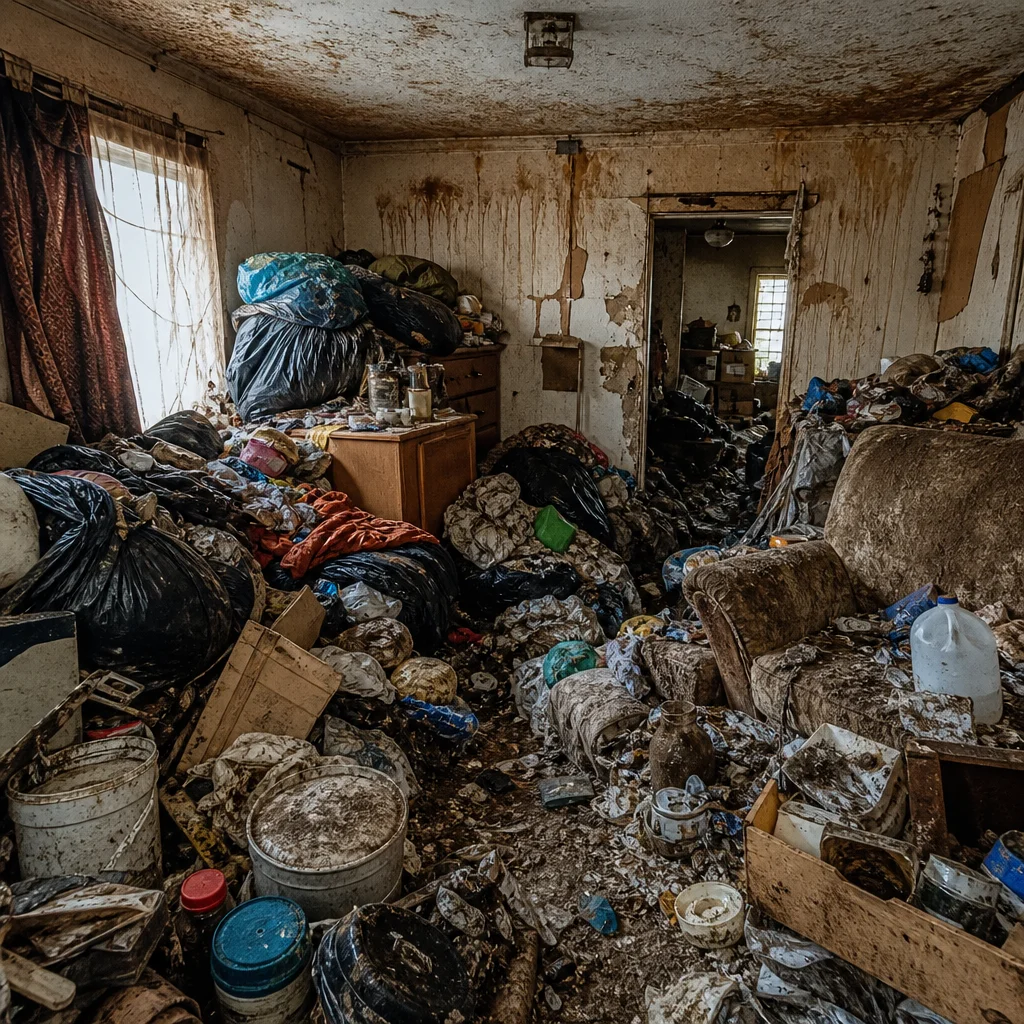
Odor is one of the most reliable contamination indicators, yet it’s also one people tend to normalize or ignore over time. A persistent smell that conventional cleaning doesn’t eliminate usually means the source is embedded in materials, not simply on the surface. Odors originating from biological contamination, sewage exposure, or chemical residue embed themselves in porous materials like carpet, insulation, wood, and drywall.
Opening windows, using air fresheners, or cleaning floors won’t resolve odors rooted in structural materials. The smell returns because the source remains untreated. This is particularly common in properties where hoarding, animal waste, or sewage backup has occurred over extended periods.
Common contamination-related odors include:
- Ammonia-like or urine smell (animal or human waste)
- Sweet, musty, or decay-associated odors (biological decomposition or mold)
- Chemical or industrial smell (hazardous material exposure)
- Sulfurous or rotten-egg smell (sewage or bacterial growth)
Rather than masking odors with chemical treatments, professional assessment identifies the source. Remediation then addresses the contaminated materials directly. This might involve removal and replacement of affected flooring, insulation, or structural components. The goal isn’t temporary freshness but permanent elimination of the hazard itself.
3. Unexplained Health Symptoms Among Occupants
When occupants or frequent visitors develop respiratory issues, headaches, skin irritation, or persistent coughing without obvious cause, environmental contamination becomes a reasonable consideration. Children and elderly individuals often show symptoms first because their immune systems are more vulnerable. Similarly, people with asthma or allergies may experience symptom escalation in contaminated spaces.
Health effects from contamination vary widely depending on what occupants are exposed to. Mold exposure can trigger respiratory distress. Sewage contamination carries pathogens that cause gastrointestinal illness. Chemical residues may cause neurological or dermatological symptoms. Biohazard exposure can lead to infections.
The timeline matters. If symptoms worsen specifically when someone is in a particular location and improve when they leave, that spatial connection suggests environmental contamination rather than illness unrelated to the property. Symptoms that affect multiple occupants simultaneously point even more clearly toward a shared environmental cause.
We recommend documenting when symptoms appear and fade, and discussing the pattern with your physician. This information helps professional remediation teams understand what they’re likely encountering and prioritize safety precautions accordingly.
4. Structural Damage and Material Deterioration
Visible structural compromise often indicates that contamination has progressed beyond early stages. Warped or soft flooring, disintegrating drywall, deteriorating wood framing, or crumbling foundation material suggests prolonged exposure to moisture, biological growth, chemical corrosion, or biological waste.
Unlike cosmetic damage, structural deterioration affects the integrity of the building itself and poses safety risks. Floors weakened by moisture or biological activity can fail suddenly. Walls compromised by mold or chemical exposure lose load-bearing capacity. Foundation damage accelerates when exposed to sewage or caustic materials.
Structural warning signs include:
- Soft, spongy, or buckling flooring
- Drywall that crumbles when touched or shows visible decay
- Wall or ceiling sagging or bowing
- Visible gaps between materials or separation at seams
- Wood that appears blackened, crumbly, or has lost structural integrity
- Rust or corrosion on metal supports
Professional assessment becomes urgent when structural damage is visible. Beyond the obvious remediation costs, structural compromise can render a space unsafe for occupancy and creates liability exposure. Insurance claims also become more complex when damage has progressed to structural levels.
5. Pest Infestations and Unusual Animal Activity
Active pest or animal infestations typically signal that contamination, food waste, or accumulated debris has created an inviting environment. Rodents, insects, birds, and other animals are attracted to biohazardous materials, organic waste, and deteriorating conditions. Their presence introduces additional contamination through droppings, urine, nesting material, and decay.
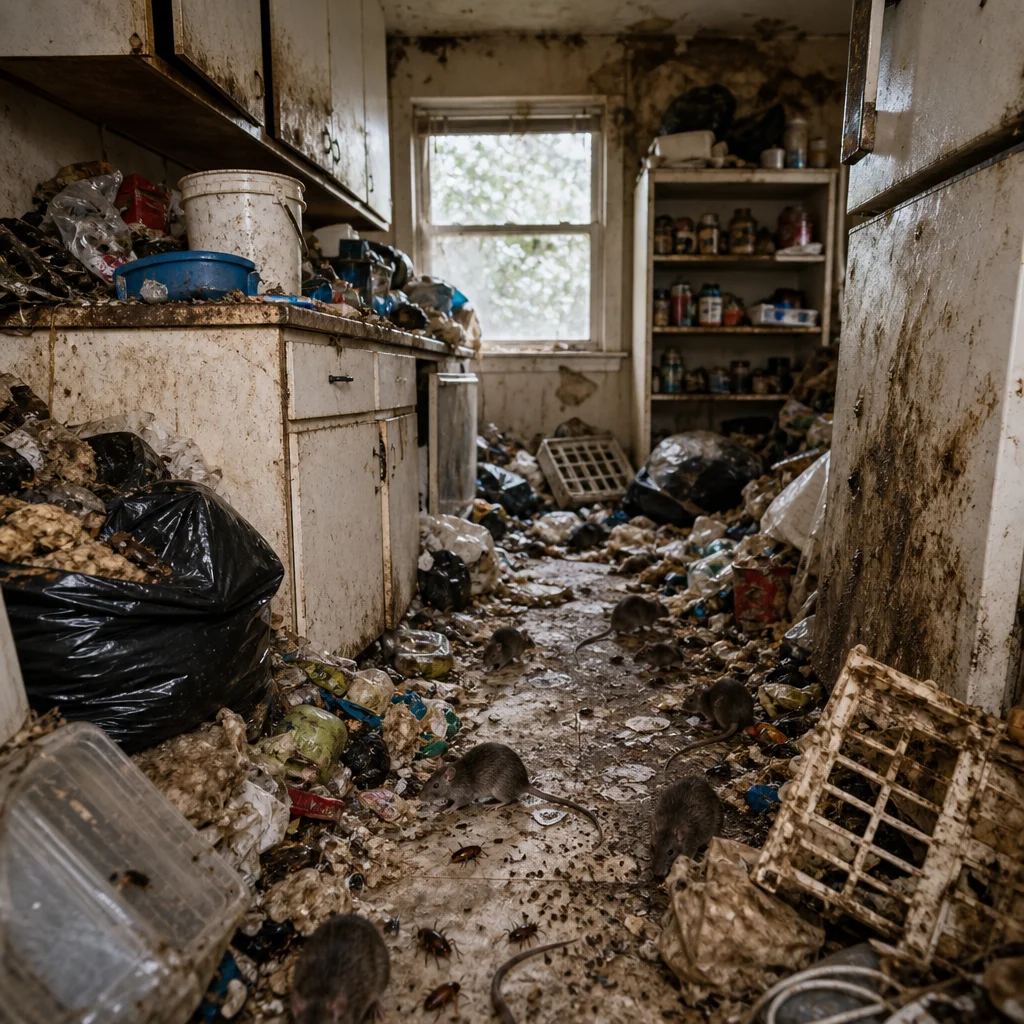
Signs of infestation include droppings in multiple locations, visible nesting material, dead animals (or the smell of them), audible scratching or movement in walls, and damage to insulation or wiring from chewing activity.
A single insect or occasional rodent sighting doesn’t necessarily indicate severe contamination, but widespread infestation points to an environment that supports pest populations. This usually correlates with substantial clutter, food accumulation, standing water, or biohazardous material.
Animal waste itself becomes a contamination hazard. Rodent droppings carry hantavirus and other pathogens. Bird droppings harbor histoplasmosis spores. Insect colonies create their own biohazard concerns. Once pests are removed, professional decontamination addresses the waste they’ve left behind, which standard pest control services don’t handle.
6. Chemical Spills and Residue Accumulation
Industrial properties, manufacturing facilities, and spaces housing chemical storage or processing equipment can develop chemical contamination through spills, leaks, or improper disposal. What qualifies as a hazardous material varies by substance, but the principle is consistent: chemical residue requires specialized handling.
Visible chemical contamination may appear as:
- Pooled liquid with unusual color or consistency
- Crystalline residue or powder accumulation
- Discolored or etched surfaces
- Visible rust or corrosion on containers or nearby materials
- Chemical odors that smell industrial, metallic, or caustic
Even small chemical spills can present serious hazards. Some substances are toxic at minimal exposure levels. Others interact with common materials to create secondary hazards. Attempting cleanup without proper safety equipment, containment protocols, and disposal procedures violates regulatory standards and creates personal safety risks.
Industrial hazard cleaning requires trained technicians, appropriate personal protective equipment, proper containment, and compliant disposal methods. We coordinate with licensed hazardous-waste disposal contractors to ensure materials are handled according to environmental and occupational safety regulations.
7. Mold Growth and Air Quality Issues
Visible mold or musty air quality problems indicate moisture intrusion and biological growth. Mold thrives in damp environments and spreads through building materials. While some molds are non-toxic, others produce mycotoxins that trigger respiratory and neurological effects, particularly in sensitive individuals.
Mold appears as:
- Fuzzy or slimy growth in black, green, white, or orange colors
- Discoloration that returns repeatedly after cleaning
- Growth in or around bathrooms, basements, crawl spaces, or HVAC systems
- Musty odor preceding visible growth
Air quality degradation occurs when mold colonies release spores, or when accumulated dust, debris, and biological material overwhelm ventilation systems. Poor air quality causes or worsens respiratory symptoms, particularly in children, elderly occupants, or those with asthma.
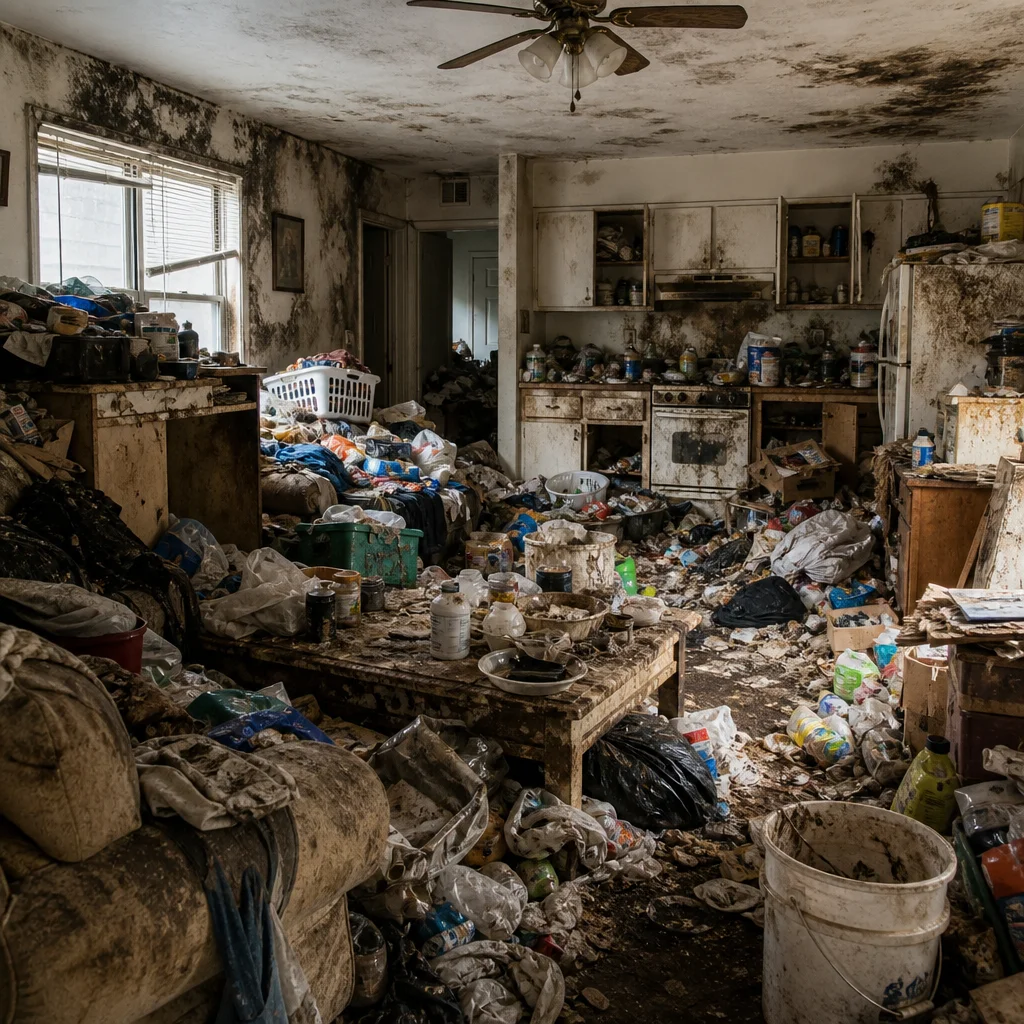
Visual mold inspection is an important first step, but air quality assessment requires professional testing. Mold can exist within walls, HVAC ducts, or insulation without being immediately visible. Professional remediation includes containment, removal of affected materials, addressing moisture sources, and restoration of clean air quality.
8. Documentation Requirements for Legal and Insurance Purposes
When contamination is present, documentation becomes legally and financially important. Insurance claims, liability protection, and legal proceedings all depend on evidence that contamination existed, the scope of the problem, and the professional remediation performed.
Critical documentation includes:
- Photographic and video evidence of contamination before remediation
- Professional assessment reports detailing contamination type and location
- Safety protocols and protective measures implemented during remediation
- Material removal and disposal records (particularly for hazardous substances)
- Post-remediation testing or clearance documentation
- Communication records between property owners, professionals, and relevant authorities
Property owners often underestimate the importance of this documentation. Insurance companies require detailed evidence to process claims. If legal disputes arise regarding liability or property condition, professional documentation protects your position. If regulatory agencies become involved (health departments, environmental agencies, occupational safety regulators), your documentation demonstrates compliance and professional handling.
We provide detailed documentation for every project, including before-and-after photography, comprehensive assessment reports, detailed work logs, and clearance verification. This documentation is organized and prepared to support insurance claims, legal proceedings, or regulatory inquiries.
When contamination is suspected, professional assessment provides clarity, safety assurance, and the documentation you need for whatever comes next. We handle the technical complexity and ensure everything is done correctly from both safety and compliance perspectives. Contact us for same-day assessment and flat-rate pricing so you can make informed decisions about your property without uncertainty or delay.
Frequently Asked Questions (FAQ)
What should we do if we notice unexplained health symptoms among people living in our property?
We recommend documenting any symptoms and their timeline, then having your property professionally assessed for contamination. Our team can conduct a thorough evaluation to identify potential biohazards or environmental hazards that may be affecting occupant health. If we detect issues, we provide detailed documentation that you can share with your healthcare provider or insurance company to establish the connection between your property and health concerns.
How do we know if persistent odors in our property indicate a serious contamination problem?
Odors that linger despite cleaning efforts often signal underlying contamination like sewage backup, mold growth, or biohazard materials that require specialized remediation. We recommend contacting us for a same-day assessment rather than attempting to mask the smell with air fresheners, as this can mask a worsening situation. Our team identifies the source and handles the remediation using professional-grade techniques that eliminate both the cause and the odor permanently.
Why is documentation important when we identify contamination in our property?
We understand that proper documentation protects you legally and ensures your insurance claim is valid when contamination requires professional remediation. We provide detailed reports with photographs and descriptions of all identified hazards and our remediation work. This documentation becomes essential if you’re selling the property, filing an insurance claim, or need evidence for liability purposes.