Salvaging heirlooms from a hoarded home means locating the items a family actually cares about and setting them aside before the rest of the clutter is cleared out. That covers jewelry, photographs, legal paperwork and keepsakes that have been buried for years in conditions nobody should be digging through unprotected. Emergency Cleanings does this work as part of a hoarding cleanup, at a flat price locked in after a technician scopes the property on site.
1. Understanding the Unique Challenges of Heirloom Recovery in Contaminated Environments
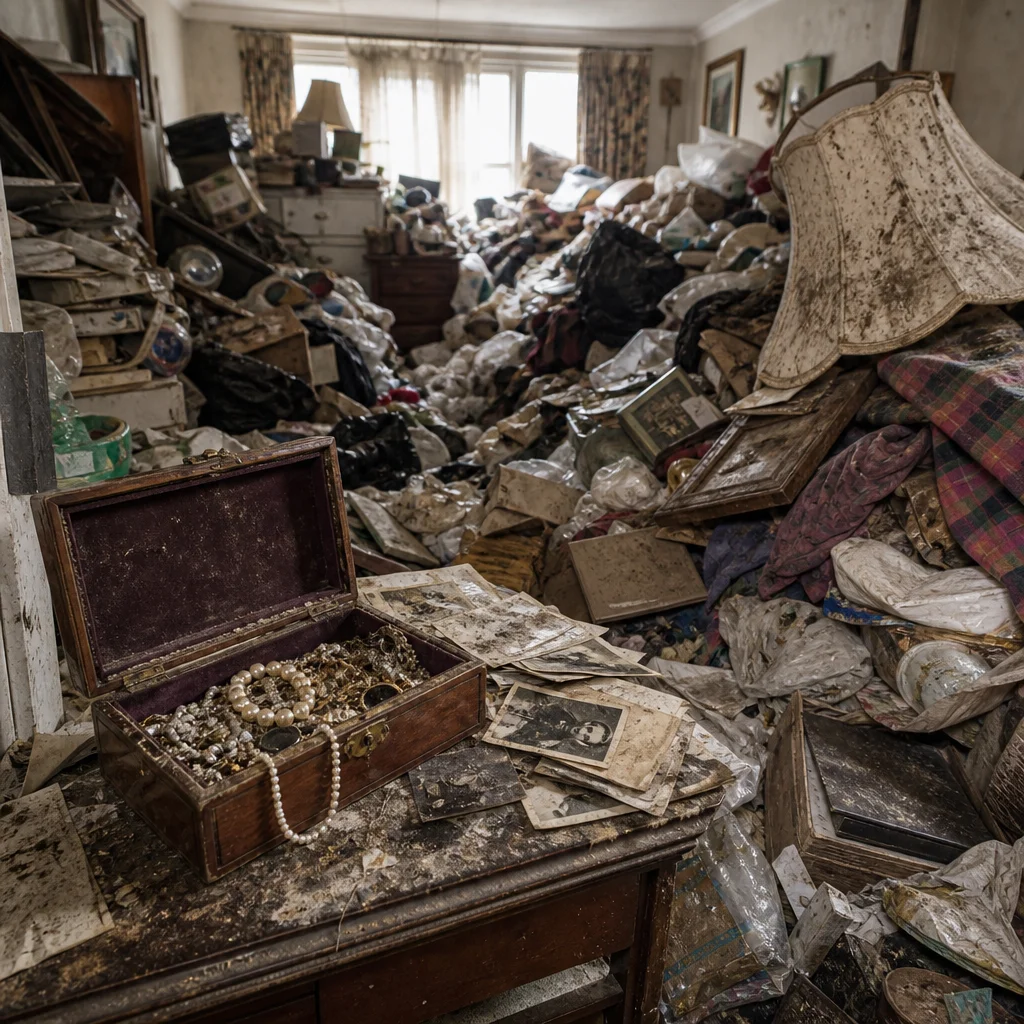
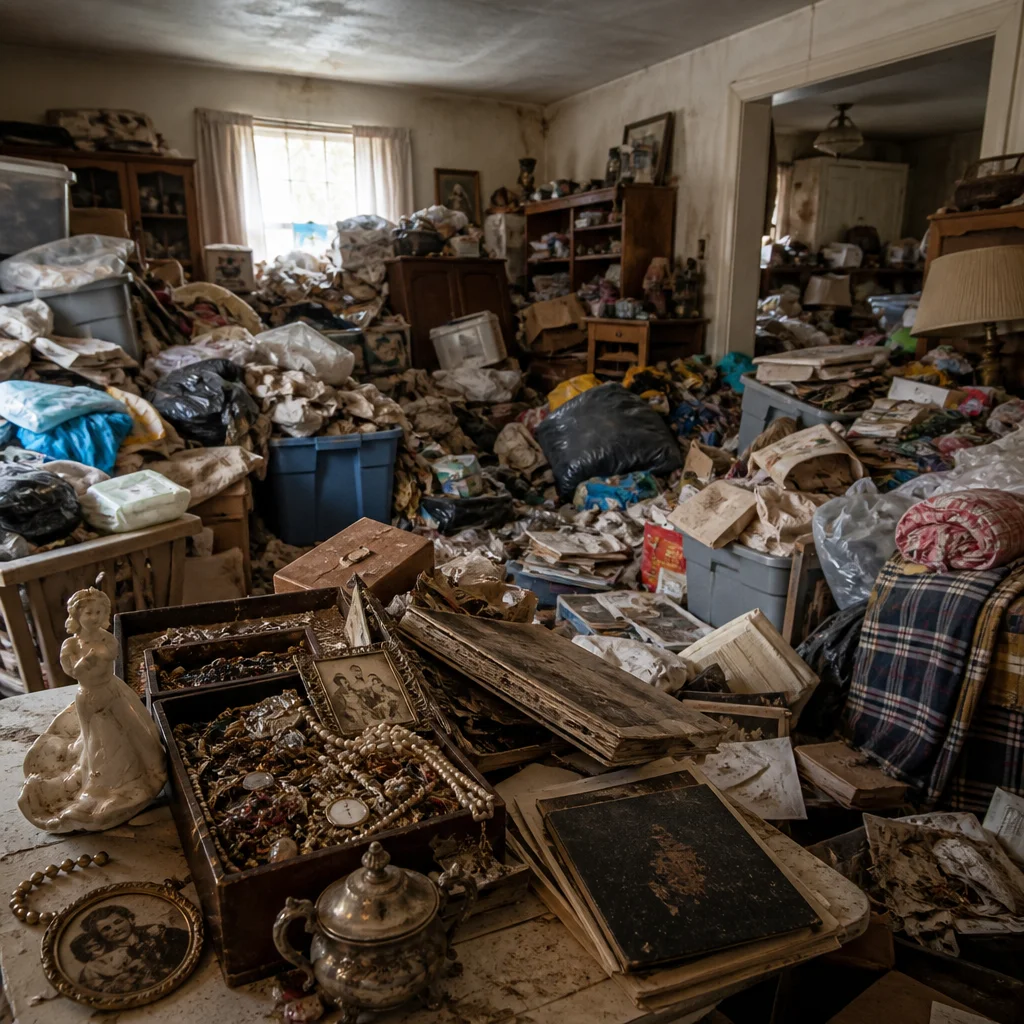
When a parent moves to assisted living or a family member finally forces a conversation about a cluttered home, one worry rises above the chaos: What happens to the irreplaceable items? A grandmother’s jewelry box. Photographs spanning decades. Documents that hold the family’s legal and financial story. In hoarded or severely cluttered estates, these treasures sit buried under years of accumulation, often in contaminated or unsafe conditions.
Salvaging heirlooms from these environments requires more than good intentions and plastic gloves. It demands a methodical approach that protects both the items and the people handling them. We’ve helped hundreds of families navigate this exact situation, and what separates successful heirloom recovery from heartbreaking loss is planning, professional guidance, and the right support system.
Hoarded estates present a complex puzzle. The same conditions that allowed clutter to accumulate for years often mean mold growth, pest infestation, moisture damage, and biohazard exposure. A family photo album tucked under stacks of newspapers may sit in an environment where humidity has warped the pages or rodents have nested nearby. A jewelry box might have been exposed to sewage backup or airborne contaminants.
The challenge isn’t just finding the items. It’s retrieving them without spreading contamination, without damaging the pieces further, and without exposing family members or workers to health risks. Many families attempt this themselves, moving items through the home with contaminated hands, placing valuables on household surfaces, or storing them in conditions that don’t arrest the damage already done.
We recognize that sentimental value doesn’t follow the same rules as monetary value. A costume ring may mean nothing financially but everything emotionally. That recognition shapes how we approach every estate recovery. Your heirlooms aren’t clutter to us. They’re the thread connecting your family’s past to its future, and they deserve recovery strategies as careful as the items themselves are precious.
2. Professional Assessment and Documentation Before Any Items Are Touched
Before we touch a single heirloom, we conduct a detailed walkthrough assessment. This serves two purposes: it identifies which items can be safely salvaged and which may pose health risks, and it creates a documented record of condition, location, and ownership.
Here’s what this process includes:
- Visual inspection of each potential heirloom under safe conditions
- Photographic documentation showing items in situ and noting visible damage or contamination
- Written descriptions of condition, material, and estimated fragility
- Identification of items that may require professional restoration after cleaning
- Safety evaluation of access routes and environmental hazards near valuables
This documentation matters beyond sentiment. If an item is needed for estate settlement, probate, insurance claims, or family disputes, a professional record establishes chain of custody and baseline condition. If a piece requires restoration later, documentation helps conservators understand what happened to the item before it reached their workshop.
We provide this assessment on the same day in most cases, giving you clarity about what can be saved and what realistic recovery looks like. This upfront transparency prevents false hope and frames realistic expectations before we begin any work.
3. Specialized Handling Techniques for Delicate and Sentimental Pieces
Not all items require the same touch. A leather-bound journal needs different handling than a ceramic figurine or a framed photograph. Our team applies specialized techniques based on material, condition, and contamination exposure.
For delicate items, this means:
- Using clean, sterilized surfaces and containers before any item is moved
- Handling fragile pieces with nitrile gloves and minimal contact points
- Transporting items in sealed, breathable containers that prevent cross-contamination
- Avoiding rapid temperature or humidity changes that can warp materials
- Isolating potentially contaminated items from those in better condition
For example, old photographs require completely separate handling from metal items. Photos can be placed in acid-free tissue within sealed bags, while jewelry might need chemical-safe storage to prevent tarnishing during a decontamination phase. Textiles like quilts or clothing face different risks from wood furniture or documents.
This isn’t guesswork. We’ve worked with conservators and restoration specialists to develop protocols that align with museum-standard preservation practices. That expertise translates directly to your family’s treasures, whether they’re worth thousands or priceless only to you.
4. Safe Segregation and Cleaning Protocols for Potentially Contaminated Heirlooms
Once items are identified and documented, they move into a controlled segregation and cleaning phase. This is where contamination exposure is addressed without destroying the item itself.
We use graduated cleaning protocols. Some pieces need only isolation and dry-environment storage to arrest mold or pest damage. Others require gentle surface cleaning with methods specific to material and contamination type. A few may need professional restoration after initial decontamination.
Our approach includes:
- Preliminary cleaning of low-risk items on-site when safe
- Transportation of delicate or highly contaminated pieces to secure holding facilities
- Consultation with professional conservators for items requiring specialized treatment
- Clear communication about what cleaning can and cannot restore
A water-damaged leather album can’t have its pages separated and dried at home without expert guidance; improper drying causes permanent adhesion. A tarnished silver piece requires specific chemical treatments to avoid further damage. We know the difference and can advise when professional restoration is worth the investment and when careful storage is sufficient.
Safety for our team and your family is non-negotiable. We follow all protocols for biohazard handling, use appropriate protective equipment, and isolate contaminated items to prevent exposure during recovery.
5. Preservation of Irreplaceable Family Records and Photographs
Family records and photographs represent your family’s documented history. Deeds, birth certificates, old letters, and decades of photographs are often scattered throughout hoarded estates, sometimes damaged by moisture, insects, or mold.
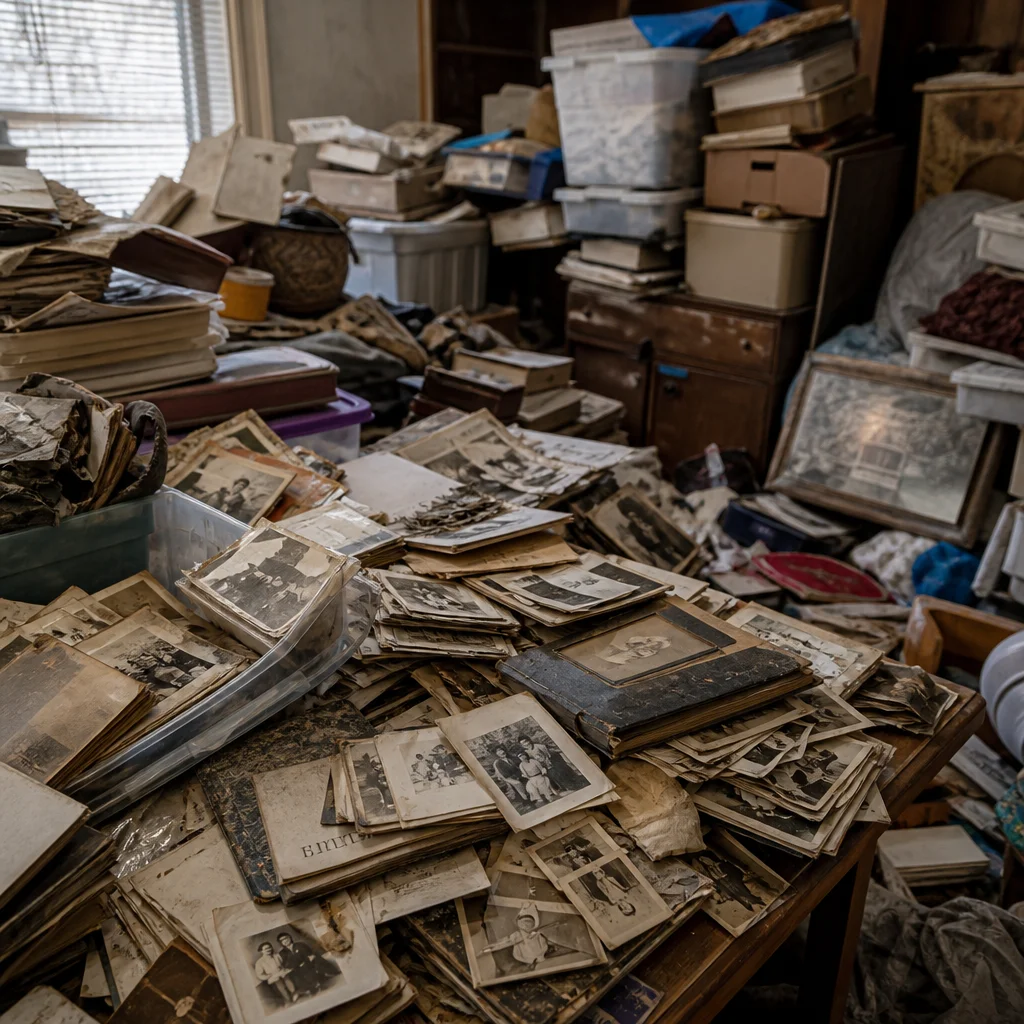
We treat these items with particular care because their informational value often exceeds their physical value. A photograph can be reproduced once it’s recovered and documented. A land deed cannot.
Recovery of documents and photographs includes:
- Systematic search of all likely storage areas (closets, drawers, boxes)
- Gentle removal and preliminary assessment of each item
- Segregation of moldy or moisture-damaged documents for conservation review
- Organization by type and era when possible
- Referral to professional document conservators for severely damaged pieces
We recommend that families consider digitization of recovered family records and photographs as a follow-up step. Once items are safe and cataloged, having high-quality scans ensures that even if original items deteriorate further, the information and images survive.
6. Proper Storage and Restoration Coordination After Recovery
Recovery doesn’t end when items leave the estate. Proper post-recovery storage and restoration coordination prevents new damage and gives your family realistic timelines for when items can be used or displayed again.
After initial cleaning and segregation, items typically need:
- Climate-controlled storage in acid-free, moisture-regulated containers
- Regular monitoring for mold, pest activity, or environmental instability
- Coordination with restoration specialists if professional treatment is needed
- Clear labeling and documentation of storage location and contents
- A timeline and budget for any restoration work
We help coordinate this transition and can refer you to qualified conservators and restoration specialists based on the specific items you’re recovering. Not every family needs professional restoration of every piece; sometimes careful storage and proper display is all that’s needed. We help you distinguish between the two.
For items requiring restoration, the sooner they’re assessed and placed on a conservator’s schedule, the better the outcomes. Mold and pest damage progress over time; professional intervention halts that progression.
7. Working with Flat-Rate Pricing Models That Protect Your Budget
Heirloom recovery isn’t something most families have budgeted for. It’s an unexpected expense that arises during an already stressful time. Understanding costs upfront and knowing exactly what you’ll pay is essential.
We operate on a flat-rate pricing model that removes surprises. Once we complete the initial assessment, we provide a detailed quote that covers all recovery work, transportation, and initial storage or holding. You’ll know the total cost before work begins, without worrying that contamination levels or unexpected complications will inflate the bill.
Our pricing reflects the specialized nature of this work. Professional heirloom recovery isn’t the same as general estate cleanup. The documentation, segregation, handling protocols, and coordination required command higher care standards and trained personnel.
To understand what emergency cleaning costs might look like for your situation, we recommend requesting a same-day assessment. The quote will clarify exactly what’s included and what follow-up work (like professional restoration) remains separate and optional.
Flat-rate pricing also protects us from cutting corners. We can allocate appropriate time and expertise to each item without pressure to rush through contaminated estates or skip documentation steps.
8. The Importance of Discreet Service When Family Privacy Matters
Many families hesitate to pursue heirloom recovery because they’re embarrassed about the condition of the home or worried about neighbors discovering the situation. That hesitation sometimes means valuable items are lost or damaged irreversibly.
Discretion isn’t optional in our work. We use unmarked vehicles, schedule work at times that minimize visibility, and treat every family’s situation with complete confidentiality. Your family’s circumstances are private, and we operate accordingly.
Discreet service also matters when multiple family members are involved. Sometimes one sibling forces the issue while another struggles with guilt or denial. A quiet recovery process prevents needless conflict and allows families to handle sensitive conversations without added stress.
We’ve worked with families navigating CPS concerns, probate disputes, and complex medical situations where privacy during hoarding cleanup was as important as the cleanup itself. We understand that context and build our operations around protecting it.
Your heirlooms deserve recovery from professionals who understand that the items themselves are only part of the story. The family dynamics, emotional weight, and need for privacy are just as important to handle with care.
When you’re ready to recover your family’s treasures, we’re ready to help. Request a same-day assessment and let us show you what professional, compassionate heirloom recovery actually looks like.
Frequently Asked Questions (FAQ)
How are heirlooms protected from contamination during a hoarding cleanup?
Items with sentimental or legal value are looked for before the general clearing begins, and whatever turns up is set aside instead of being bagged with the trash. Heirlooms are kept away from contaminated material and handled with gloves and clean containers so nothing carries contamination out of the house with them. The family reviews what was found, and nothing leaves the property until they say so.
What does the flat price cover for heirloom recovery?
The flat price covers the scope agreed with you after the on-site walkthrough, including the time spent pulling keepsakes out and setting them aside. That number does not move once work starts, so finding more than expected under the piles does not change what you pay. Restoration by a conservator is separate work, and we can point you toward specialists when a piece needs it. Financing is available, and a large job can be phased.
Why does discretion matter during a hoarded estate cleanup?
Hoarding is a private thing, and most families would rather the neighborhood not form opinions about it. Crews arrive in unmarked vehicles, work can be scheduled at hours that keep visibility low, and your situation is not discussed with anyone outside the crew on the job. That matters most when siblings disagree or a probate matter is open, because a quiet cleanup keeps outside pressure off an already hard family conversation.
What happens to documents and paperwork found in the house?
Deeds, titles, bank statements, insurance files and photographs get pulled out and set aside as they surface. They are stacked somewhere safe so the family can go through them before anything is hauled away, because a deed cannot be reprinted the way a photo can be rescanned. Wet or moldy paper is kept apart from the dry material so the damage stays put. Disposal records for what does get removed are available if you ask for them.
How quickly can someone come look at the property?
Emergency Cleanings responds the same day in most cases. Once a technician is assigned you get a two-hour arrival window and a text with the ETA when they are on the way. The assessment itself is free, and the flat price is set after that on-site scope, so you have the number before anyone starts clearing.
Working with Emergency Cleanings
Heirloom recovery is part of how we work a hoarding cleanup, not an add-on. Nothing is discarded without the family’s say-so, salvageable pieces are set aside and documented before anything leaves the property, and what genuinely has to go is removed through our junk removal service. Where there is biological contamination, that work runs under our biohazard and waste cleanup protocols.
To get moving on a specific property, call 888-560-8488 for a same-day response. The assessment is free, a technician scopes the property on site, and Emergency Cleanings locks the flat price with you before any work begins.